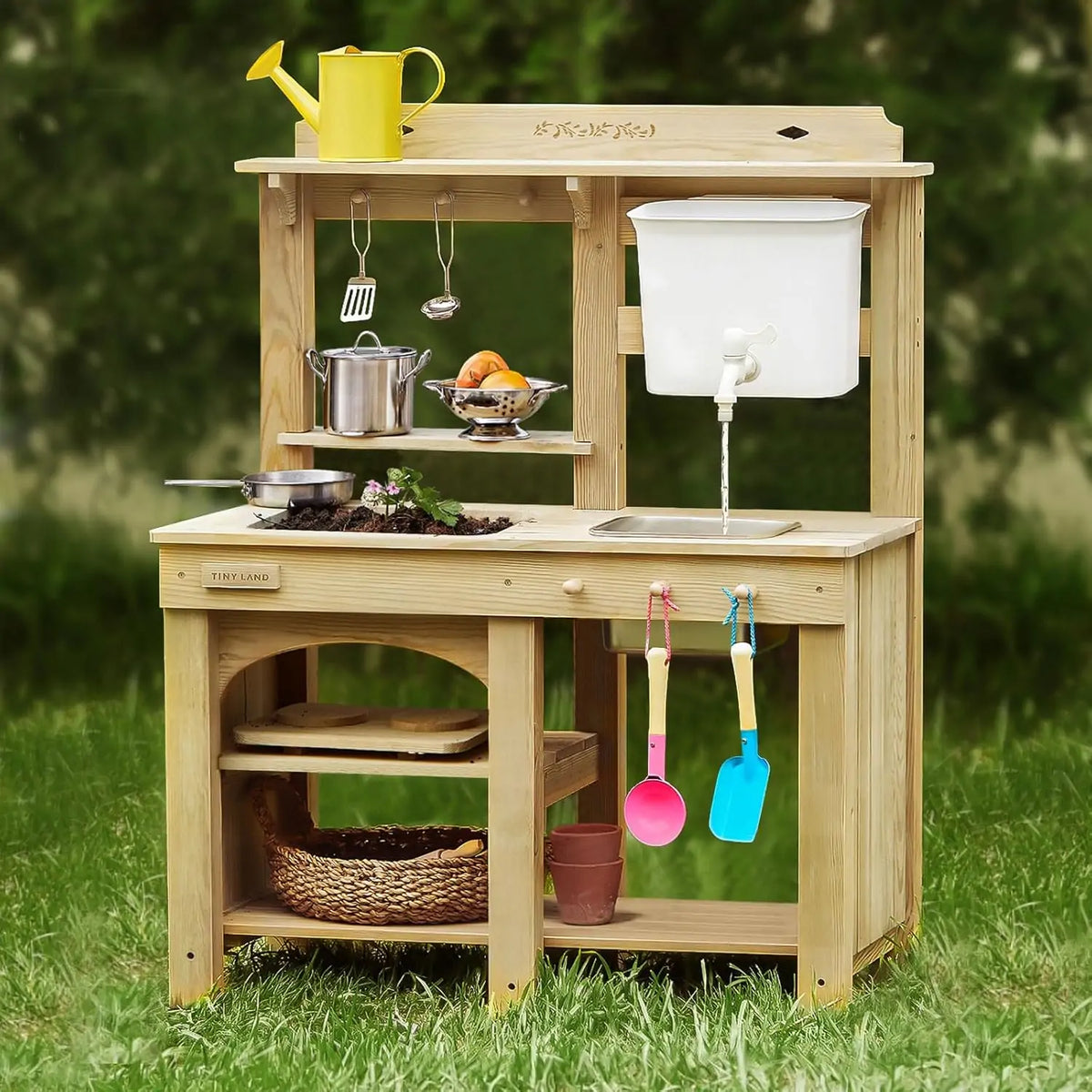
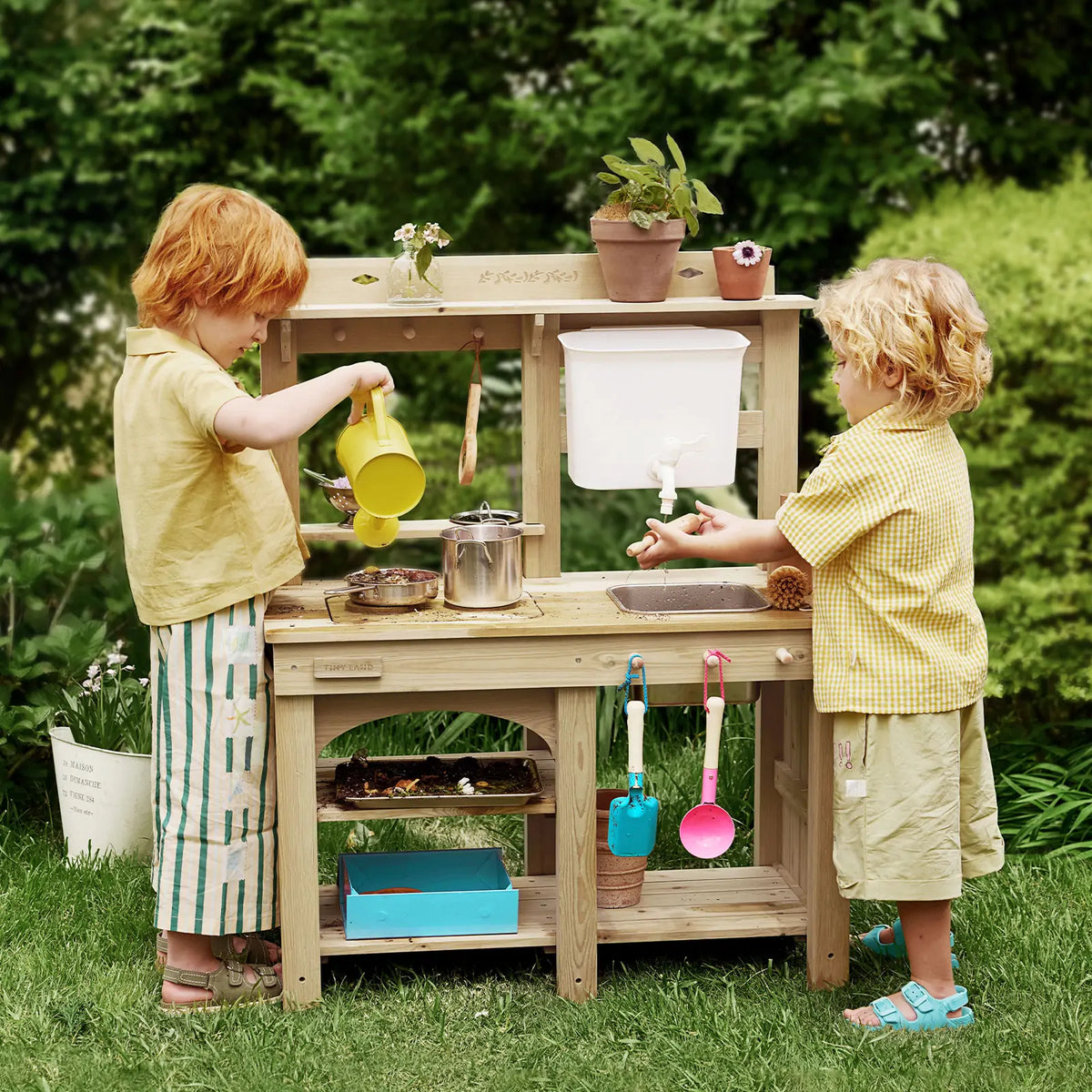
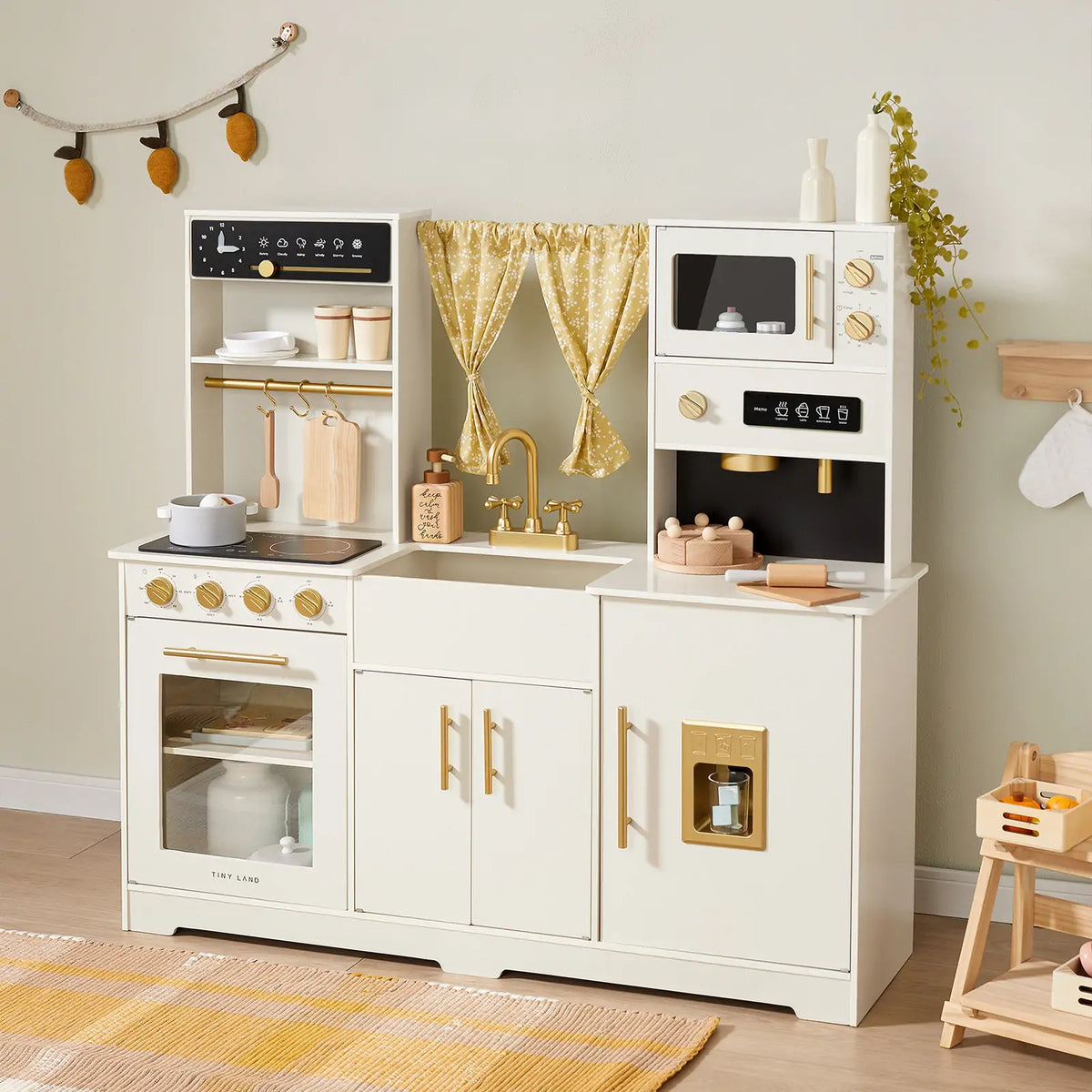
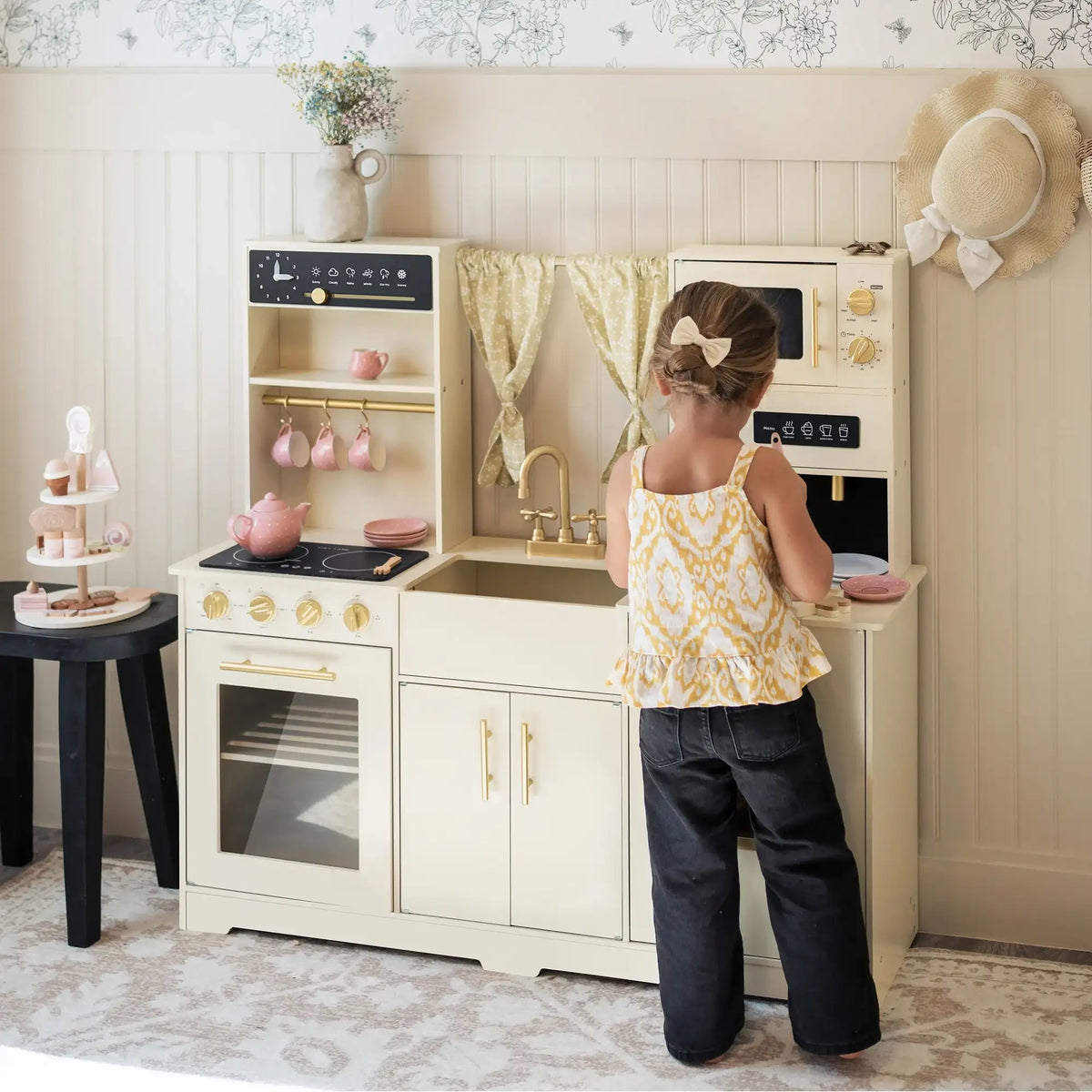
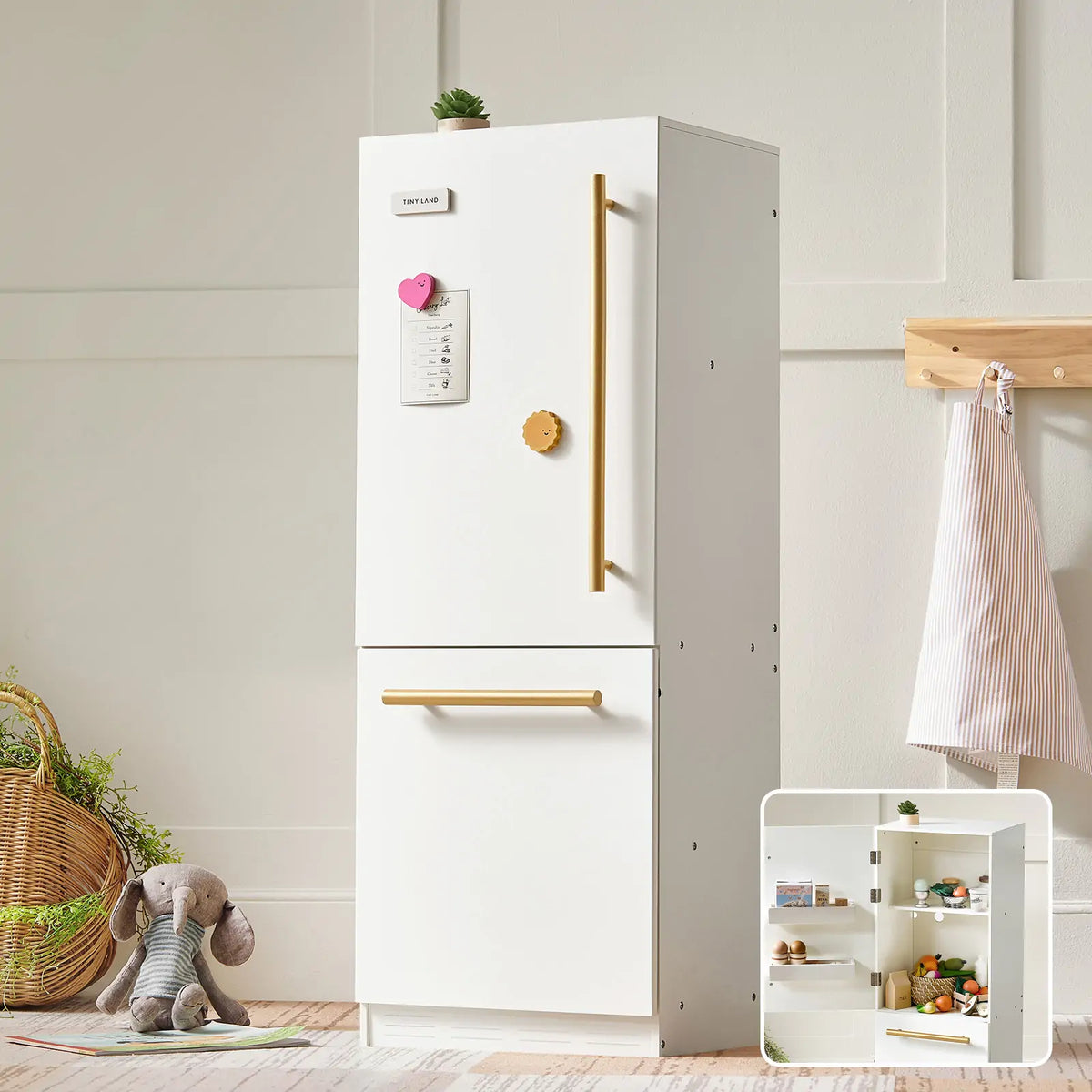
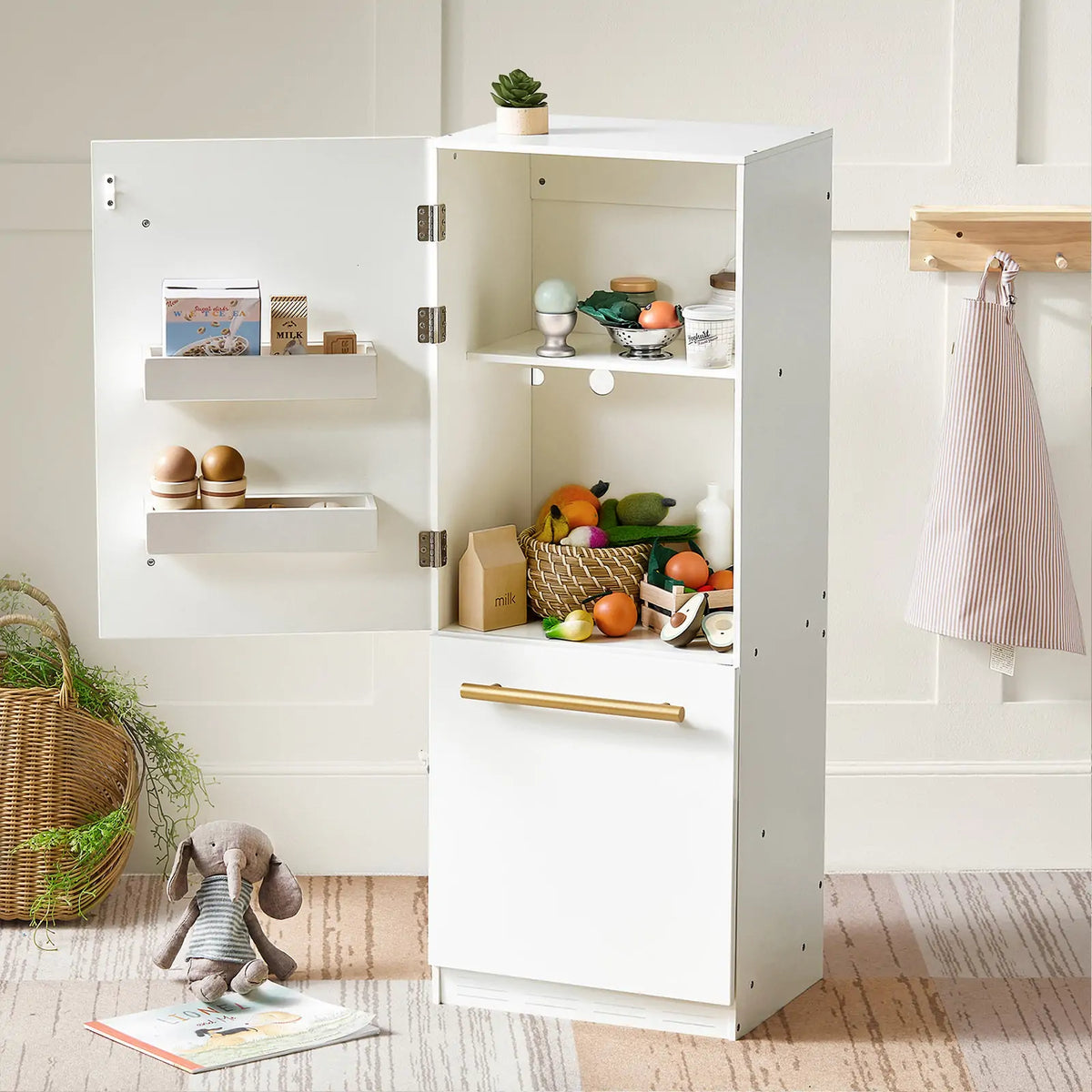
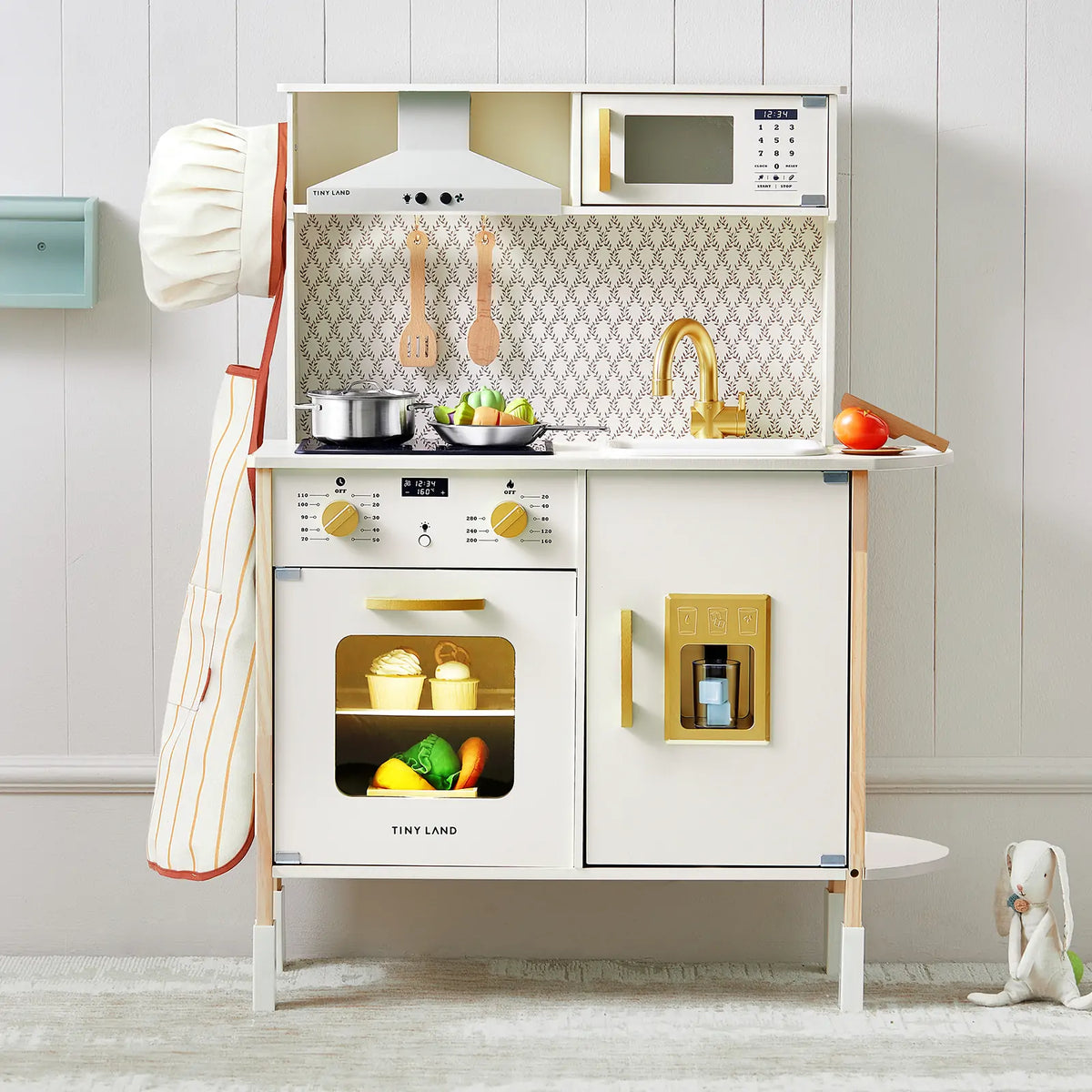
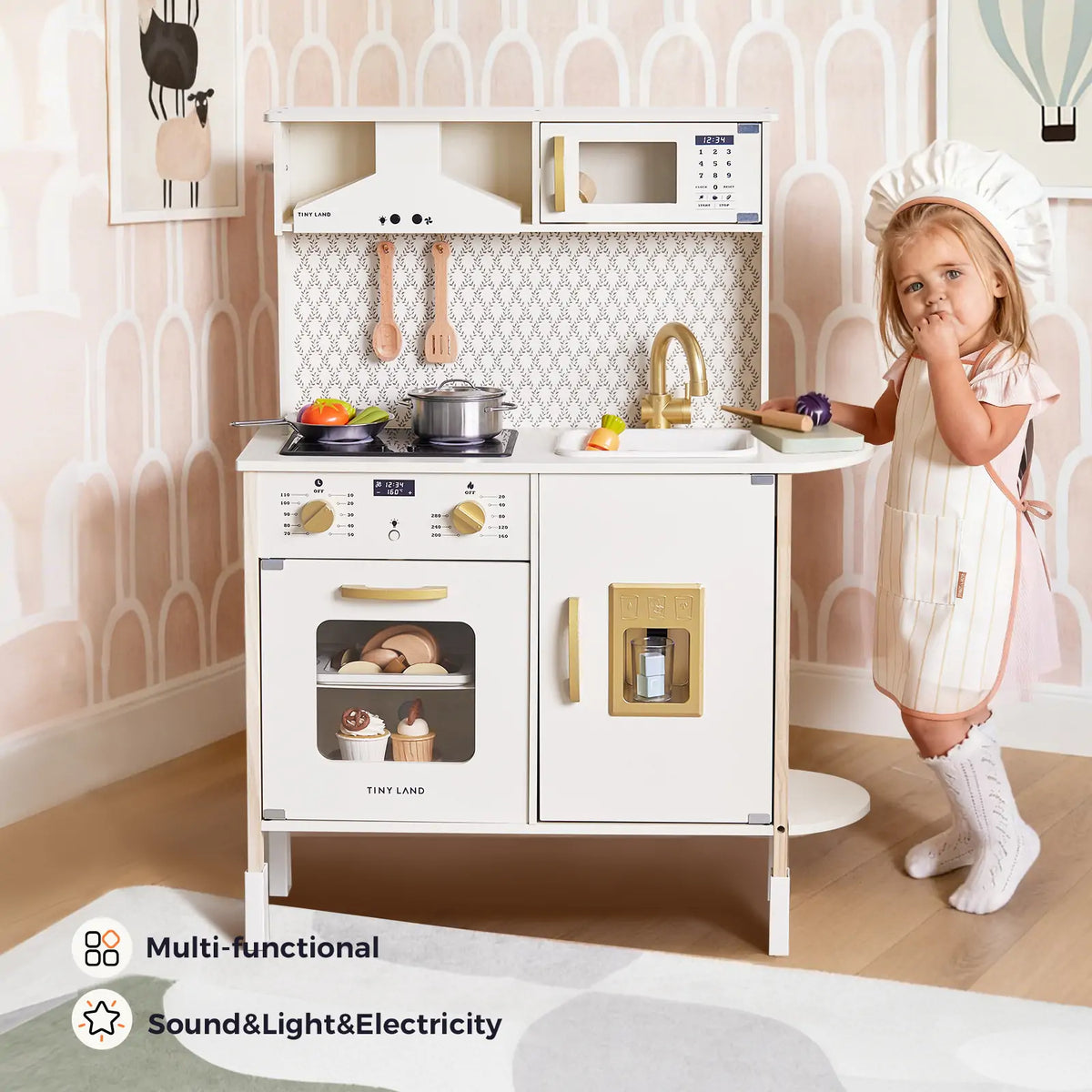




When parents shop for a play kitchen, the first things they usually notice are color, size, and style. But the most important detail is often the one that matters most over time: the materials. Choosing safe play kitchen materials helps create a better experience for both children and parents, because a well-made play kitchen supports fun, durability, and peace of mind all at once.

A high-quality wooden play kitchen is more than a cute addition to a playroom. It becomes a place where kids explore imaginative play, practice routines, and build confidence through everyday pretend cooking. Since children touch every handle, shelf, knob, and accessory, parents should look closely at whether the materials are non toxic, durable, and designed for safe daily use.
At Tiny Land, this matters because a child's play kitchen should support joyful play in a safe environment. The right materials can help children enjoy role play, build fine motor skills, and learn through hands-on experiences without parents worrying about hidden risks.
Safe Play Kitchen Materials Checklist for Parents
Before buying a safe play kitchen, parents should check for a few essentials:
-
non toxic materials and non toxic finishes
-
strong wood construction such as solid wood or other durable wood components
-
rounded corners and smooth edges
-
secure parts with no obvious choking hazards
-
clear safety certifications and safety labels
-
stable, sturdy construction
-
age-appropriate accessories and no unsafe loose parts
This simple checklist helps parents compare products more confidently and quickly identify a play kitchen built with child safety in mind.

How to Choose Safe Play Kitchen Materials
A good toy kitchen should be made from safe materials that can handle frequent, hands-on use. Children open cabinets, move accessories, serve meals, sort items, and return to the same activities again and again. That is why a play kitchen needs to be more than attractive. It should be made for real family life.
Parents should pay attention to whether materials contain harmful substances, rough finishes, or weak parts that may break over time. Lower-quality products may use harmful materials or coatings with toxic substances that parents would rather avoid in a child’s room. A safer product is one that is rigorously tested, clearly labeled, and built to meet recognized safety standards.
If a play kitchen arrives with a strong chemical smell, peeling finish, or unstable parts, that may be a sign to look more closely at the quality of the materials. A better choice is a safe play kitchen made with durable wood, child-friendly finishes, and practical safety details for young users.
Why a Wooden Play Kitchen Is a Safer Choice for Many Families
Many parents prefer a wooden play kitchen because it often feels more durable, more timeless, and more dependable than many plastic toys. A well-made wooden kitchen can offer better stability for daily use, especially in busy homes where kids love to open doors, move accessories, and return to pretend cooking every day.
Quality wooden toys are often popular because they combine long-term durability with a warm, classic look. A wooden play kitchen made with solid wood, real wood, or other sturdy components may hold up better over time than lighter plastic ones. This kind of durability matters because children do not use a play kitchen gently. They lean, pull, lift, sort, stack, and rearrange throughout every stage of play.
A strong wooden kitchen also supports a better overall play experience. Children can focus on stories, pretend meals, and routines instead of dealing with wobbling parts or flimsy accessories. That makes wooden play a smart choice for families who want a product that feels beautiful, reliable, and made for everyday play.

Start With Non Toxic Materials and Finishes
One of the most important things parents should check is whether the play kitchen is made with non toxic materials. Because kids spend so much time touching every part of a toy kitchen, the finish and coating matter just as much as the main structure.
Look for non toxic paints, sealants, and non toxic finishes that are designed for children’s products. Low VOC coatings are another good sign, since they can help reduce strong odors and limit unnecessary indoor chemical exposure. A wooden play kitchen made with eco friendly materials and child-conscious finishes can help parents feel more comfortable about bringing it into a nursery, bedroom, or family play area.
This is especially important for younger children who explore with their hands constantly. Choosing non toxic, well-finished materials helps reduce concern about contact with harmful substances and supports a cleaner, safer daily environment.
Safety Features Parents Should Check in a Play Kitchen
Even the best materials need the right design. A truly safe play kitchen combines strong construction with practical safety features that make it safer for active children to use.
Parents should look for:
Rounded edges and smooth surfaces
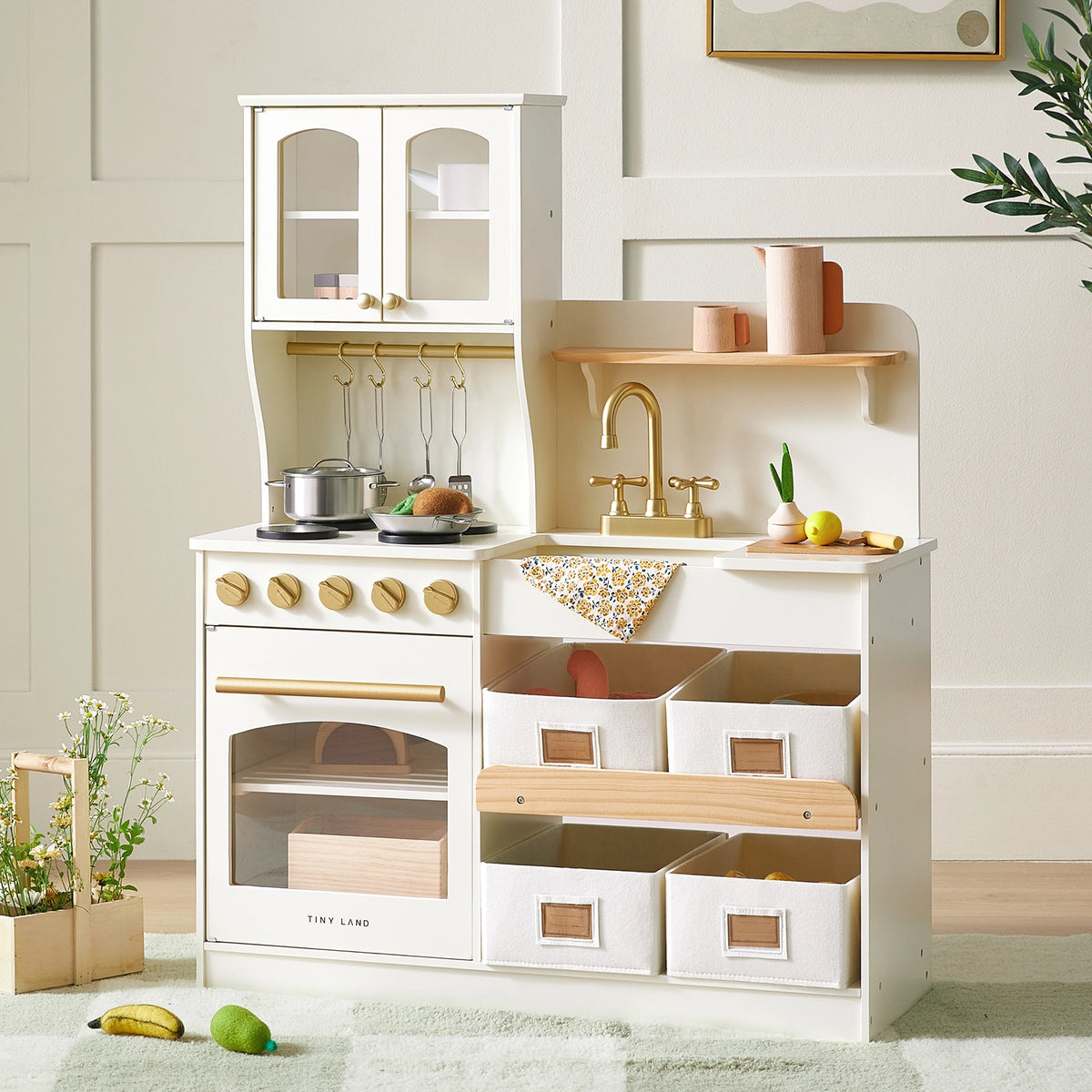
A good play kitchen should have rounded edges, rounded corners, smooth edges, and smooth surfaces. These details help protect tiny fingers and reduce bumps or scrapes during active play. Avoid visible sharp edges or corners that feel rough to the touch.
Sturdy construction
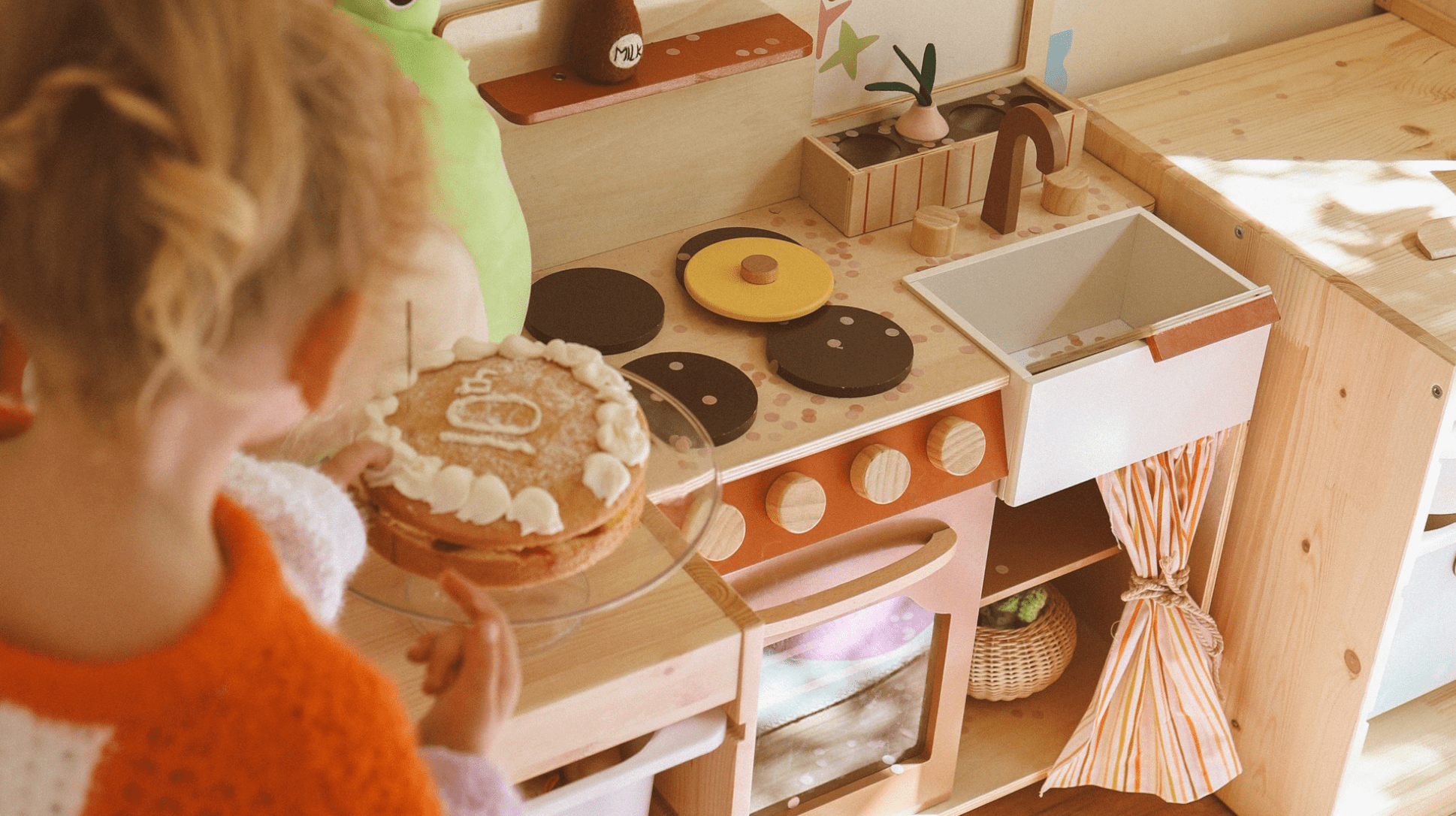
A toy kitchen should stay stable when children use the sink, stove, or shelves. Sturdy construction and sturdy wood help the kitchen stay balanced even when kids are fully engaged in pretend cooking. A well built kitchen gives parents more confidence during daily use.
Safe moving parts
Children love opening doors, pulling handles, and turning knobs. These are some of the most exciting parts of a child's play kitchen, but they should be secure, smooth, and easy to use. When doors open and close properly, children can enjoy interactive features without extra risk. Well-attached knobs and secure hardware are simple but important safety features.
Smart storage design
Features like open shelves can improve visibility and make cleanup easier. This kind of thoughtfully designed storage can help children organize accessories safely and support more independent routines during play.

Watch for Choking Hazards and Loose Parts
Accessories can make a play kitchen even more exciting, but parents should always check for choking hazards. This is especially important in homes with toddlers, younger siblings, or children who still explore toys by mouthing objects.
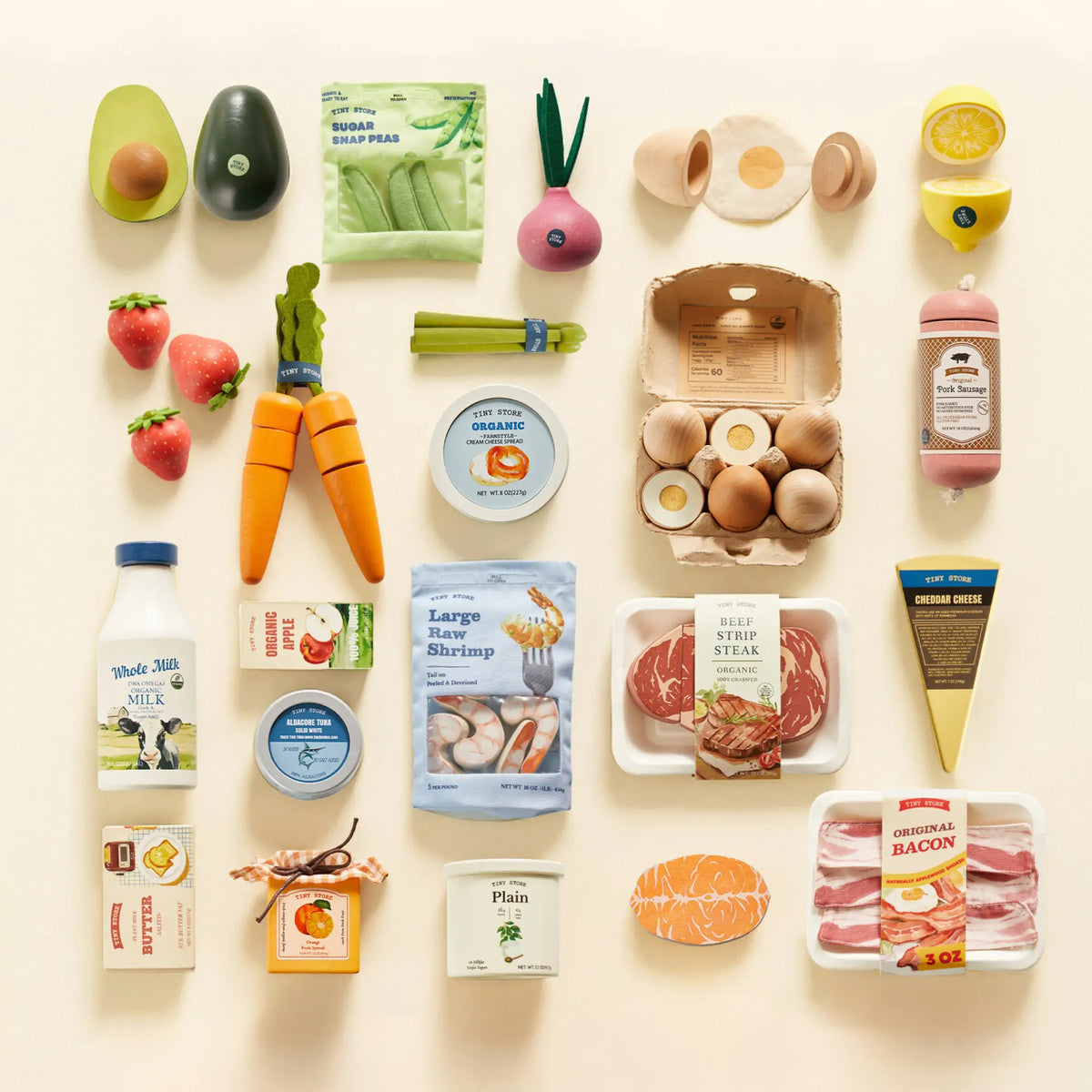
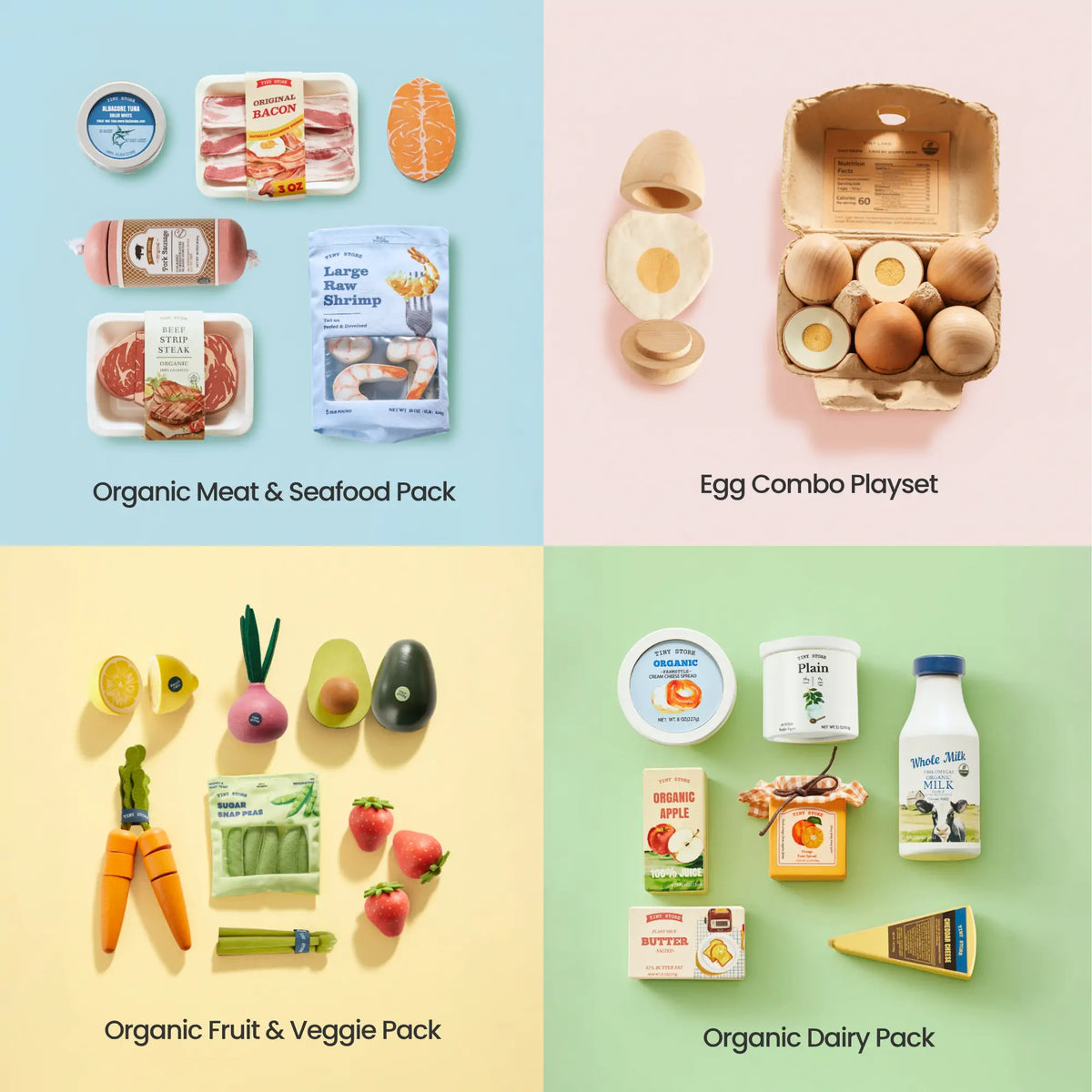
Small pieces of play food, pretend food, wooden utensils, or accessories from a cooking set should be age-appropriate and securely made. Weak connections, broken handles, and damaged pieces can become loose parts that may pose risks to younger children.
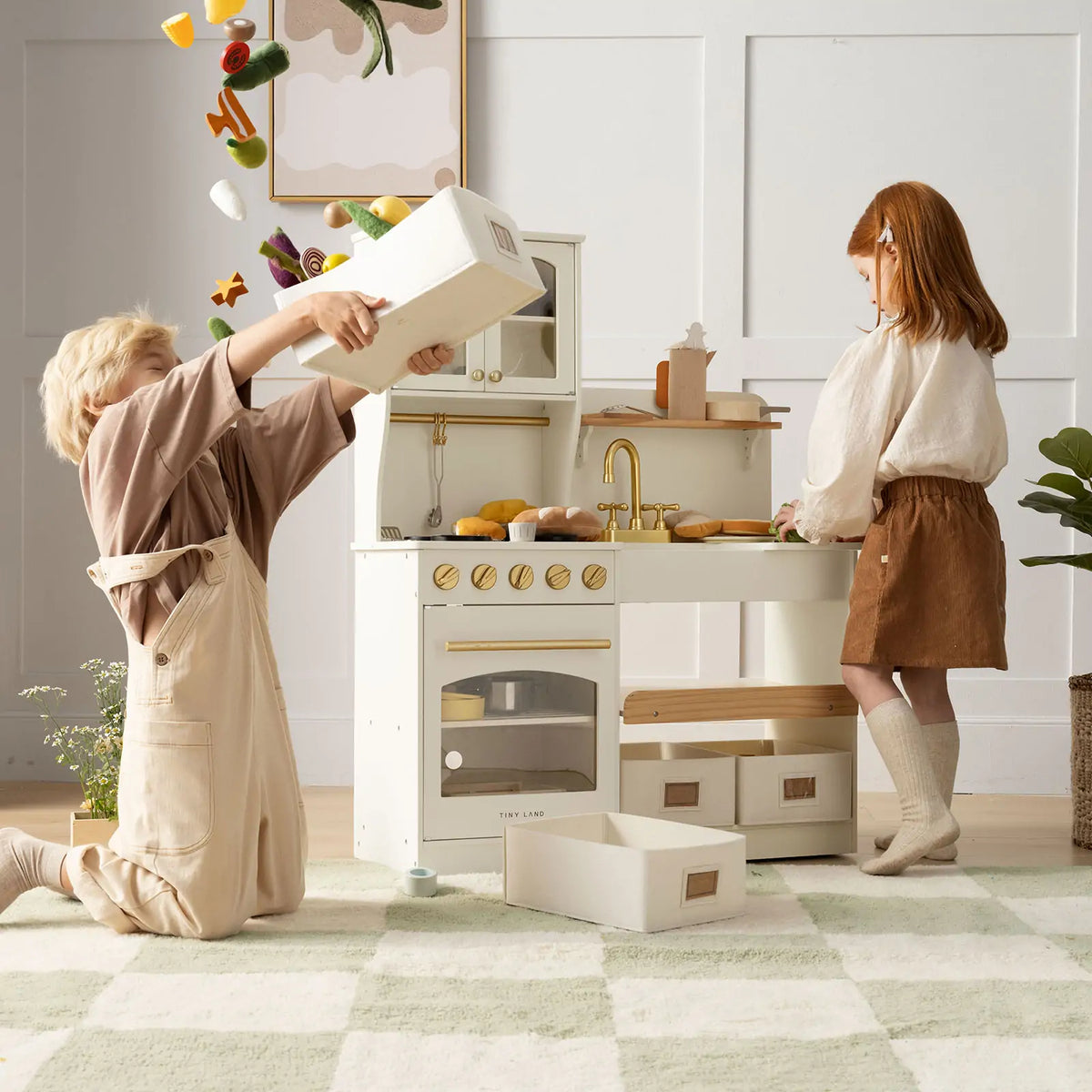
That does not mean accessories are a problem. In fact, safe accessories often help support role play, storytelling, and social interaction. They also encourage hand use and coordination as children sort, serve, stack, and carry pretend meals. The key is to choose accessories that match the child’s age and are built for repeated use.
Why Safety Certifications and Safety Labels Matter
Parents should also check for safety certifications and clear safety labels before choosing a safe kitchen for home use. These details can tell parents whether a product has been rigorously tested and whether it follows recognized safety standards for children’s toys.
A play kitchen with trusted safety certifications gives parents more confidence that the materials, finish, and construction were evaluated for common risks. Clear safety labels can also help parents understand age guidance, care instructions, and accessory warnings.
When a wooden play kitchen is rigorously tested and designed to meet strong safety standards, families can shop with greater peace of mind. This is one of the clearest signals that a product was built with long-term child use in mind.

Choose the Right Size for Everyday Play
Safe design is also about fit. A child's play kitchen should be comfortable for the child to use. Features like counter height and countertop height affect how naturally children can reach the sink, stove, and prep area. When the fit feels right, children can use the play kitchen more confidently and enjoy a better flow during pretend routines.
The right size supports independent play because children can reach accessories, store items, and move through the kitchen on their own. It also helps young chefs feel more capable as they practice turning knobs, arranging play food, and setting up their own pretend meals.
A well-sized play kitchen can better support long sessions of play, especially when children use it for both solo stories and shared activities with siblings or friends.
How Safe Materials Support Better Play
Safe materials do more than protect children. They also support richer, longer-lasting play. When a wooden play kitchen feels secure and dependable, children can focus on storytelling, pretend routines, and creative exploration.
That is why material quality matters so much. A strong, non toxic play kitchen supports creative play, role play, and even active play as children move between cooking, serving, cleaning, and organizing. Through that process, they build fine motor skills, confidence, and everyday habits connected to real life skills.
A quality toy kitchen can also help spark imagination in ways that feel natural. Children create their own menus, set up pretend breakfasts, and invent stories around family routines. For young chefs, that kind of open-ended play is both fun and meaningful.

Eco Friendly Materials and Long-Term Value
For many families, safety and sustainability go together. A wooden play kitchen made with eco friendly materials, natural materials, and an environmentally friendly approach can feel like a better long-term choice than lower-quality alternatives.
A durable kitchen may also reduce environmental impact over time, since families are less likely to replace it quickly. High-quality wooden toys often last longer, look better as they age, and can be passed down or reused. That makes a sturdy wooden kitchen a practical investment for families who want value as well as safety.
Regular Maintenance Helps Keep a Play Kitchen Safe
Even the safest product needs occasional care. Regular maintenance helps parents keep a play kitchen in good condition and spot small issues before they become larger ones.
Check periodically for:
-
loose screws
-
chipped finish
-
damaged accessories
-
rough spots or sharp edges
-
worn parts that could become choking hazards
A quality wooden play kitchen made with non toxic finishes, strong wood, and dependable hardware is built for repeat use, but regular checks help preserve a safe environment for children over time.

Final Thoughts
The best safe play kitchen is one that combines durable design with child-conscious materials. Parents should look for non toxic materials, reliable safety certifications, secure accessories, and practical safety features like rounded corners, rounded edges, and sturdy construction.
A beautiful wooden play kitchen should do more than look good in a room. It should support meaningful play, encourage imaginative play, and help kids enjoy hands-on learning in a setting that feels safe and dependable. When parents choose a play kitchen made with quality materials and thoughtful design, they are investing in a toy that supports both fun and peace of mind.
For families looking for a carefully made wooden play kitchen, material quality is one of the smartest places to start.