



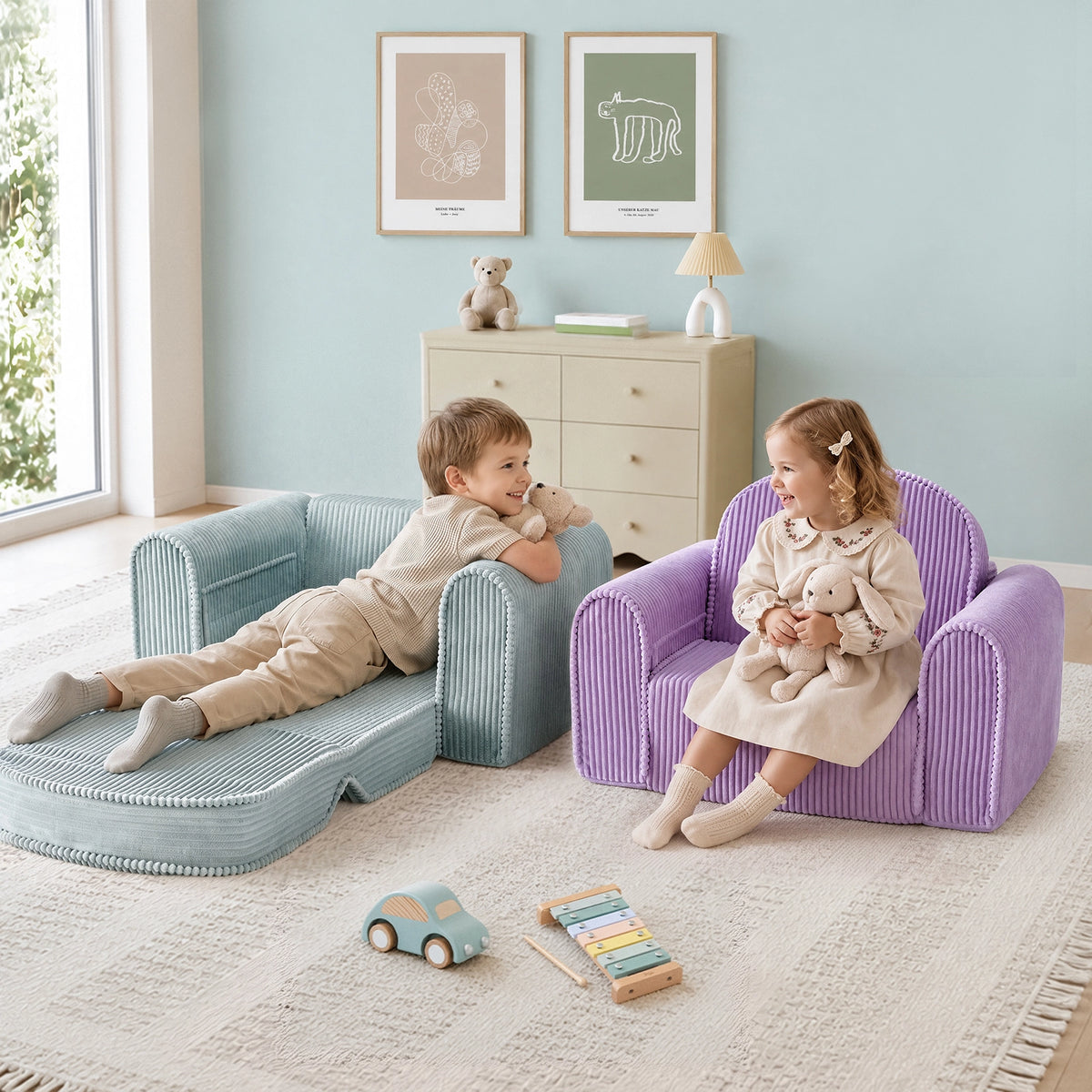

Choosing climbing toys for your toddler isn't just about finding something fun—it's about supporting healthy development while creating a safe environment for everyday play.
At Tiny Land, we believe children learn best through movement, imagination, and open-ended exploration. That's why we design toys that encourage active play while fitting naturally into modern family life.
This guide combines practical buying advice with child development principles to help parents confidently choose a foam climbing block set that will continue supporting their child's growth for years.

What Are Foam Climbing Blocks?
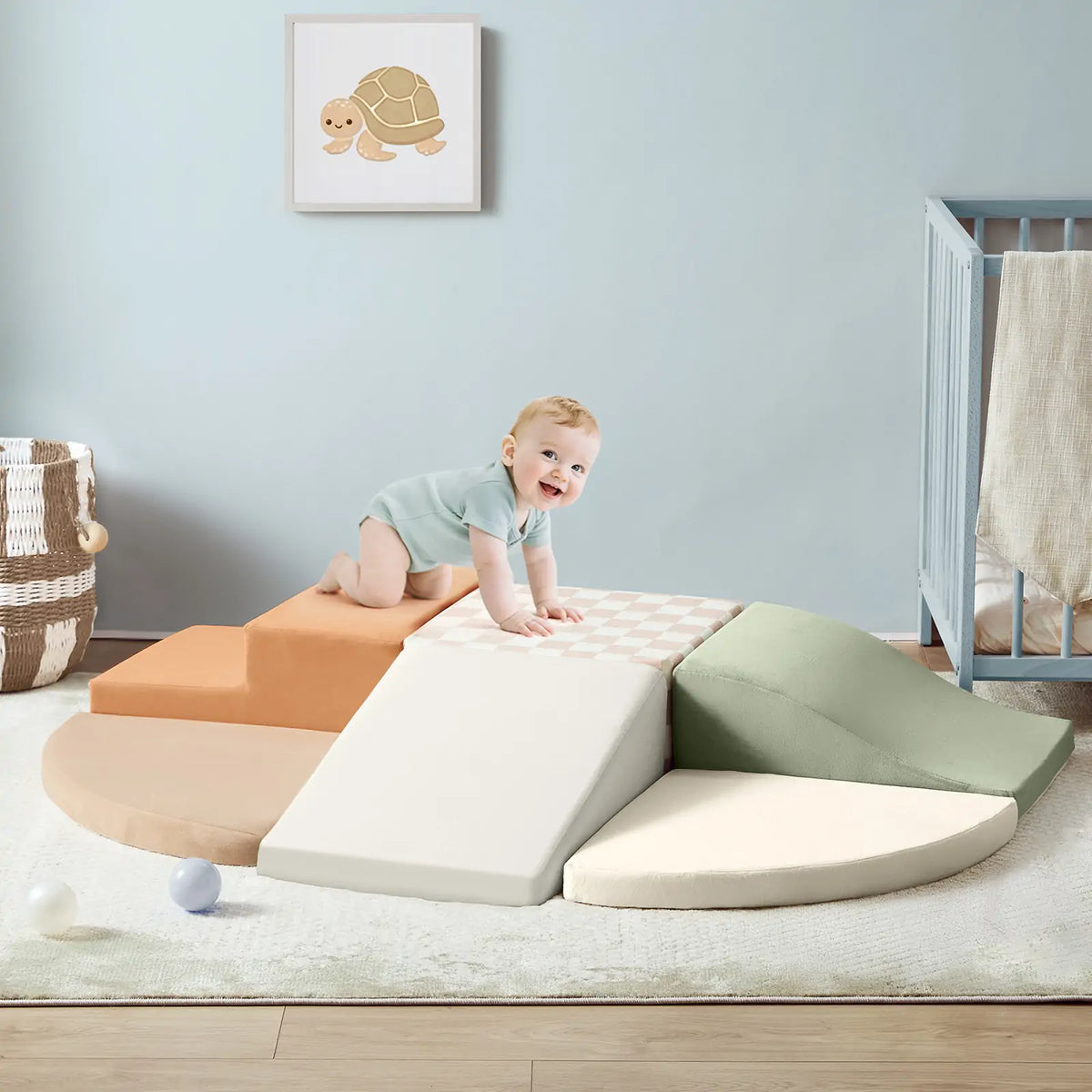
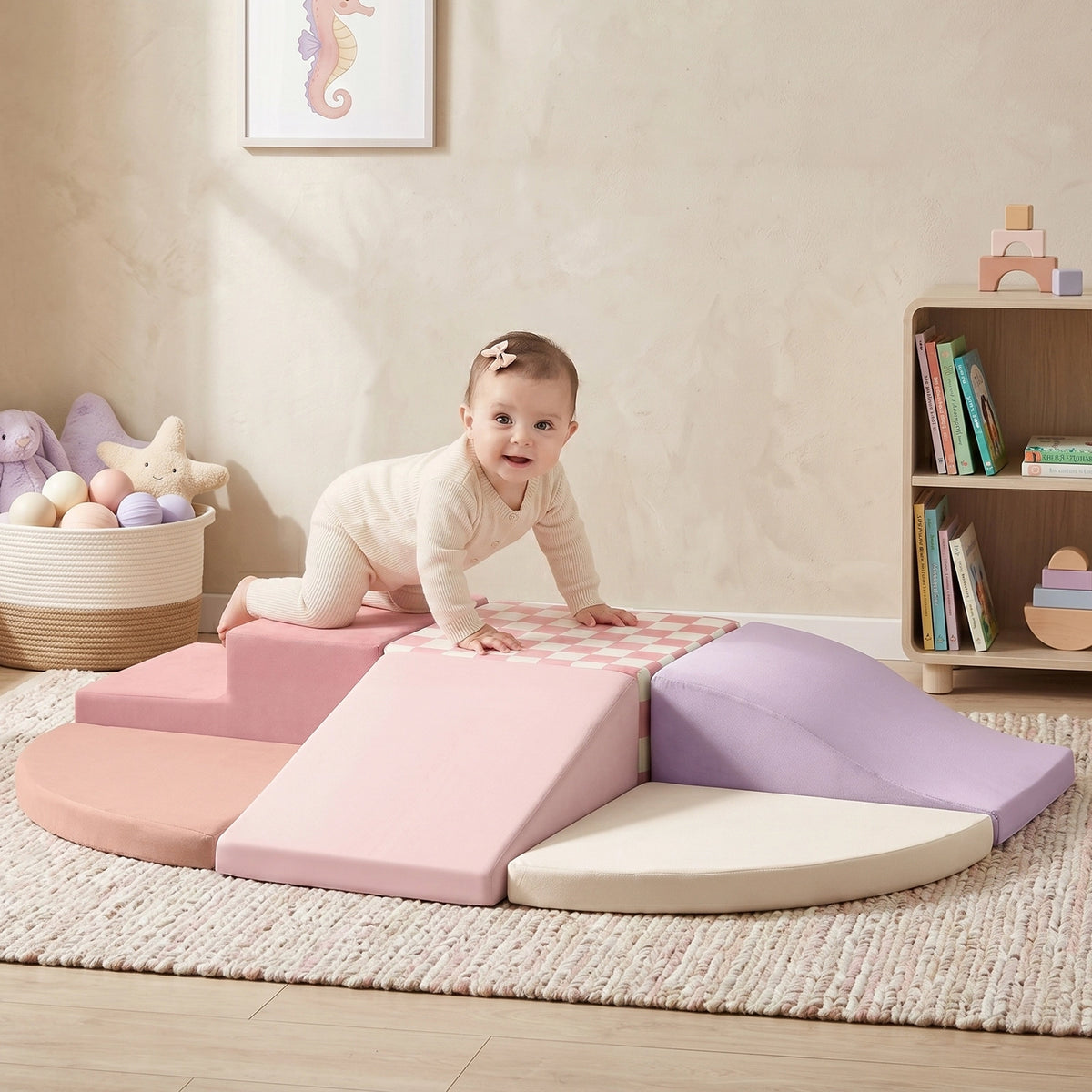
Foam climbing blocks are soft, modular play structures designed for babies and toddlers to crawl, climb, balance, slide, and explore safely indoors. Made from supportive high-density foam and covered with durable, easy-to-clean materials, they offer a gentle introduction to climbing long before children are ready for traditional playground equipment.
Unlike fixed climbing toys, foam climbing blocks can be rearranged into endless configurations. A simple set may include ramps, stairs, cubes, wedges, arches, and cylinders, allowing parents to create age-appropriate play challenges that evolve as their child grows.
This flexibility is one of the biggest reasons foam climbing blocks have become increasingly popular in homes, playrooms, therapy spaces, and early learning environments.

Why More Parents Are Choosing Indoor Soft Play
Today's parents are looking for toys that do more than simply keep children occupied. They want products that encourage movement, creativity, confidence, and independent learning.
Foam climbing blocks meet all of these needs while fitting easily into everyday family routines.
Whether it's a rainy afternoon, an extremely hot summer day, or a busy weekday when visiting the playground isn't practical, an indoor soft play area gives toddlers the opportunity to stay active without leaving home.
Unlike electronic toys that often hold a child's attention for only a short time, climbing blocks continue offering new ways to play because the experience changes every time the pieces are rearranged.
More importantly, they transform movement into something children naturally enjoy rather than something parents need to encourage.

What are the Benefits of Soft Play Climbing Blocks for Infants?
One of the greatest advantages of foam climbing blocks is that they combine active play with meaningful learning. Instead of practicing developmental skills through structured exercises, toddlers strengthen their abilities simply by having fun.
Build Gross Motor Skills
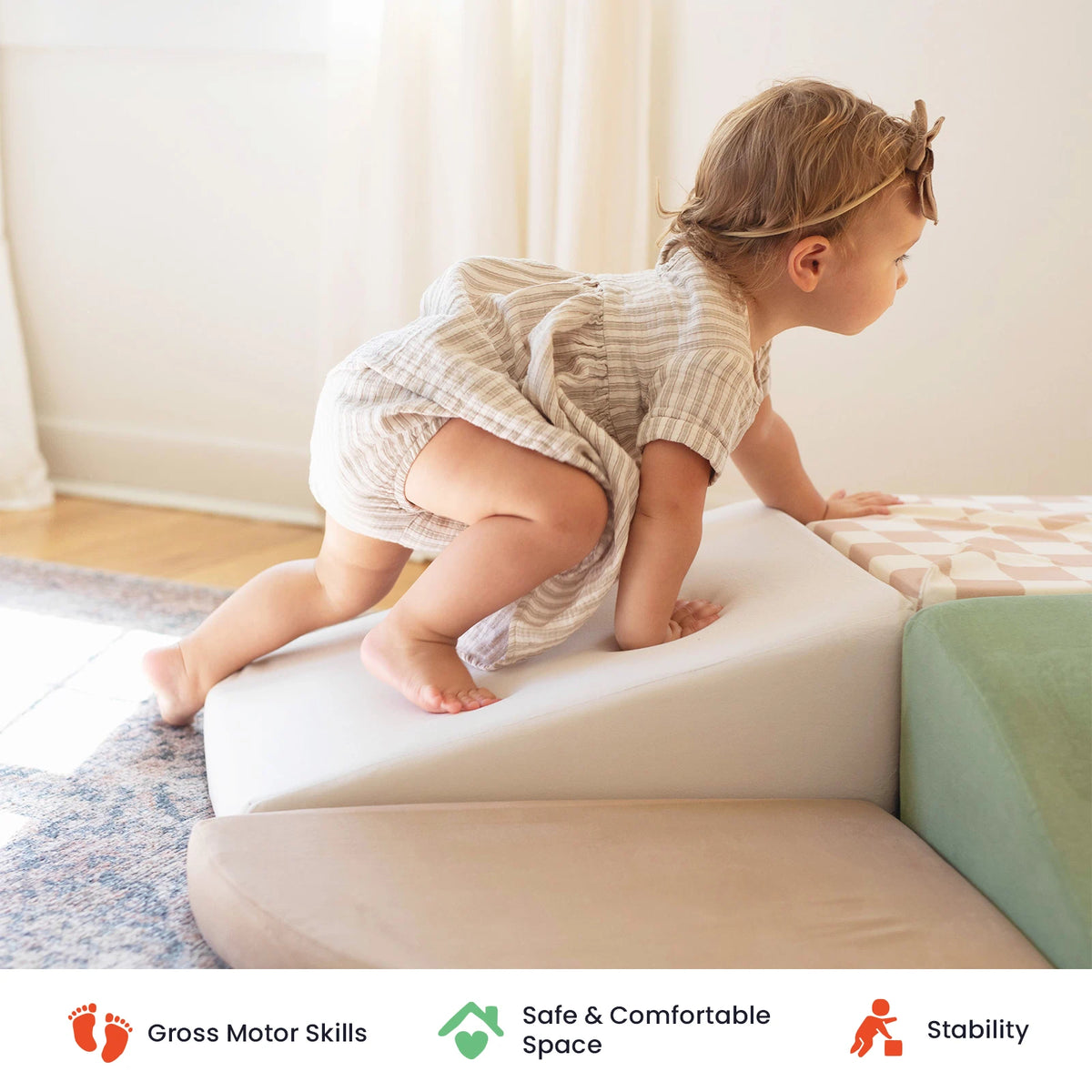
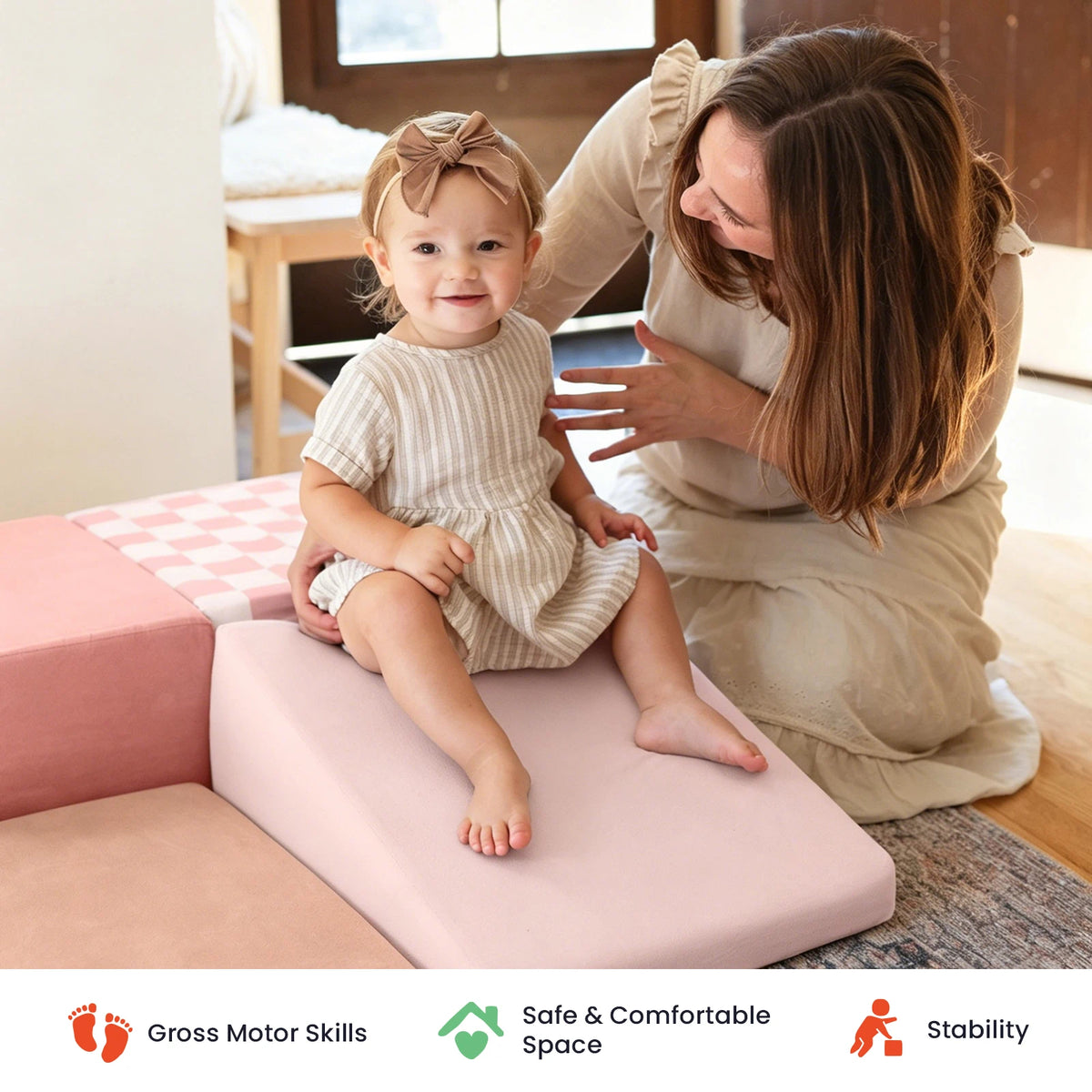
Gross motor skills form the foundation of nearly every physical milestone during early childhood. Activities like crawling, climbing, balancing, stepping, and jumping help toddlers strengthen the large muscles they rely on for everyday movement.
As children explore ramps, steps, and soft obstacles, they naturally develop:
- Core strength
- Leg and arm strength
- Balance and coordination
- Postural control
- Movement confidence
Encourage Balance and Body Awareness
Every climb, crawl, and change in height gives toddlers the opportunity to explore how their bodies move and respond in different positions. As they navigate soft play structures, they gradually develop a stronger sense of balance, body awareness, and spatial understanding through active exploration.
Regular active play helps children:
- Better understand how their bodies move through space
- Develop balance and stability
- Improve spatial awareness
- Approach physical challenges with greater independence
Encourage Independent Problem Solving
Unlike toys with a single purpose, foam climbing blocks invite experimentation.
- Should I climb over the ramp?
- Can I crawl underneath?
- Can I build a taller mountain?
Every decision encourages children to observe, test ideas, and adjust their movements independently.
Without realizing it, toddlers practice problem-solving skills every time they build a new obstacle course or discover a different way to climb.
Inspire Imaginative Play
Foam climbing blocks are more than climbing toys—they're building blocks for creativity.
One day they become a mountain range for toy animals.
The next day they're a pirate ship sailing across the living room.
Later they transform into a castle, a bridge, a tunnel, or stepping stones across an imaginary river.
Because there are no fixed rules, children continue discovering new ways to play long after many traditional toys have been forgotten.
Grow With Your Child
One of the biggest reasons parents appreciate modular foam climbing blocks is their long-term value.
- A baby may begin by crawling across a gentle ramp.
- A one-year-old starts climbing over simple obstacles.
- A two-year-old builds increasingly challenging obstacle courses.
- By preschool age, the same pieces become part of imaginative adventures that combine climbing, storytelling, and cooperative play.
Rather than quickly becoming "too easy," a well-designed foam climbing block set grows alongside your child's changing abilities.

How to Choose the Right Toddler Foam Climbing Blocks for Your Living Room
Not all foam climbing blocks are created equal. While many products look similar at first glance, differences in materials, construction, and design can significantly affect safety, durability, and the overall play experience.
Before choosing a set, consider these key factors.
1. High-Density Foam That Provides Both Support and Cushioning
The quality of the foam determines how comfortable and stable the blocks feel during play.
Foam that is too soft may compress excessively, making climbing difficult and reducing stability. Foam that is too firm may not provide adequate cushioning for younger children who are still learning to balance.
Look for high-density foam that offers the right balance between support and softness, allowing toddlers to climb confidently while helping cushion small tumbles.
2. Durable, Easy-to-Clean Covers
Life with toddlers can get messy.
From snack crumbs and spilled drinks to finger paint and muddy socks, climbing blocks quickly become part of everyday play.
A high-quality cover should be:
- Water resistant
- Easy to wipe clean
- Durable enough for daily use
- Resistant to cracking and peeling
Easy maintenance helps the blocks stay looking fresh even after years of active play.
3. A Stable, Non-Slip Base
Safety starts with stability.
When children climb, crawl, or step from one block to another, the pieces should remain securely in place.
A non-slip bottom helps reduce unwanted movement on hardwood, tile, or laminate flooring, creating a more confident climbing experience for young children.
4. Modular Pieces That Encourage Open-Ended Play
The best foam climbing blocks don't limit how children play.
Instead of fixed structures, modular sets allow families to create new obstacle courses, climbing paths, bridges, tunnels, and imaginative play spaces every day.
This flexibility not only keeps play interesting but also allows the toy to grow with your child's changing developmental needs.
5. Child-Safe Materials and Thoughtful Construction
Finally, look beyond appearance.
Rounded edges, reinforced stitching, quality zippers, and child-safe materials all contribute to a better long-term experience.
A thoughtfully designed climbing set should feel sturdy, easy to maintain, and ready for
years of active family play.

Foam Climbing Blocks by Age
One of the biggest advantages of foam climbing blocks is that they evolve with your child. Instead of becoming outdated after a few months, modular pieces can be rearranged to provide new challenges at every developmental stage.
6–12 Months: Exploring Movement
Once babies begin crawling and pulling themselves up, they become eager to explore different heights and textures.
At this stage, simple ramps and low platforms encourage:
- Crawling
- Pulling to stand
- Cruising
- Body awareness
Keep layouts low and open, and always supervise closely.
12–24 Months: Building Confidence
This is when foam climbing blocks often become a favorite daily activity.
Toddlers begin to:
- Climb independently
- Balance on different surfaces
- Step between blocks
- Crawl through tunnels
- Create simple obstacle courses
As confidence grows, you can gradually introduce more varied layouts.
2–4 Years: Imaginative Adventures
By preschool age, climbing becomes only part of the experience.
Children begin combining movement with pretend play, transforming the blocks into castles, mountains, bridges, race tracks, and animal habitats.
This combination of physical activity and storytelling keeps the toy engaging long after many single-purpose toys lose their appeal.

Foam Climbing Blocks Buying Checklist
Before purchasing, use this checklist to compare different products.
✓ High-density foam that holds its shape
✓ Durable, wipe-clean cover
✓ Non-slip base
✓ Rounded edges
✓ Modular pieces that can be rearranged
✓ Child-safe materials
✓ Easy to store
✓ Suitable for your child's age
✓ Large enough for long-term use
✓ Designed for everyday indoor play
If a climbing block set checks most of these boxes, it's likely to provide years of enjoyable play.

5 Common Mistakes Parents Make
Choosing the right climbing blocks isn't complicated, but a few common mistakes can reduce both safety and long-term value.
1. Buying Only for Today's Age
Many parents purchase the smallest possible set because it fits their toddler's current abilities.
Instead, think ahead. A modular set that grows with your child often provides better value over time.
2. Focusing Only on Appearance
Foam density, stability, and durability have a much bigger impact on everyday use than color alone.
3. Ignoring Available Space
Measure your play area before purchasing.
Even a large modular set can work well if it can be rearranged and stored efficiently between play sessions.
4. Forgetting About Cleaning
Children play with climbing blocks every day, so easy-to-clean materials make a noticeable difference over time.
Choose covers that wipe clean quickly after snacks, crafts, or everyday messes.
5. Expecting One "Perfect" Layout
One of the greatest strengths of foam climbing blocks is flexibility.
Instead of leaving the pieces arranged the same way every day, try creating new obstacle courses regularly to keep children engaged.

Safety Tips for Everyday Play
Foam climbing blocks are designed to provide a safer climbing experience, but good play habits remain essential.
For the best experience:
- Always supervise younger children.
- Place the blocks on a flat, stable surface.
- Leave enough open space around the play area.
- Check that every piece is securely positioned before climbing.
- Encourage climbing rather than jumping from high structures.
- Inspect the covers regularly for signs of wear.
A few simple precautions help create an environment where children can confidently explore and learn through movement.

Frequently Asked Questions
Are foam climbing blocks safe for babies?
Many sets are suitable for babies who are beginning to crawl or pull themselves up. Always follow the manufacturer's age recommendations and supervise play closely.
What foam density is best?
High-density foam offers the ideal balance between support and cushioning. It helps maintain the shape of the blocks while providing a comfortable climbing surface.
Are foam climbing blocks Montessori?
Although they are not traditional Montessori materials, they align with Montessori principles by encouraging independence, self-directed movement, and open-ended exploration.
How do you clean foam climbing blocks?
Most premium sets feature wipe-clean covers. A soft cloth with mild soap and water is usually all that's needed for regular cleaning. Always follow the care instructions provided by the manufacturer.
Can foam climbing blocks replace a Pikler triangle?
Not entirely. Foam climbing blocks provide a softer introduction to climbing for younger children, while Pikler triangles offer more advanced climbing opportunities as children become older and more confident.
How many pieces do I need?
For most families, a five- to seven-piece modular set offers an excellent balance between variety and space efficiency. Larger sets work well for dedicated playrooms or households with multiple children.
How long will my child use foam climbing blocks?
Many children enjoy them from infancy through the preschool years. Because modular pieces can be rearranged in countless ways, they continue offering new challenges as children develop.
Are foam climbing blocks worth the investment?
For many families, yes. They combine physical development, imaginative play, and long-term versatility in one product, making them a toy children often return to every day.

Final Thoughts
At Tiny Land, we believe the best foam climbing blocks do much more than encourage climbing—they help children build confidence, strengthen growing bodies, and discover the joy of learning through movement.
When setting up an active indoor play area, investing in a high-quality foam climbing blocks set ensures long-term safety, durability, and years of engaging play.
It's a simple way to create a space that encourages movement, creativity, and independent learning while bringing meaningful play into everyday family life.