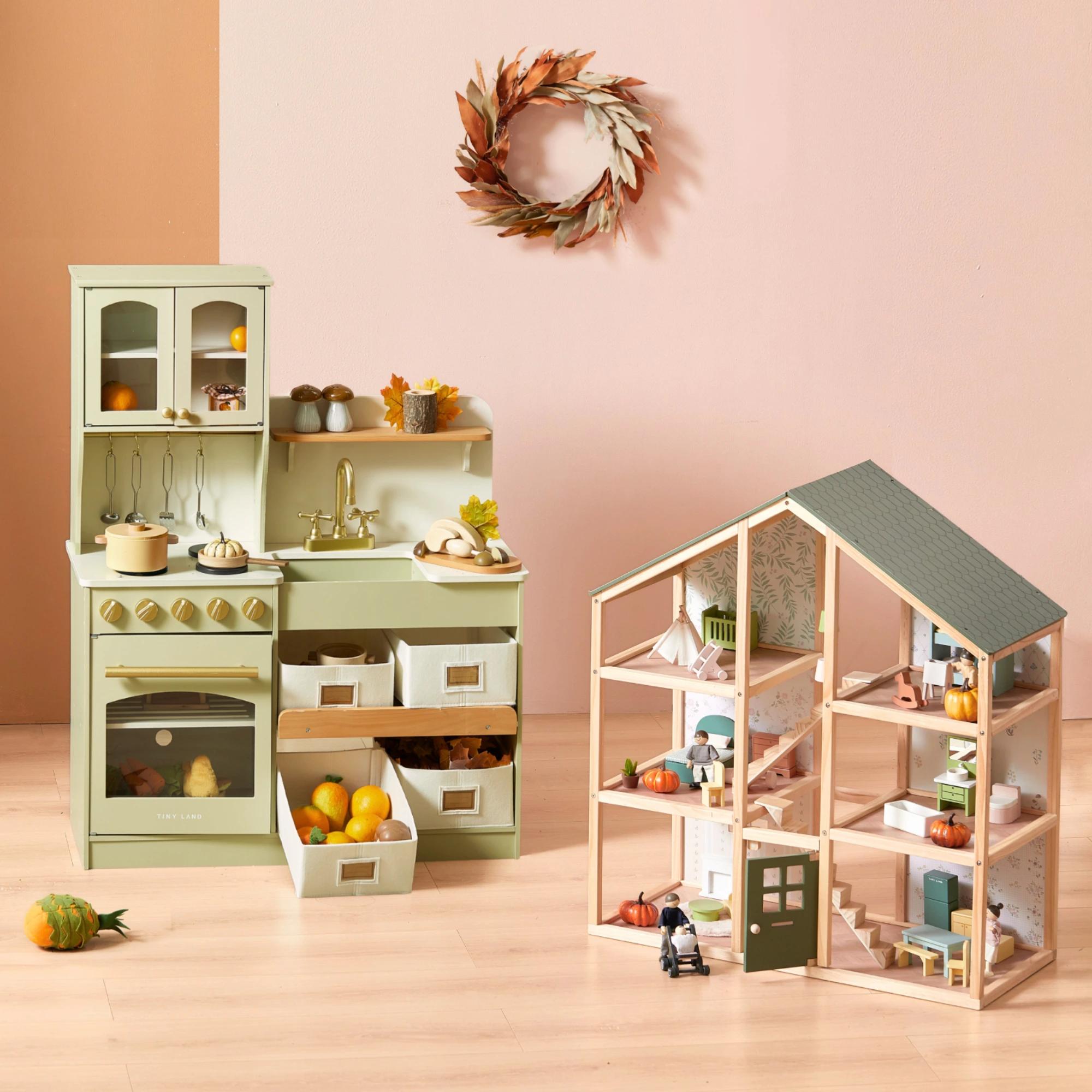



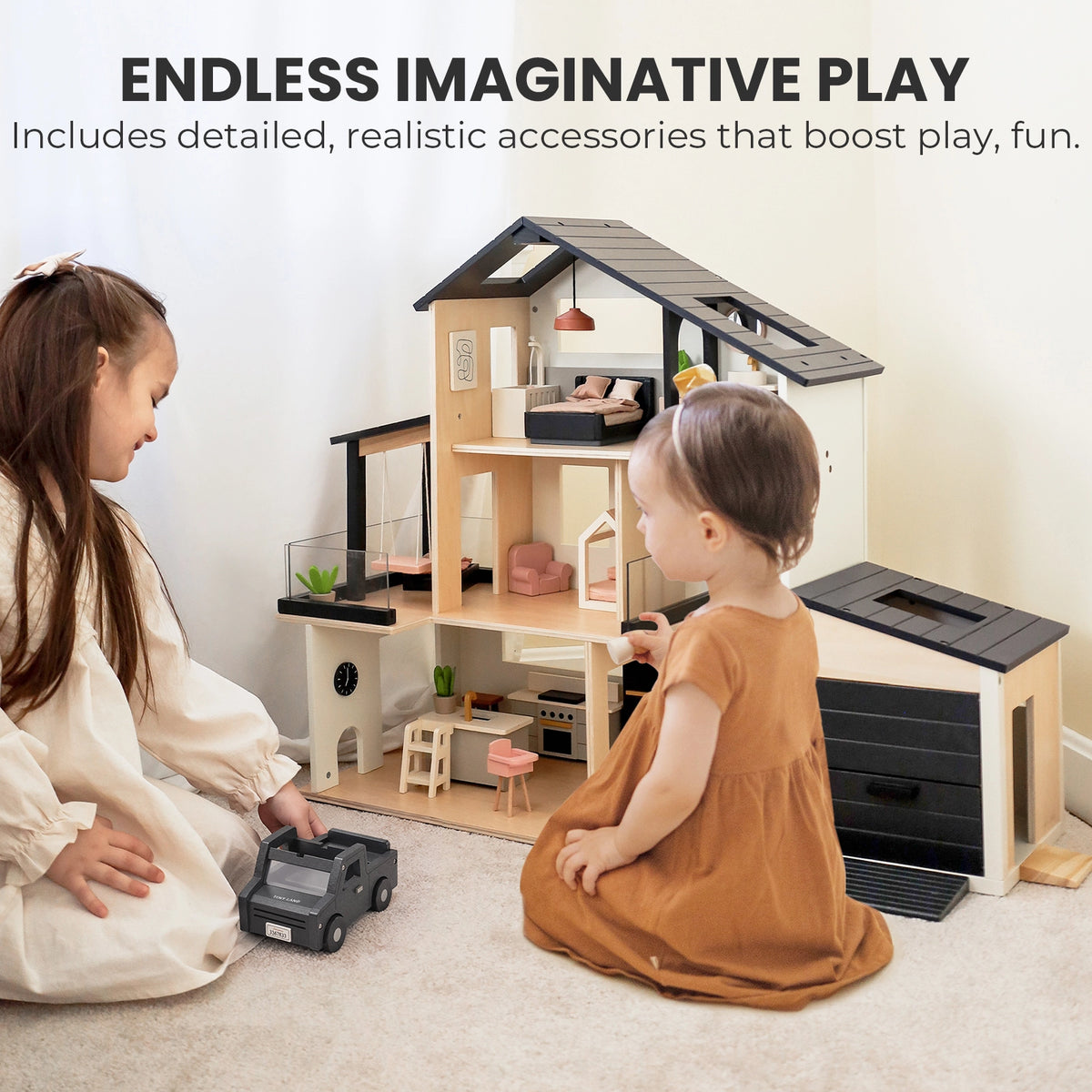
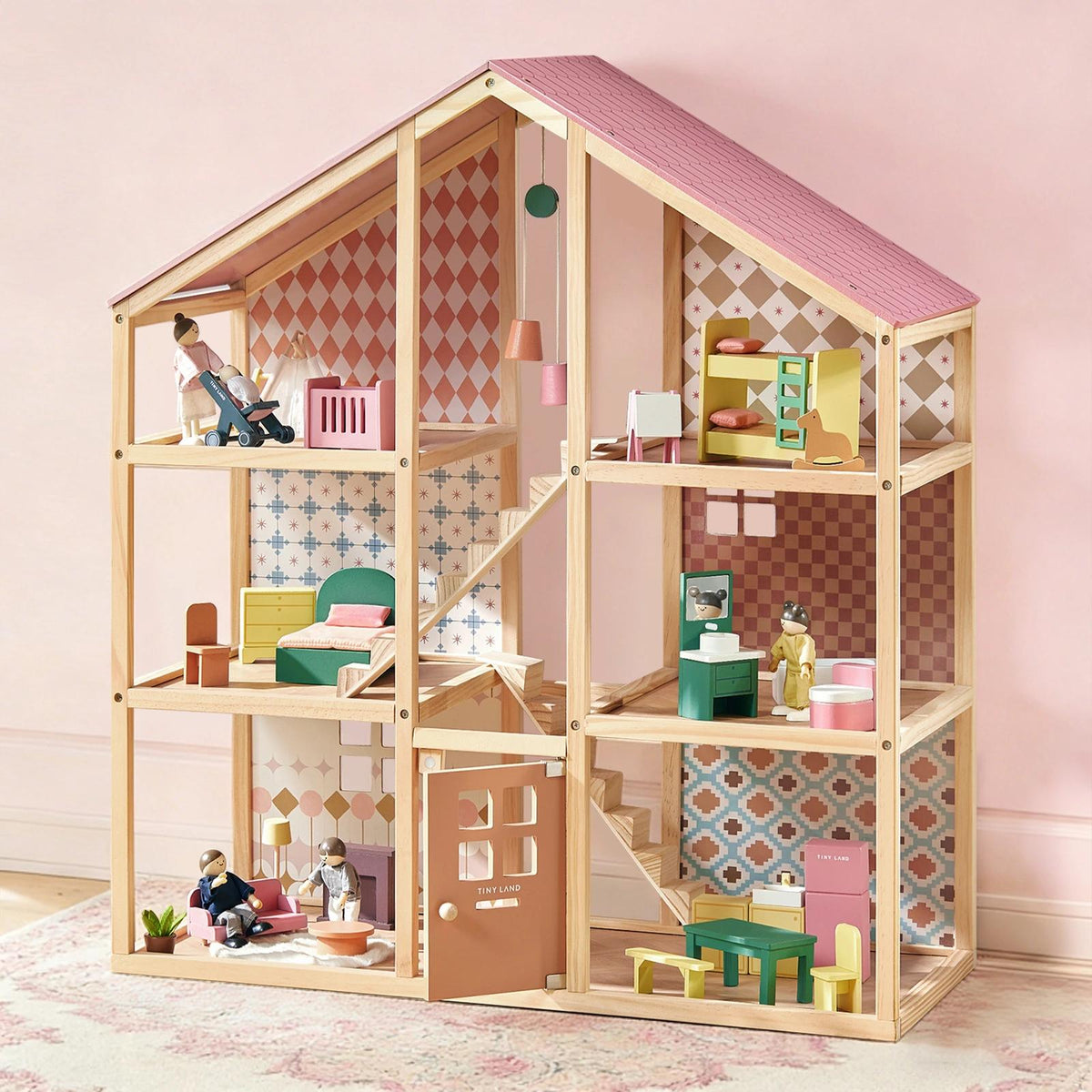




A dollhouse may look like a simple toy, but for kids, it can become a whole little world. With a few dolls, rooms, and pieces of dollhouse furniture, a child can create family stories, school days, friendships, conflicts, and everyday moments they are still learning to understand.
That is why doll house social skills matter. When children enjoy dollhouse play, they are not only having fun. They are practicing language skills, fine motor skills, emotional processing, problem solving skills, and imaginative play in a natural way. A dollhouse gives kids a safe space to explore people, feelings, and different scenarios without pressure.

Why Dollhouse Play Supports Social Skills
Social skills grow through practice. Kids learn how to share, wait, listen, talk, and notice another person’s feelings through small daily experiences. Playing with a dollhouse gives them a gentle way to practice these important skills.
For example, one doll may be the parent, another may be the baby, and another may be a friend visiting after school. The child playing may decide who gets which room, who needs help, or who feels left out. These simple social scenarios help children understand how people act together.
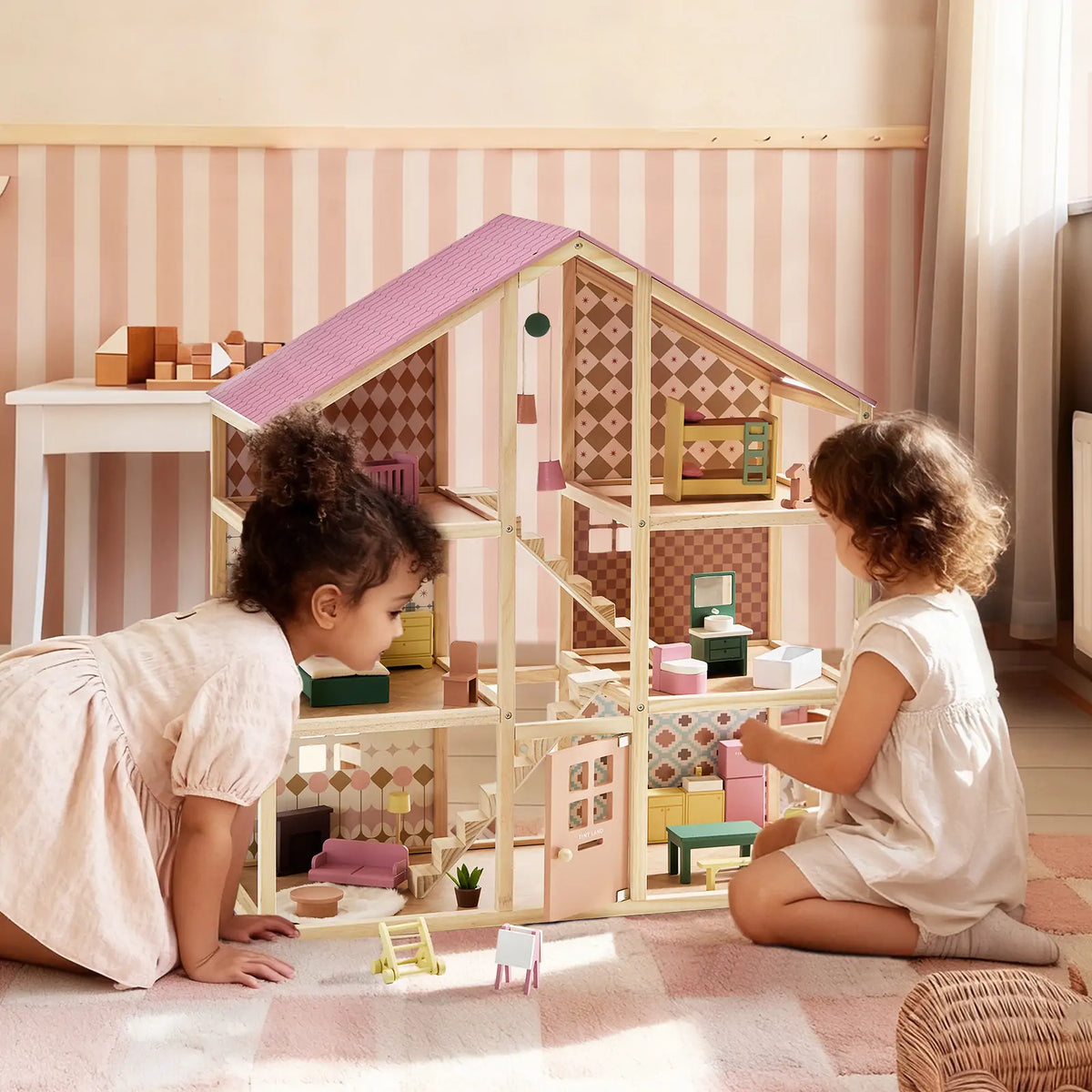
When siblings or friends join the play, the learning becomes even richer. Children need to negotiate roles: “You be the mom, I’ll be the teacher,” or “This doll is going to school today.” Sometimes they may disagree about the story or who controls the house. That is not always a bad thing. Small conflicts during play give kids a chance to practice problem solving, sharing, and using words instead of grabbing or shouting.

Role Play Helps Kids Understand Emotions
Role play is one of the biggest benefits of doll play. Children often use dolls to act out real life moments they have seen or experienced. A doll might feel nervous about school. A baby might cry because there is a new sibling at home. A friend might feel sad because nobody shared a toy.
Through these stories, children can explore emotions in a way that feels safe. Sometimes a child cannot clearly say, “I feel jealous,” “I feel scared,” or “I feel left out.” But they may make a doll say it. This kind of emotional processing helps kids build emotional intelligence and emotional growth.
A dollhouse also helps children see different perspectives. One character may be angry, while another wants to help. One doll may want quiet time, while another wants to play. As kids act out these different perspectives, they begin to realize that people can feel different things in the same situation. This is the early root of empathy.

Language Development Through Storytelling
Dollhouse play is also great for language development. When children create stories, they naturally use words to explain what is happening. They name objects, describe feelings, build characters, and connect ideas.
A child might say, “The family is eating dinner,” “The baby is sleeping,” or “The dolls are going to school.” Over time, these simple sentences can grow into longer stories with more vocabulary, more details, and more confidence.
Parents can support language skills without taking over the play. Try asking simple open questions like, “What happened next?” “How does she feel?” or “Who lives in this room?” These questions invite kids to talk more, but still let them control the story.
The goal is not to make play feel like a lesson. The goal is to give children space to use language, imagination, and storytelling in their own way.

Problem Solving in Everyday Scenarios
A dollhouse can create a broad range of everyday social interactions. The dolls may need to share a bedroom. A friend may come over. A sibling may take a toy. Someone may feel upset during dinner. These different scenarios help kids practice problem solving skills.
Because dollhouse play is open ended play, there is no single right answer. The child can try one solution, change the story, and act out a new ending. This helps children feel a sense of control while they explore real-life problems.
For example, if two dolls want the same bed, the child may decide they can take turns. If one doll feels sad, another doll may bring comfort. If friends argue, the child may create a way for them to say sorry. These small stories can become meaningful practice for real friendships and family life.
Parents may also notice what their child is thinking about through play. A child who keeps acting out a new baby, a school conflict, or a family routine may be trying to understand something happening in real life.

Fine Motor Skills and Creative Play
While the social and emotional benefits are important, dollhouse play also supports fine motor skills. Moving tiny dolls, placing furniture, opening doors, and arranging small objects all help children develop hand control and motor skills.
These actions are connected to creativity, too. When kids move a table into the kitchen or place a baby in the bedroom, they are not just moving objects. They are building a story. They are deciding how the house works, who belongs where, and what happens next.
A good dollhouse should leave room for imagination. Simple rooms, flexible furniture, and open-ended toys allow kids to create their own world instead of following only one fixed way to play.

How Parents Can Encourage Dollhouse Play
Parents do not need to guide every moment. In many cases, children benefit most when they are allowed to lead. Still, you can gently support the play by joining as one character, adding a feeling, or asking a simple question.
You might say, “This doll looks worried,” or “Maybe the baby wants someone to help.” You can also suggest familiar ideas like a family dinner, a school morning, a birthday party, or a friend visiting the house.
If kids play together, let them practice how to negotiate roles and solve small conflicts. These moments may feel messy, but they are part of learning social skills.
A dollhouse gives children a small world where they can explore big ideas: family, friendships, emotions, sharing, and empathy. It may look like simple play, but inside that little house, kids are practicing skills they will use for life.