









A play kitchen can be one of the most inviting spots in a child’s play routine. But when it lives in the living room rather than a dedicated playroom, there is another consideration: how it looks when playtime is over.
For many families, the living room has to do several jobs at once. It is where adults relax, children play, and everyone spends time together.
A brightly colored toy kitchen may offer plenty of pretend-play possibilities, but it may not feel at home beside a neutral sofa, a carefully chosen rug, or warm wood furniture.
That is why choosing an aesthetic play kitchen is about more than picking a pretty color. The finish, silhouette, footprint, storage, and placement all affect whether a play kitchen feels like a natural part of your home.
The goal is not to make a child’s play space look like a showroom. It is to find a kitchen that gives little ones room to imagine, while fitting comfortably into the shared spaces your family already uses.

What play kitchen looks good in a living room?
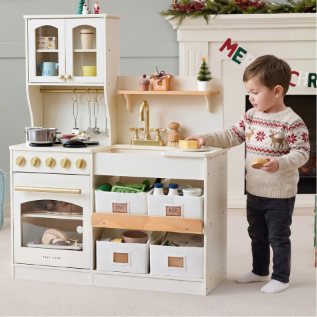
Choose a wooden or wood-look kitchen in a soft neutral such as cream, natural oak, birch, or muted sage.
Look for a simple, furniture-like silhouette, restrained hardware, and enough closed storage to put accessories away. Keep the footprint modest, leave a clear walkway beside the sofa, and use a rug or baskets to make the play area feel intentional.
Why Living-Room Aesthetics Matter More Than Another Feature List
When choosing a play kitchen for a separate playroom, it is natural to focus on features: how many accessories are included, whether the oven door opens, or how many pretend cooking activities a child can explore.
Those details still matter in a living room. But the kitchen also becomes part of the room's everyday visual landscape.
A play kitchen beside the sofa may be visible throughout the day, including when nobody is playing with it. Its colors and proportions can affect how the entire room feels. A design that works with the surrounding furniture may be easier to leave in a shared space instead of moving it in and out of the room.
This does not mean choosing décor over play value. It means considering both from the beginning.
A living-room-ready kitchen should feel inviting to a child and visually comfortable for the adults who share the space. Think of it as a small piece of play furniture rather than simply another toy to fit into a corner.

What “Living-Room-Ready” Actually Means
Before comparing individual kitchens, consider five details that make the biggest difference in a shared space.
Finish and Color: Start With the Room Around It
The easiest way to make a play kitchen feel at home is to consider the colors already in your living room.
Cream, natural wood, and muted sage are popular choices because they can complement a range of home styles without making the play area feel visually disconnected.
-
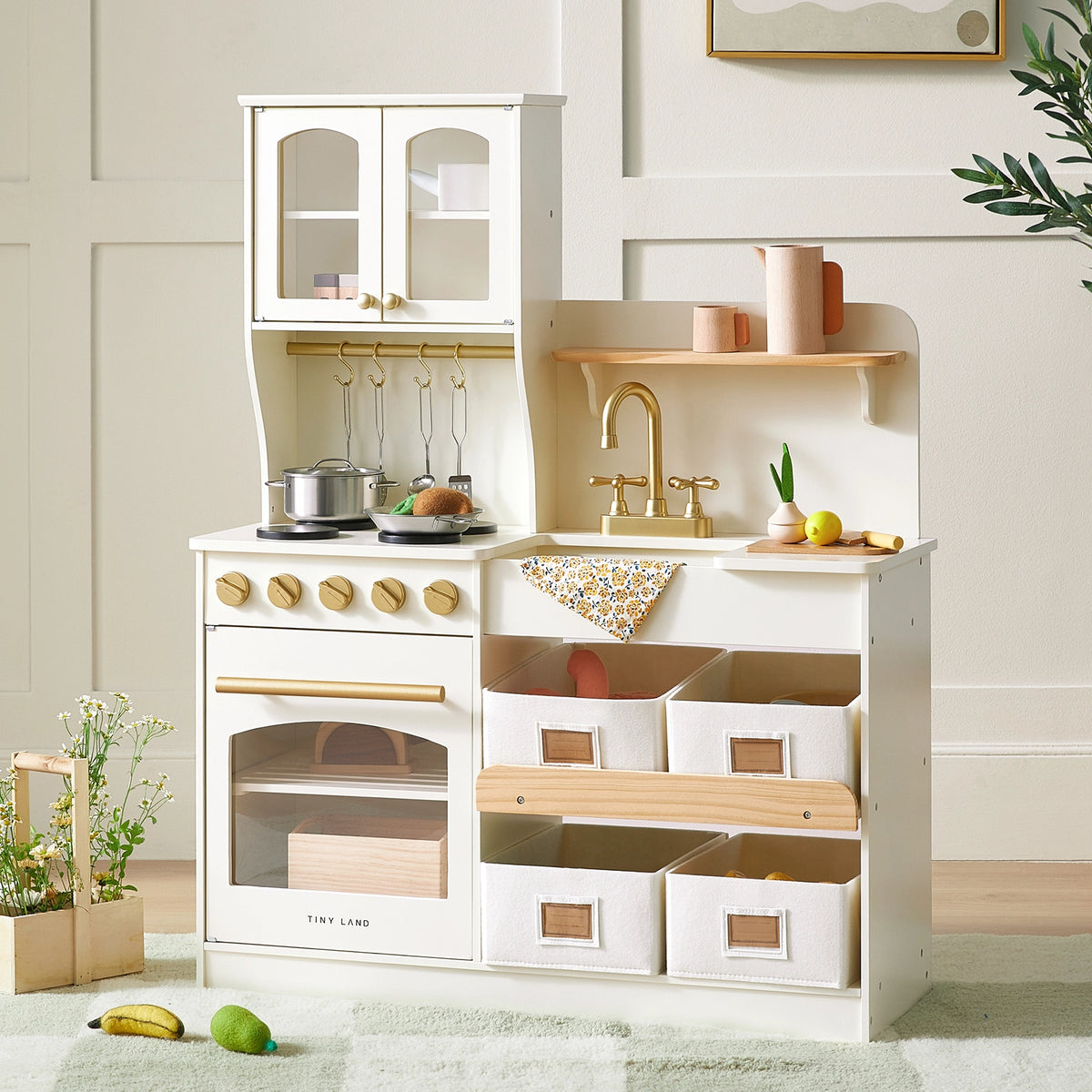
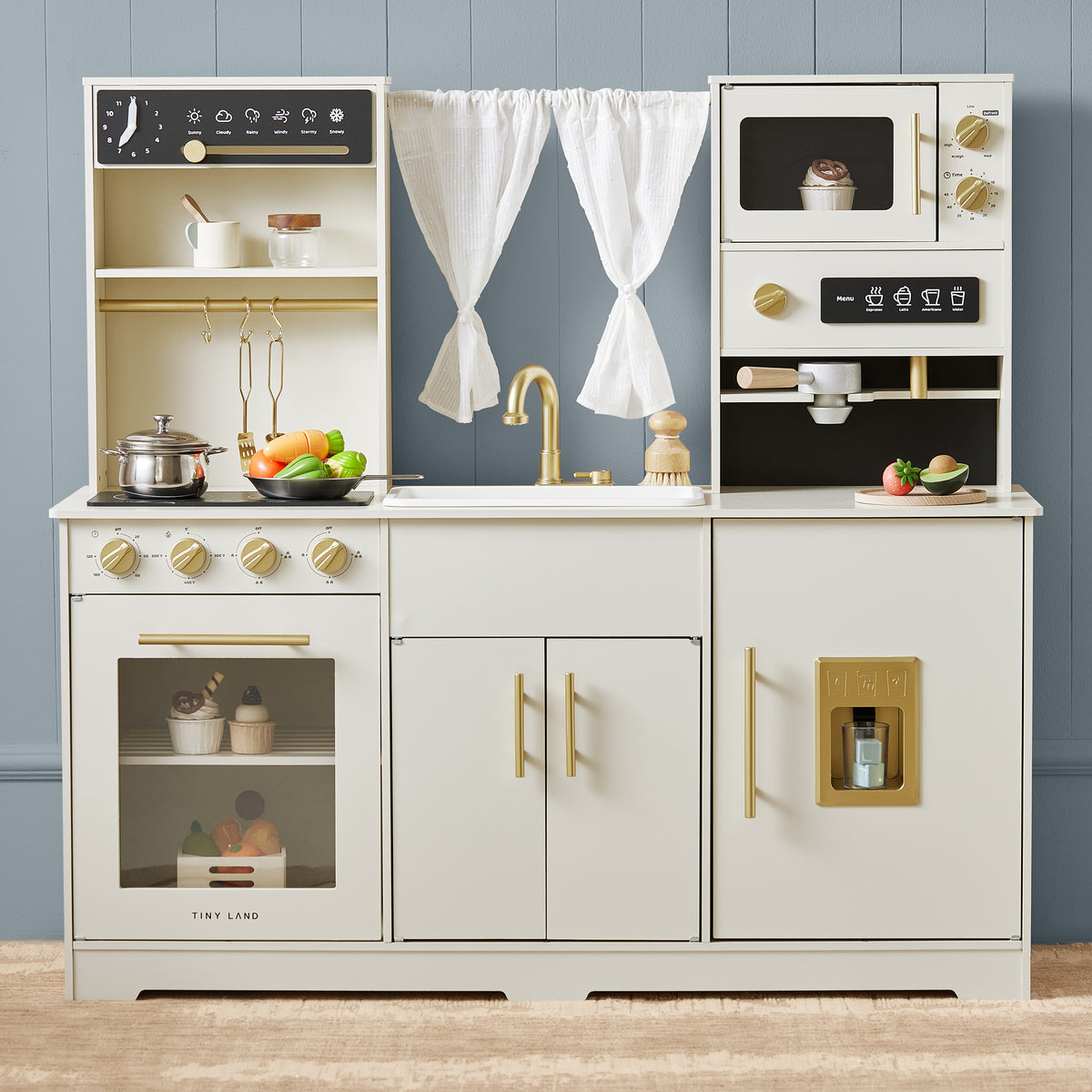
Cream: A warm cream finish can work beautifully with beige or oatmeal sofas, light walls, warm wood furniture, and soft neutral rugs. It offers a gentle alternative to bright white or highly saturated toy colors.
-
Natural wood: Oak- or birch-inspired tones are a natural fit for Scandi-inspired spaces, light wood furniture, and rooms with simple, organic materials.
-
Muted sage: Sage can introduce a little color without overwhelming a room. It pairs naturally with warm neutrals, wood tones, and understated contemporary décor.
The important detail is undertone. A warm cream may look harmonious beside a beige sofa, while a cooler white could feel noticeably different. If you are unsure, compare the kitchen's finish with the largest nearby furniture piece rather than choosing a color in isolation.

Silhouette and Materials: Look for a Furniture-Like Shape
Color is only part of the picture. The overall shape of a kitchen can make it feel more like a piece of furniture and less like a large toy.
Look for a straightforward outline, balanced proportions, and details that do not compete for attention. Wood or wood-look surfaces, simple cabinet fronts, and restrained hardware can help create a calmer appearance.
A more elaborate play kitchen may still be a good choice for a dedicated playroom. In a living room, however, consider how the doors, shelves, decorative details, and overall shape will look from the sofa.
A useful question is: if the kitchen is not being used, does it still look like it belongs in this corner?

Footprint and Height: Measure Beyond the Product Listing
A kitchen can look compact online and feel much larger once it is placed beside a sofa.
Check the product's width, depth, and height before deciding where it will go. Depth deserves particular attention because a kitchen that projects too far into the room can interrupt a walkway.
As a starting point, a depth around 13–14 inches or less may be easier to accommodate in a smaller living room. This is a planning reference, not a universal size limit. The right dimensions depend on your room layout and the space your family needs to move comfortably.
Also consider the relationship between the kitchen and nearby furniture. A very tall kitchen may dominate a low seating area, while a shorter design may feel more integrated. Measure the available wall space and compare the kitchen's height with nearby furniture before making a decision.

Storage That Hides Playtime Clutter
A kitchen can have a beautiful finish and still make a room feel messy if accessories are always scattered around it.
Storage is therefore part of the design, not just a practical extra.
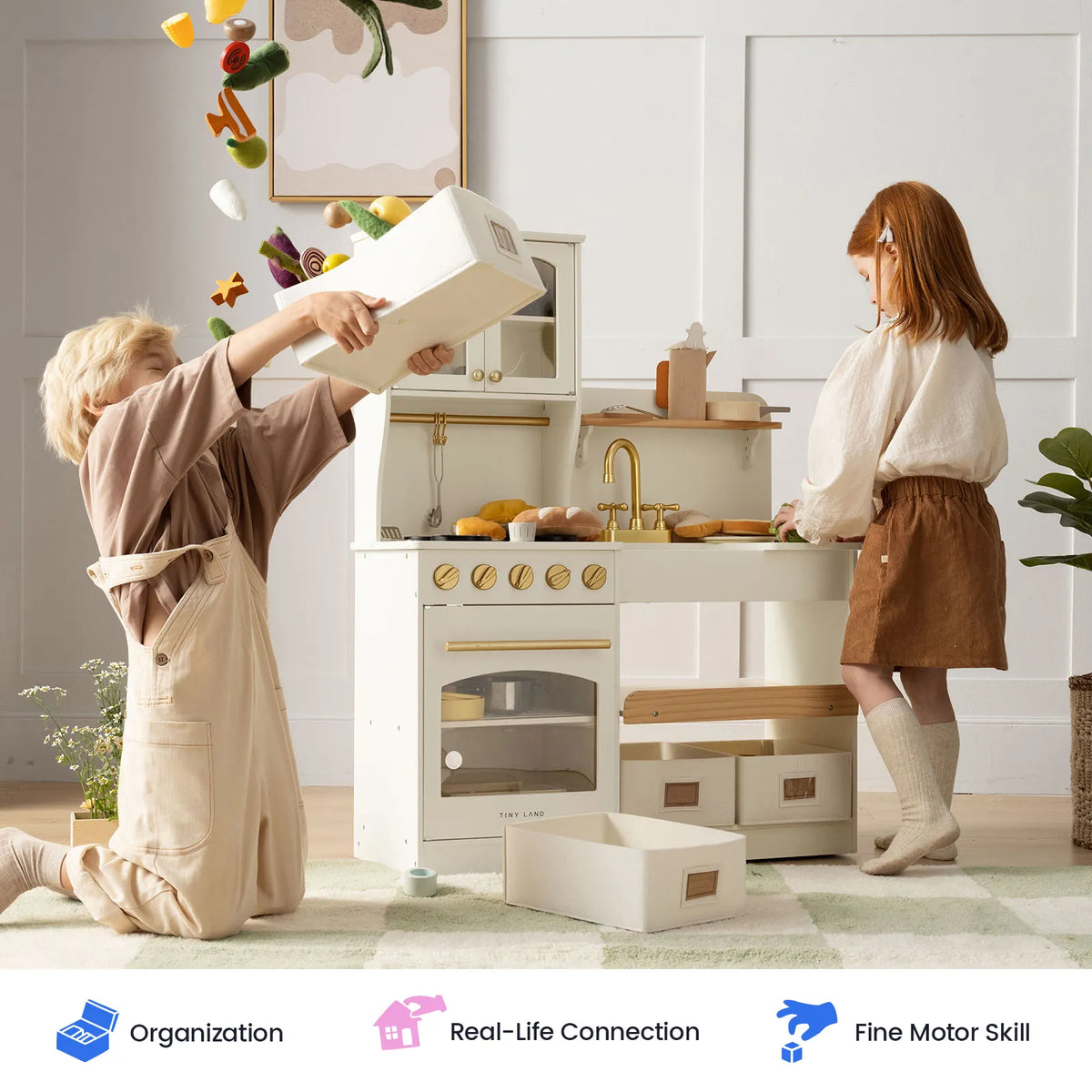
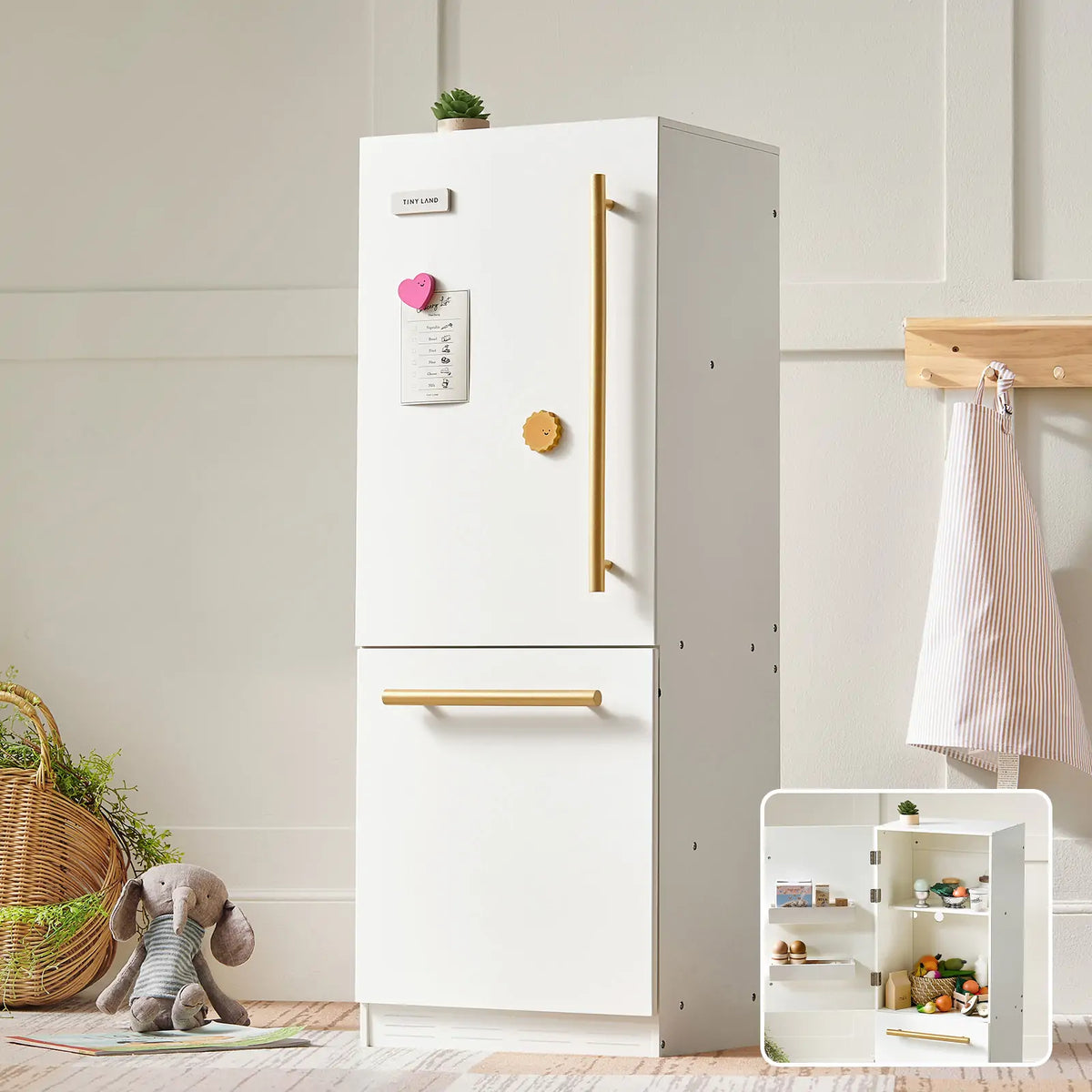
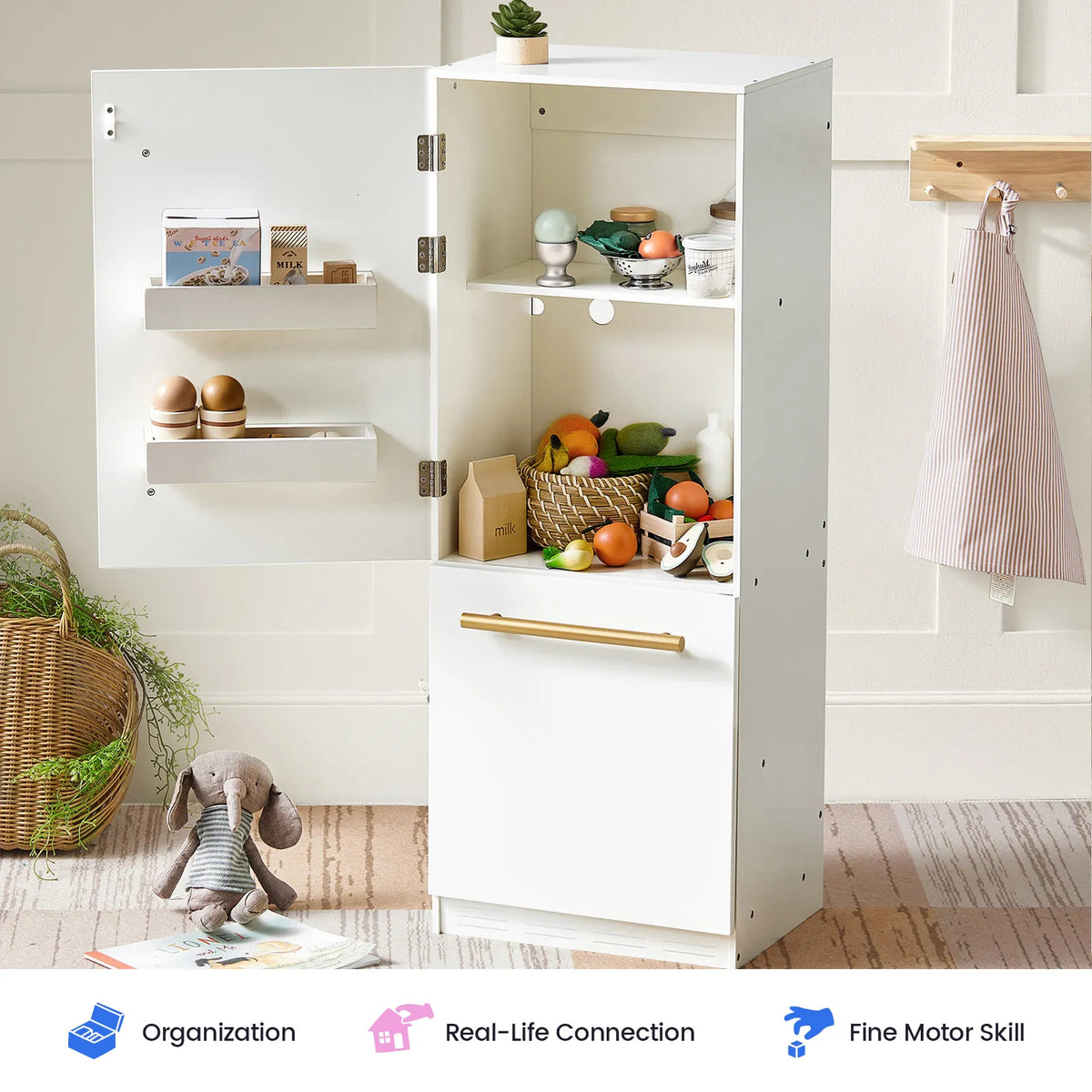
Cabinets, bins, shelves, hooks, and a matching refrigerator can give pretend food and utensils a place to go. Closed storage is particularly useful when you want the play area to look calmer after playtime.
Open shelves can be attractive, too, but they work best when you are comfortable keeping only a few items on display.

Cream vs. Natural vs. Modern Color: Which Fits Your Room?
There is no single finish that works for every home. The best choice depends on the furniture, flooring, wall colors, and overall feeling of your living room.
| Your living-room style | Finish to consider | Why it may work |
|---|---|---|
| Cottage-inspired or warm neutral | Cream | Softens into beige, warm white, and natural textures |
| Scandi or light-wood interior | Natural wood | Echoes oak, birch, and simple organic materials |
| Contemporary or understated modern | Muted sage or soft color | Adds personality without relying on bright primary colors |
Choose cream for a softer, coordinated look. If your living room has a beige sofa, warm wood accents, woven baskets, or light walls, a cream play kitchen can blend into the palette without disappearing completely.
Choose natural wood for a lighter, more organic look. Natural finishes can feel especially at home alongside pale oak furniture, simple shapes, and neutral textiles.
Choose sage when you want a little more character. A muted green can add color while still feeling calm. Details such as gold-tone accents may also suit a more contemporary room.
Cream is not automatically better than natural wood, and neutral does not have to mean colorless. The best approach is to match the kitchen's undertone and overall style to the largest pieces already in the room.
Is a cream play kitchen better for home décor?
Cream is popular because it can blend with beige sofas, warm woods, and light walls more easily than a brightly colored plastic kitchen. But it is not automatically better than natural wood.
Cream often suits cottage-inspired or warm-neutral rooms, while natural wood can be a better match for Scandi or light-oak interiors. Compare the finish with your largest nearby furniture piece before choosing.

How to Style a Play Kitchen Corner So It Doesn't Look Like a Toy Pile
A thoughtfully chosen kitchen is a good starting point. A few simple styling decisions can help the entire corner feel connected to the rest of the living room.
1. Use a Rug to Define the Play Area
A small rug can visually separate the kitchen corner from the rest of the room without adding a wall or bulky divider.
Choose a rug that works with your existing palette. A simple neutral pattern or a soft texture can make the area feel intentional while giving the kitchen its own place.
Make sure the rug stays flat and does not create a tripping hazard. Keep the kitchen stable on the surface and follow the product's placement and assembly instructions.
2. Give Accessories a Home
Instead of leaving every pretend ingredient and utensil on display, choose one or two baskets for the extras.
A basket beside the kitchen can hold play food, while a cabinet or bin can store smaller accessories. If the kitchen has built-in storage, use it before adding more containers to the room.
The goal is to make cleanup easy enough that it becomes part of the everyday routine.
3. Keep the Countertop Edited
A kitchen counter does not need to display every accessory that comes with the set.
Choose a small group of items for the countertop, such as a few pieces of wooden play food or a favorite utensil. Put the rest away until the next play session.
For families who want to add to their pretend-food collection, explore wooden play food and accessories that suit the scale and style of the kitchen.

4. Create a Simple Reset Routine
A two-minute reset at the end of playtime can make a noticeable difference.
Return food to its basket, place utensils in their storage spot, and clear the countertop. Children can take part in this routine as they become comfortable with the idea that every accessory has a home.
How do I keep a living-room play kitchen from looking messy?
Treat storage as part of the design. Choose cabinets, bins, or a matching fridge for accessories; keep only a small selection of play food on the counter; store overflow in one or two baskets; and finish with a quick two-minute reset.
A play kitchen looks more at home when its accessories have a place to go.

Size Guide for Apartments and Open-Plan Living Rooms
The right size depends on how much room you have, how the kitchen will be used, and whether you want it to stand alone or become part of a larger play area.
A compact single kitchen
A smaller kitchen can be a practical choice for apartments, condos, and living rooms where floor space is limited. It gives children a dedicated pretend-cooking area without requiring a long stretch of wall.
Before choosing one, measure the available width and depth, including the space needed for a child to stand and play comfortably.
A kitchen with a matching refrigerator
A kitchen-and-fridge combination creates a more complete pretend-play setup. It may suit a larger open-plan room where you have enough wall space to arrange the pieces together.
Measure the full arrangement rather than looking only at the kitchen's dimensions. Leave room for cabinet doors and refrigerator doors to open, and make sure the setup does not narrow a walkway.
A slim, dual-mode kitchen
For a smaller room, a design with a relatively shallow footprint can offer more flexibility. A dual-mode setup may also give children different ways to use the same play space.
This can be a useful option when you want the kitchen to offer varied play possibilities without taking up the floor space of a much larger arrangement.

Features Worth Paying For Once the Look Is Right
Once the finish, footprint, and storage work for your home, consider the features that will make the kitchen enjoyable to use.
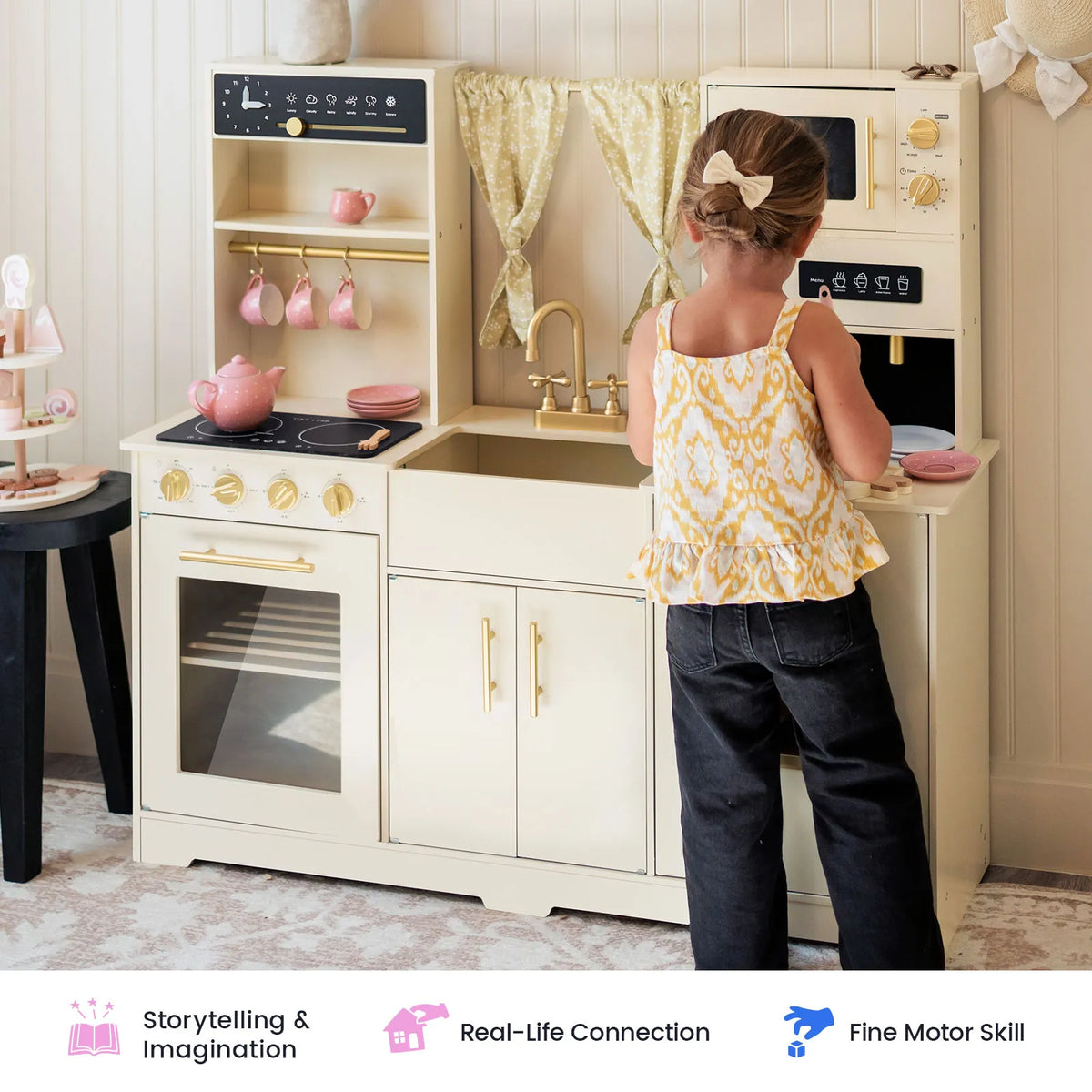
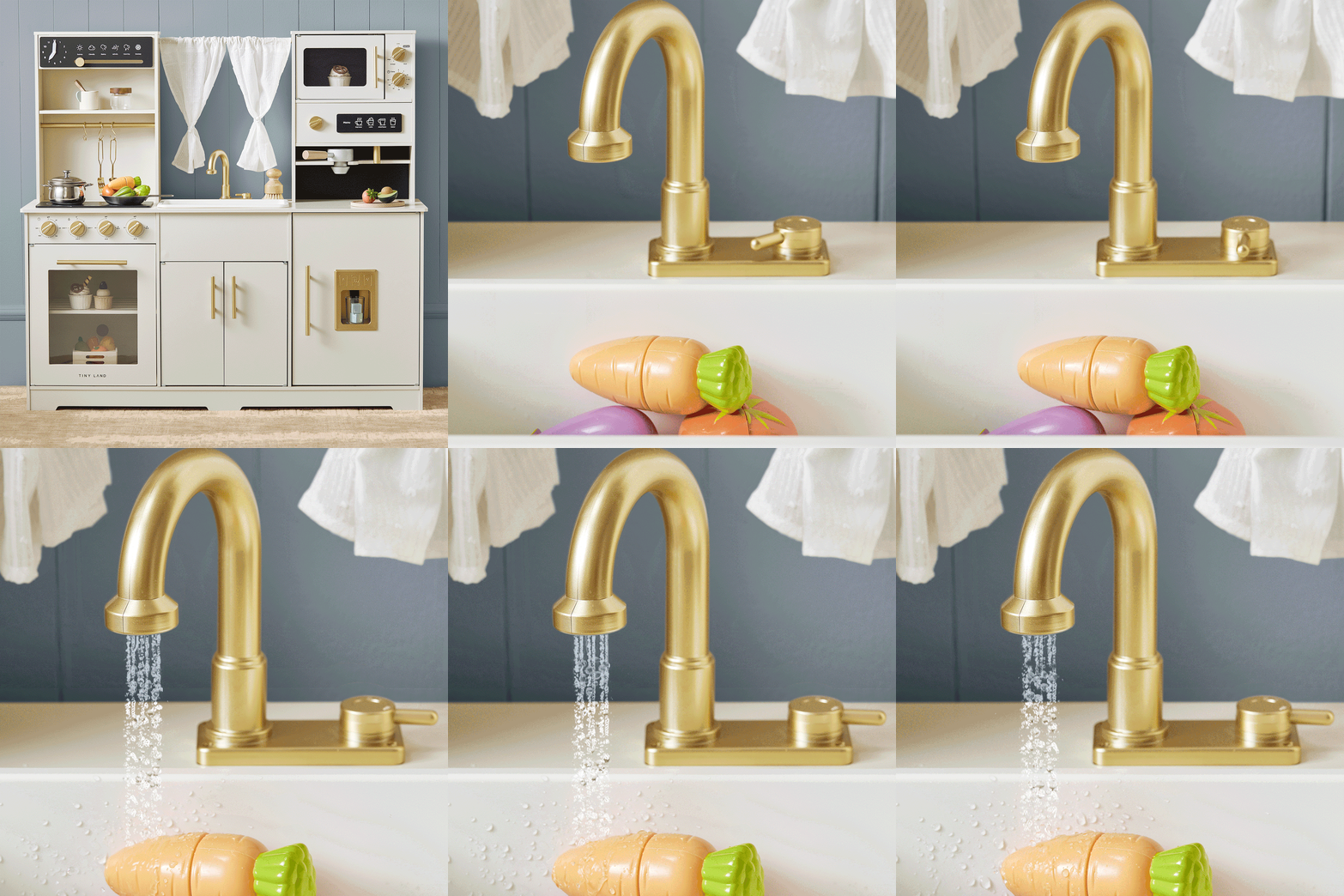
Look for details that support everyday pretend play: turning knobs, an accessible sink, opening doors, and storage that children can reach. These features can give children more ways to create their own cooking routines and imaginative scenarios.
Accessories can add variety, but a longer accessory list is not automatically better. Think about whether the included pieces are useful, easy to store, and suited to the way your child plays.
If you are comparing materials as well as appearance, our guide to wooden vs. plastic play kitchens explores that decision from a different angle.
And if your main priority is choosing by age, play features, or overall functionality, our guide to play kitchens for toddlers follows that separate buying path. This living-room guide focuses instead on finish, proportions, storage, and how a kitchen fits into a shared home.

Safety Notes When the Kitchen Lives Beside the Sofa
A play kitchen in a shared room should be placed with everyday movement in mind.
-
Follow the assembly instructions. Assemble the kitchen according to the manufacturer's directions, and check that all parts are properly secured before use.
-
Use wall anchoring when instructed. If the product includes an anti-tip device or the instructions call for wall attachment, follow the supplied guidance and use the appropriate hardware for your wall.
-
Keep walkways clear. Avoid placing the kitchen where children or adults need to squeeze past it, especially near doorways and frequently used paths.
-
Check the surrounding space. Make sure doors, drawers, and accessories can be used without creating an obstruction.
-
Choose age-appropriate play. Follow the product's stated age guidance and supervise children as appropriate.
Tiny Land product pages provide safety and product information for individual models, including applicable standards and documentation such as ASTM F963 and CPC information.
Check the specific product page and instructions for the model you are considering. No design choice replaces correct assembly, suitable placement, and following the manufacturer's safety guidance.
It is also worth being realistic about setup. Larger kitchens may take more time to assemble, so review the product instructions and allow enough time before introducing the kitchen into your living space.

Aesthetic wooden kitchen “profiles” (not a ranked best-of)
Rather than looking for one kitchen that is best for every home, start with the style and layout that match your space.
1. The Compact Natural Wood Kitchenette
A good fit for: Apartments, smaller living rooms, and families looking for a more compact play kitchen with a natural wood look.
With its 22.6-inch length and 12.3-inch depth, this kitchenette takes up less floor space than a larger play kitchen. Its smaller footprint makes it worth considering for apartments, shared living spaces, or a play corner beside the sofa.
Tiny Land's Honey Kitchenette Pretend Cooking Set is one example of this compact style. It features interactive clicking knobs, a removable-lid storage box, and an 11-piece accessory set with pretend food and cookware. The natural wood look and simple kitchenette shape offer a more understated option for homes where floor space is limited.

2. The Storage-First Cream or Sage Kitchen
A good fit for: Smaller shared spaces, families who want accessories organized, and rooms where visual clutter is a concern.
When a play kitchen lives in the living room, storage can matter as much as the finish. A design with bins and cabinet space makes it easier to put away pretend food and smaller pieces.
Tiny Land's wooden play kitchen with storage offers a more compact profile, with color options listed on the product page such as cream and sage. Its storage bins make it a useful example of a kitchen where organization is part of the design.
Check the live listing for currently available colors and dimensions, as product options may change.

3. The Cream Kitchen-and-Fridge Wall
A good fit for: Open-plan living rooms with a dedicated wall or a wider play corner.
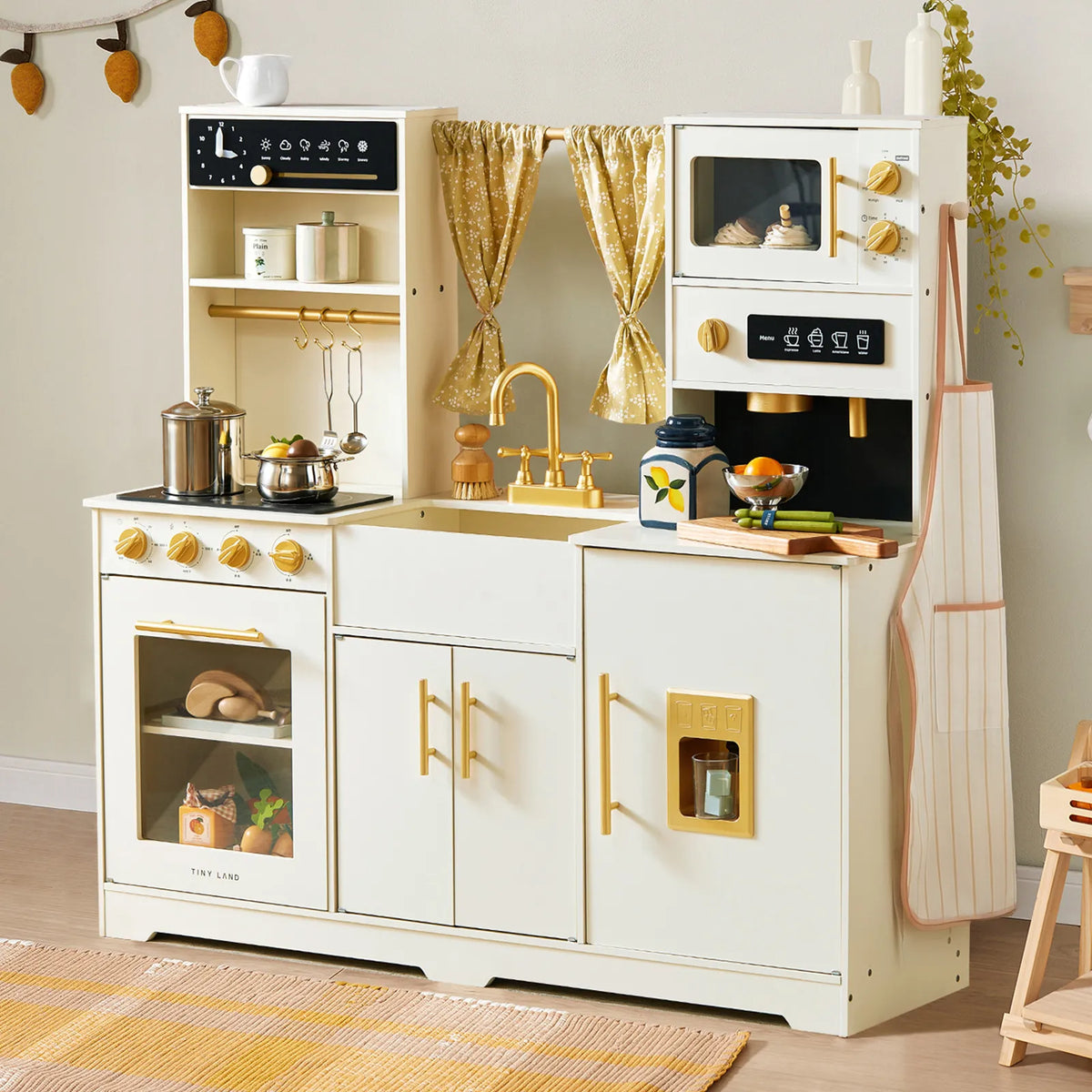
If you have more space, a kitchen paired with a matching refrigerator can create a cohesive play area. The two pieces can look more intentional together than a collection of unrelated accessories.
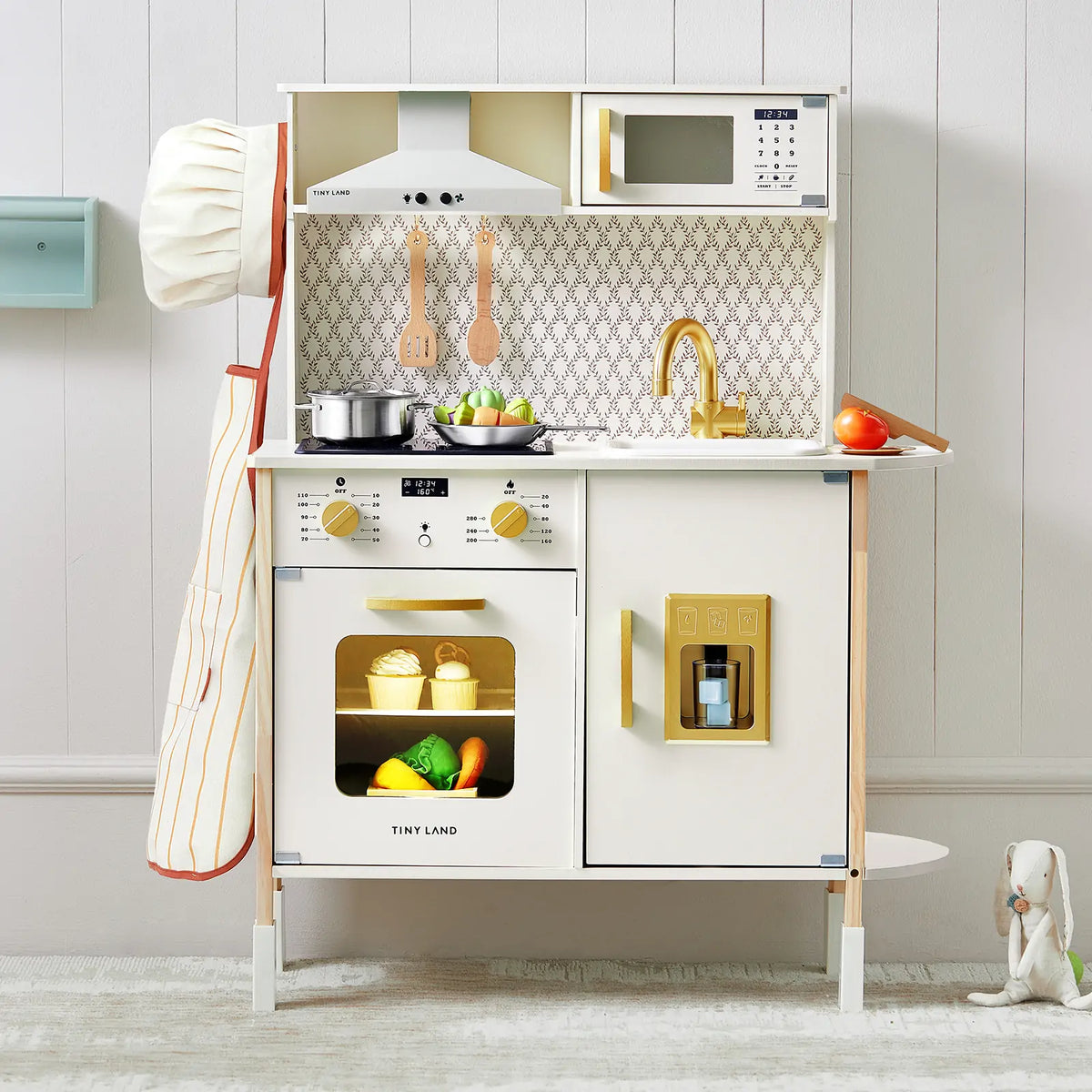
Tiny Land's Premium Play Kitchen with Fridge uses a soft cream look and modern curves. The Serenity Play Kitchen with Fridge is another cream-toned option, with gold accents and a storage-focused design.
For either arrangement, measure the complete setup before purchasing. Leave enough room for doors to open and for children to move around the play area without blocking the main walkway.

4. The Slim Modern Dual-Mode Kitchen
A good fit for: Contemporary rooms, smaller floor plans, and families who prefer a little color without a visually busy design.
A muted sage finish can bring personality into a neutral living room while remaining relatively understated. A slim profile is also worth considering when the available floor space is limited.
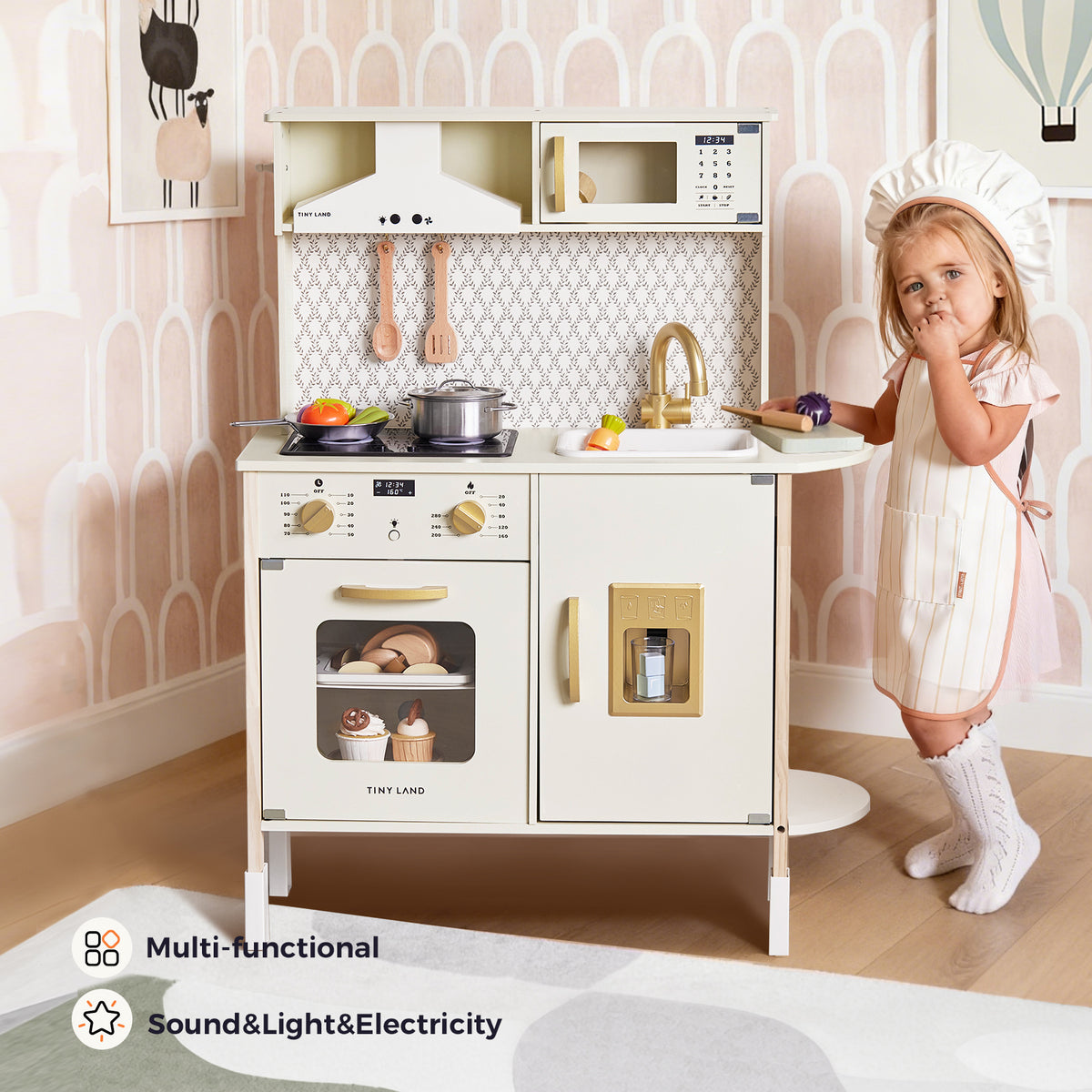
Tiny Land's BistroSwitch 2-in-1 play kitchen is an example of a modern, dual-mode design. Its sage-and-gold styling and relatively shallow footprint may suit families looking for a more contemporary look.
Compare the listed dimensions with your available space, and consider whether the kitchen's overall style works with the furniture and finishes already in your room.

FAQ: Choosing a Play Kitchen for Your Living Room
Can a play kitchen go in the living room?
Yes. A play kitchen can work in a living room when its size, finish, and placement suit the space. Choose a location that does not block a walkway, measure the available footprint, and use storage to keep accessories organized. A rug or a small basket can help define the play area without making it feel separate from the rest of the room.
Is a cream play kitchen better than a white one?
It depends on the room's color palette. Cream often has a warmer appearance that works well with beige sofas, warm wood, and soft neutral décor. White may suit a brighter or cooler palette. Compare the undertones with nearby furniture and walls rather than assuming one finish will always look better.
How much space should I leave around a play kitchen?
Start by measuring the kitchen's full footprint and the space needed to open its doors and use its accessories. Keep the main walkway clear and avoid placing the kitchen where people have to squeeze past it. The amount of space needed will depend on the room layout and the product's dimensions.
Are wooden play kitchens a better choice for shared spaces?
Wooden or wood-look kitchens can offer finishes and silhouettes that coordinate more easily with some living-room styles. But the material alone does not determine whether a kitchen will suit your home. Consider the color, proportions, storage, construction, and how the kitchen will be used.
How do I choose between a compact kitchen and one with a fridge?
Choose a compact kitchen if floor space is limited or you want a simple play corner. A kitchen with a matching fridge may work better when you have a wider wall area and want a more complete setup. Measure the entire arrangement, not just the main kitchen, before choosing.

Final Takeaway: Choose a Kitchen That Works for Both Playtime and Home
A living-room play kitchen does not have to feel like an interruption to your décor. With a little planning, it can become a natural part of the shared space.
Before choosing one, remember to:
-
Match the finish to your room. Consider cream for warm-neutral spaces, natural wood for Scandi-inspired interiors, and muted sage for a subtle modern accent.
-
Look at the silhouette. Simple lines and restrained details can help a kitchen feel more like furniture.
-
Measure the footprint. Pay attention to depth, height, and the walkway around the kitchen.
-
Make storage part of the decision. Cabinets, bins, and baskets help keep accessories from taking over the room.
-
Plan the play corner. Use a rug, keep the countertop edited, and create an easy cleanup routine.
The best choice is not necessarily the biggest kitchen or the one with the most accessories. It is the one that gives your child a welcoming place to play and fits comfortably into the home you share.
Explore Tiny Land's Play Kitchens collection to compare cream, neutral, and modern designs and find a style that works with your family's space.