




A mud kitchen can be one of the most inviting features in a backyard. But buying one and setting it up does not necessarily mean children will keep using it.
The first few days might be full of muddy pies, pretend recipes, and water-pouring experiments. Then the water tank runs dry, the utensils disappear into a storage box, and the kitchen gradually becomes part of the background.
What makes the difference?

Often, it is not more toys or a bigger play area. It is a setup that makes outdoor play easy to start, simple to reset, and interesting enough to revisit.
The best mud kitchen outdoor play setups are built around everyday habits: keeping water accessible, leaving favorite utensils within reach, rotating natural materials, and making cleanup manageable.
Whether you have a spacious backyard, a small patio, or a dedicated outdoor corner, these practical backyard mud kitchen ideas can help turn an outdoor kitchen into a play space children want to return to.
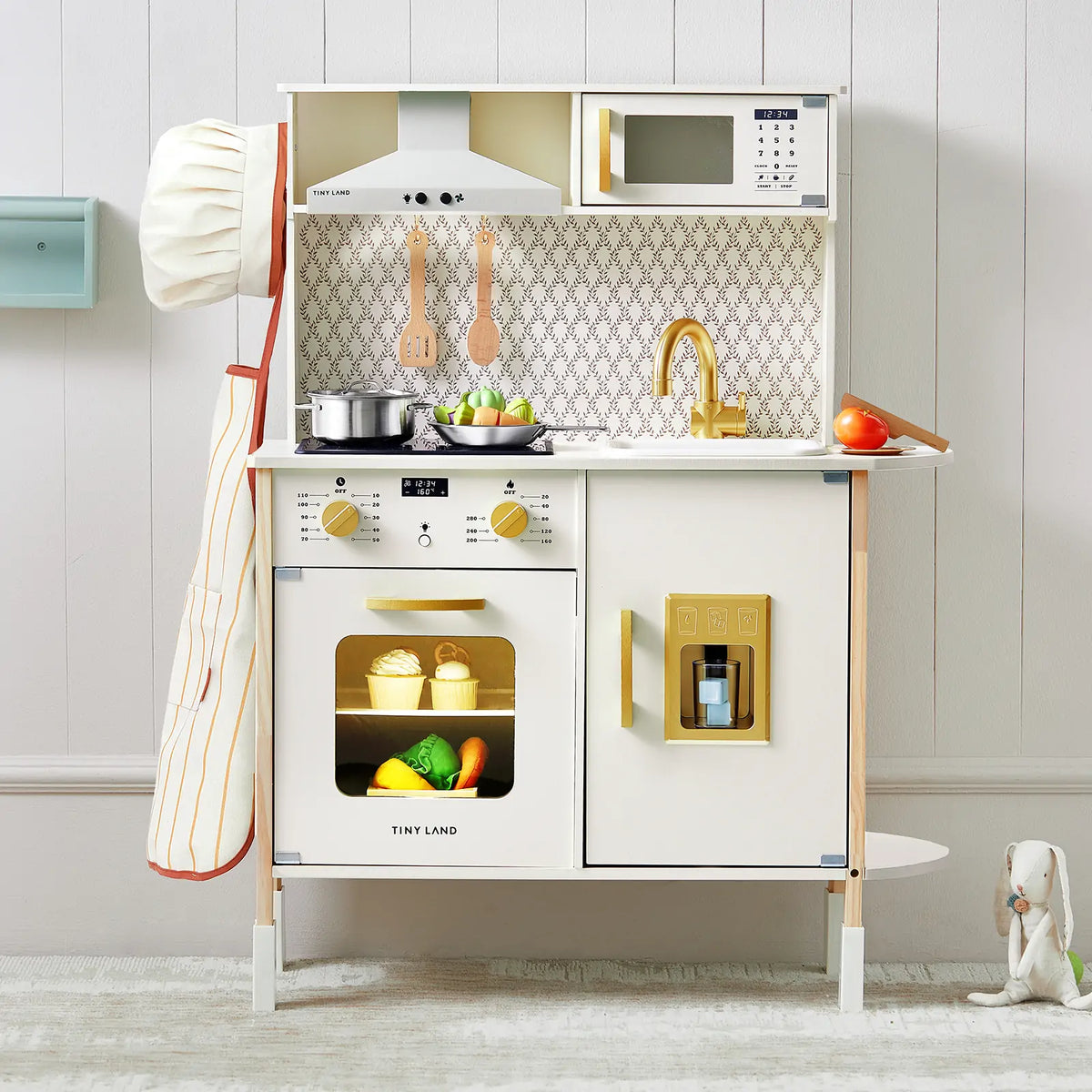
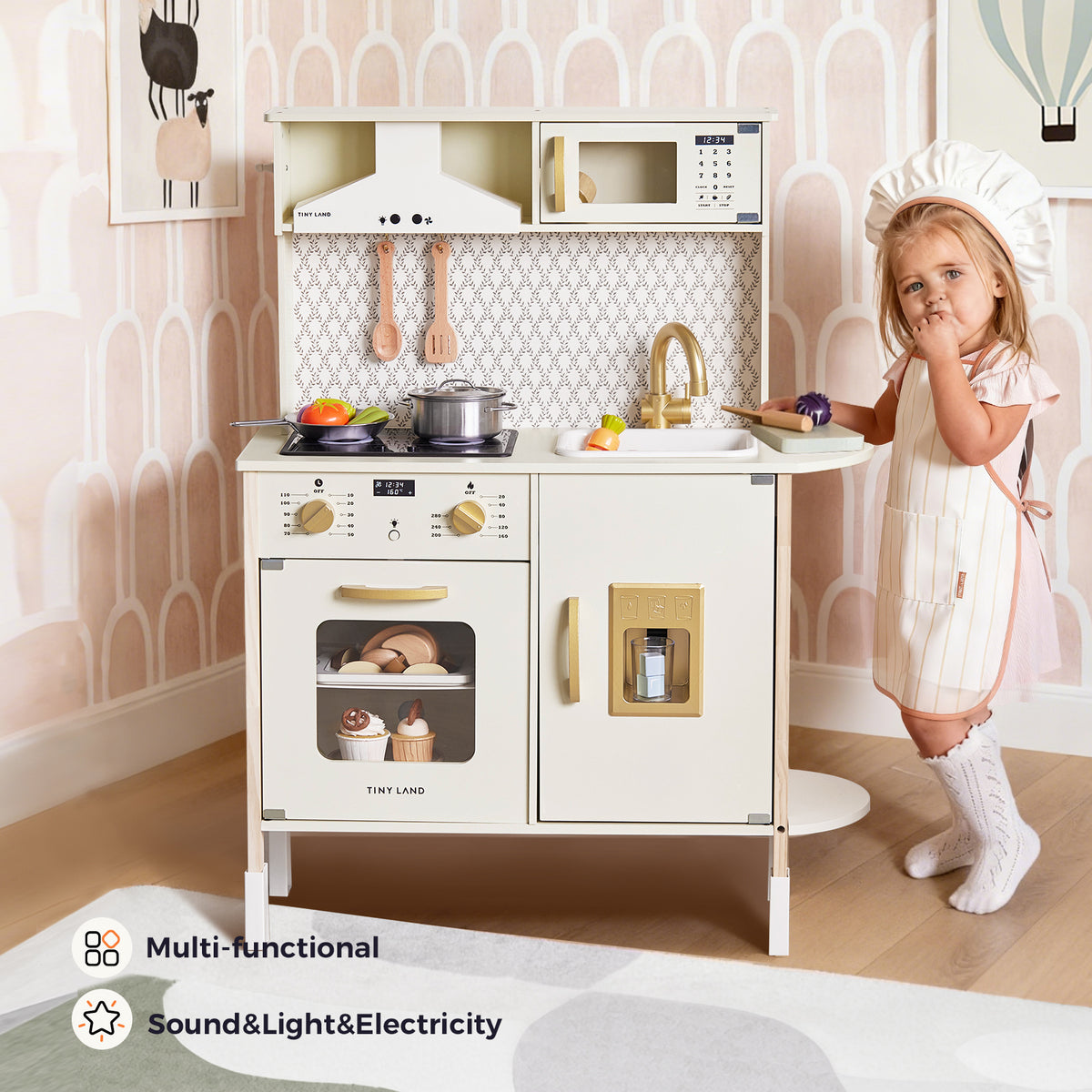
One distinction matters from the beginning: an outdoor mud kitchen is different from an indoor pretend play kitchen. This guide focuses on outdoor play with real water, soil, sand, and natural materials—not simply pretending to cook indoors.

Why Some Mud Kitchens Get Abandoned After Two Weeks
A mud kitchen may look exciting when everything is new. But small inconveniences can make children less likely to return to it.
Consider what happens when:
-
Water is inconvenient to access. Children need to wait for an adult to carry water outside or refill a container every time they want to play.
-
Favorite utensils are put away. Pots, scoops, and spoons are stored out of sight, so children cannot easily pick up where they left off.
-
Mess spreads beyond the play area. Soil and sand end up across the patio or lawn, making cleanup feel overwhelming.
-
The setup never changes. The same materials and activities are available every day, with little variation to spark a new idea.
-
Weather interrupts the routine. Rain leaves accessories wet, strong sun makes the area uncomfortable, or cold temperatures make water play impractical.
None of these problems necessarily means the mud kitchen was a poor choice. They often mean the setup needs a few practical adjustments.
Instead of creating a perfect-looking outdoor kitchen, focus on making one that is easy to use repeatedly.
If you are still planning the initial location and layout, see our guide to how to set up a mud kitchen at home. This article takes the next step: how to keep that setup useful after the first few play sessions.

Place It Where Play Already Happens
A mud kitchen does not have to occupy the biggest or prettiest corner of your backyard. It needs to be somewhere children can access easily and adults can supervise comfortably.
A few location considerations can make everyday use much more convenient.
Near a Hose, Spigot, or Easy Refill Path
Water is often one of the first things children look for when they approach an outdoor mud kitchen.
They may want to fill a pot, rinse a scoop, wash pretend vegetables, or mix soil with water to make mud.
If the kitchen is close to an outdoor faucet or garden hose, replenishing water becomes much easier.
If there is no convenient water connection, a refillable tank, watering can, or small water container can work just as well. The goal is to avoid making water access a complicated task before every play session.
For smaller patios, a manageable water supply is particularly useful, especially for toddlers. You can also place a waterproof mat underneath or nearby to help define the area where splashes are expected, and any open water used for play should be kept shallow.

Flat Ground With Room for Two Kids to Stand
A relatively level surface gives children a more practical place to work with pots, pans, and other accessories.
Think about the space around the kitchen, too. Children often move between the sink, stovetop, and storage area while playing.
If siblings or friends will share the kitchen, leave enough room for two children to stand alongside it without constantly reaching across one another.
A dual-zone arrangement can also give each child a different starting point, such as one area for water play and another for mixing ingredients.
Partial Shade for Longer Sessions
A little shade can make a backyard mud kitchen more comfortable during warmer months.
Consider a spot under a tree, beside a covered patio, or near an outdoor umbrella.
Partial shade can help protect the play area from prolonged direct sunlight. Remember to check surfaces and accessories before play, especially after extended exposure to the sun.
Close Enough to the House That You Will Actually Supervise
Convenience matters for parents as much as it does for children.
A kitchen near the patio, back door, or another frequently used outdoor area is easier to supervise during everyday activities, which helps it feel manageable for families with different routines.
You do not want every play session to require a separate trip to the far end of the garden.
A mud kitchen that is visible and easy to reach is more likely to become part of the regular outdoor routine for families.

Setup Ideas That Keep Kids Coming Back
Once the kitchen is in place, the next challenge is making it inviting enough for repeated use by supporting sensory play and imaginative outdoor use.
The following ideas focus on small, repeatable habits that support creativity and imagination rather than adding more and more accessories.
1. Always-Ready Water: Make Refilling Part of the Routine
A mud kitchen with water offers children more ways to experiment with their play materials and supports sensory play.
They can pour, rinse, stir, wash, and combine different ingredients, and children often enjoy scooping pouring, rinsing, and making a small splash when water is easy to use. But an empty water tank can bring those activities to a stop before they even begin.
Instead of treating refilling as a one-time setup task, make it part of your regular outdoor routine.
Try these simple habits:
-
Check the water supply before a planned play session.
-
Refill the tank when the water runs low.
-
Keep a watering can nearby for transferring water.
-
Empty or refresh water as appropriate and follow the manufacturer's cleaning instructions.
-
Check the faucet and surrounding area periodically.
A refillable water system makes this routine more convenient.
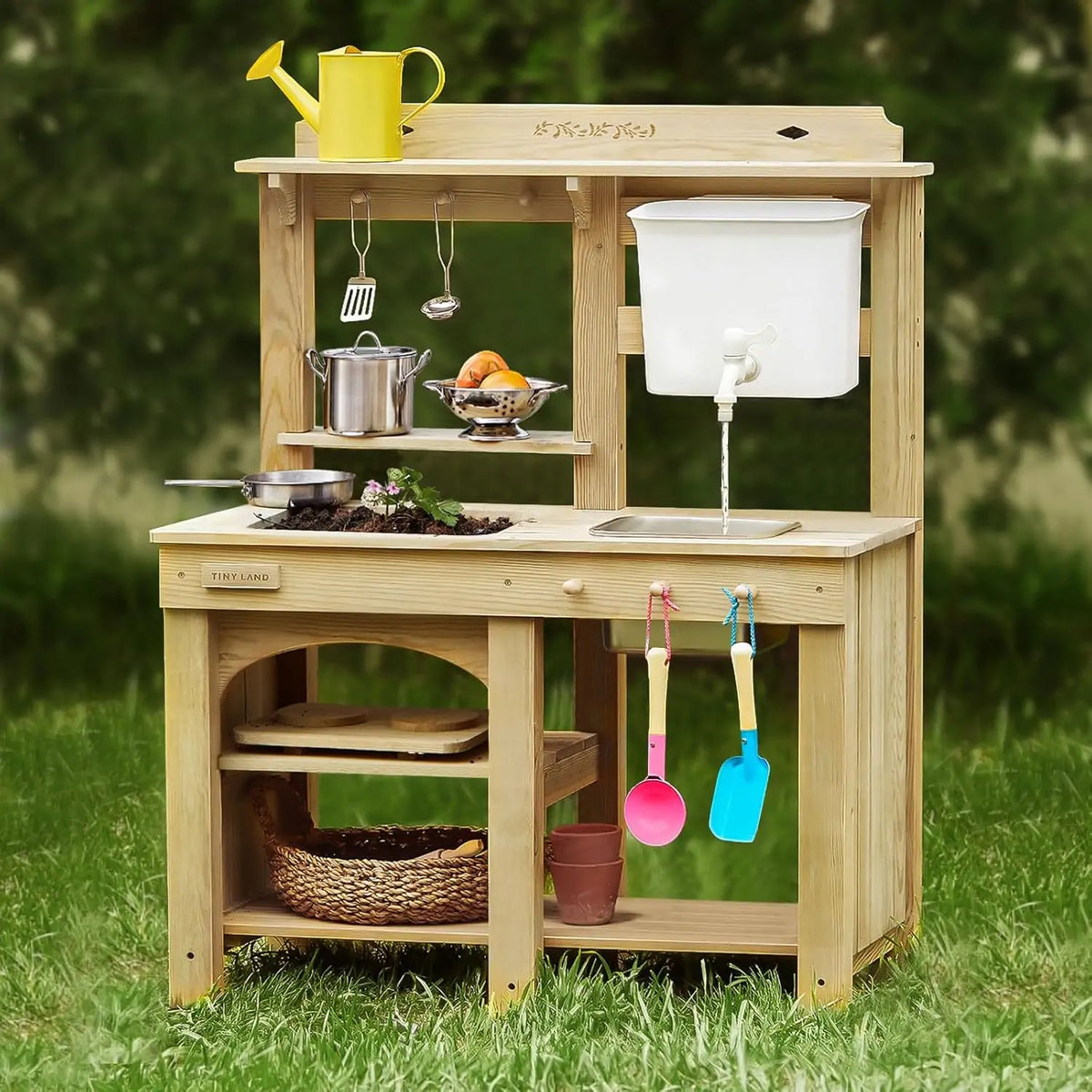
For example, the Tiny Land Mud Kitchen DuoPlay features a 4L water tank, a real working faucet, and a sink. Children can use the faucet for outdoor water activities without requiring a permanent plumbing connection.
The important part is not keeping the tank full around the clock. It is making sure water is easy to prepare when the next play session begins.

2. Create a "Yes Mess" Surface for Mud, Sand, or Soil
One of the easiest ways to make messy outdoor play more manageable is to decide where the mess belongs.
Rather than trying to prevent every spill, create a designated area for the materials children will use, since this kind of open-ended mess play can be especially good for boosting imagination.
A shallow container, sturdy bin, or defined section of the play area can hold soil or sand. Children can scoop materials into pots, mix them with water, and return unused materials to the designated container afterward.
You can keep the selection simple:
-
Soil for making pretend mud pies.
-
Sand for pouring and filling containers.
-
Water for mixing and rinsing.
-
Small, suitable stones for decorating pretend creations.
You do not need to provide every material at once.
For a small patio, a washable mat underneath the work area and a storage container for loose materials can help keep the mess more contained.
This approach gives children room for imaginative play and exploration while making it easier for adults to manage the surrounding space.

3. Keep a Nature Basket on a Hook or Low Shelf
Natural materials are an easy way to introduce variety without constantly purchasing new play accessories, and in a highly sanitized world, regular soil contact while handling outdoor materials may even be linked to lower allergy risk.
Set aside a small basket or container for suitable outdoor finds. Keep it somewhere children can see and reach with adult guidance.
Depending on the season, you might include:
-
Fallen leaves in different shapes and colors.
-
Flower petals from safe, non-toxic plants.
-
Small sticks and pinecones.
-
Smooth, appropriately sized stones.
-
Suitable herbs or garden clippings.
The trick is to rotate the basket regularly rather than filling it with everything the garden has to offer.
For example, a weekly swap might look like this:
-
One week: leaves and small sticks.
-
The next week: suitable flower petals and herbs.
-
Another week: pinecones and smooth stones.
A familiar mud kitchen can feel different simply because the materials on the shelf have changed.
Always check natural materials for sharp edges, choking hazards, dirt contamination, and potentially poisonous plants. Choose materials appropriate for the child's age and supervise their use.

4. Create Two Clear Stations for Siblings and Friends
When two children share a mud kitchen, the goal is not to eliminate every disagreement. It is to make it easier for both children to participate.
One practical approach is to give each child a different activity area.
For example:
Water and Washing Station
-
Filling containers.
-
Washing play utensils.
-
Rinsing pretend vegetables.
-
Pouring water between cups and pots.
Mixing and Preparation Station
-
Combining soil and sand.
-
Scooping ingredients.
-
Making pretend mud pies.
-
Arranging leaves and other natural materials.
The activities can overlap, but having two clear starting points gives children more room to play alongside each other.
A dual-zone tabletop can help support this arrangement.
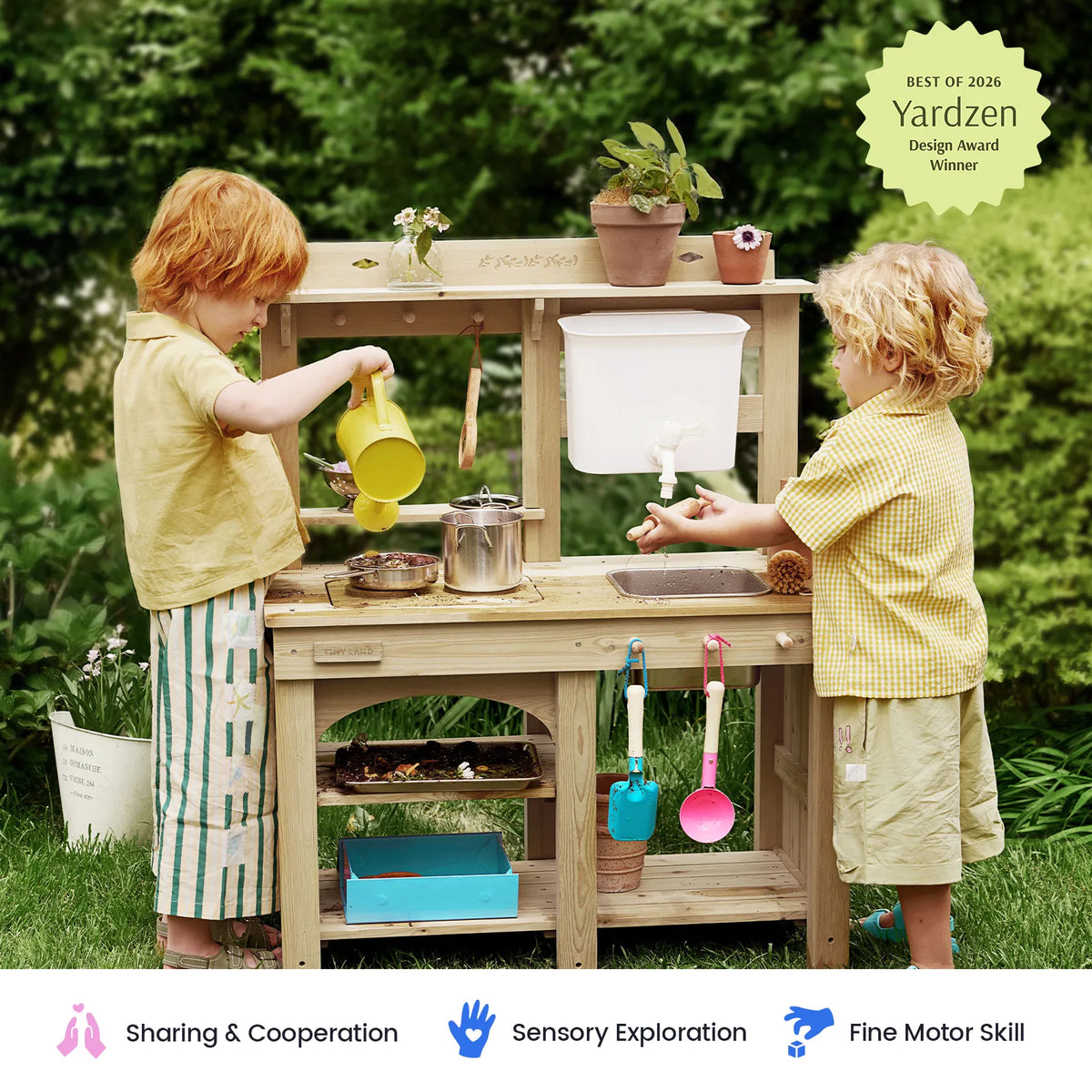
Tiny Land's Mud Kitchen DuoPlay features a dual-zone layout with a sink, stovetop, and bottom storage shelf. It provides separate areas for different activities while keeping the kitchen within one compact outdoor setup.

5. Keep Utensils Visible on Hooks
Out of sight often means out of mind.
If children have to ask an adult to retrieve their favorite spoon or search through a storage box for a scoop, getting started becomes less convenient.
Keep frequently used accessories in consistent, visible locations.
A practical selection might include:
-
A soup pot.
-
A colander basket.
-
A stir-fry pan.
-
A spatula and ladle.
-
A trowel and scoop.
-
A watering can.
Hooks for utensils are useful for hanging lightweight tools and towels, while shelves can hold larger items; for overflow accessories not kept there, storage options include stackable crates and labeled bins.
The key is to avoid overcrowding the kitchen. A few familiar tools are easier to find, use, and put away than a large collection of accessories scattered across the work surface.
Tiny Land Mud Kitchen DuoPlay includes hanging hooks and double-layer storage, giving frequently used tools and other play accessories designated places.

A Weekly Rhythm Beats a Perfect Pinterest Setup
A mud kitchen does not need to be completely reorganized after every play session.
In fact, the easier it is to maintain, the more likely it is to remain part of your everyday outdoor routine and continue supporting children’s creativity over time.
A few minutes of preparation can make the next play session easier to start. Instead of treating maintenance as a major household chore, think of it as a small weekly reset.
Sunday: Refill and Rinse
Start the week with a quick check of the kitchen.
-
Check and refill the water tank when appropriate.
-
Rinse reusable utensils and containers.
-
Return pots and scoops to their usual places.
-
Remove old or unsuitable natural materials.
-
Check the surrounding play area for debris.
You do not need to make everything look brand new. Just make sure the essentials are ready for the next session.
Midweek: Swap the Nature Basket
A small change can make a familiar setup feel different.
Replace a few leaves, introduce suitable flower petals, or add some new natural materials from the garden. Spring swaps can also include simple gardening items such as seed pods or child-safe garden clippings, keeping in mind that gardening changes slowly over time.
You can also change which materials are available. For example, offer sand one day and soil another day rather than keeping everything out at once.
This keeps the setup interesting without requiring a constant supply of new toys.
After Rain: Tip Water and Air-Dry Accessories
Rain can change the condition of an outdoor play area quickly.
Once the weather clears, take a moment to:
-
Check and empty standing water where appropriate.
-
Inspect the water tank and basin.
-
Allow removable accessories to air-dry.
-
Remove wet natural materials that have started to deteriorate.
-
Check the ground for slippery surfaces and debris.
Do not assume that everything is ready to use immediately after rain. A quick inspection and reset can help prepare the kitchen for the next suitable play session.

Seasonal Swaps: Summer Water Play vs. Fall Leaf Kitchens
Seasonal changes are another easy way to keep outdoor play interesting.
Summer: Water and Washing
Keep the water supply accessible and offer activities such as pouring, rinsing, mixing, and other sensory play. Provide shade and supervise water play.
Fall: Leaf and Garden Kitchens
Introduce suitable fallen leaves, pinecones, and seasonal colors. Children can use them as pretend ingredients for outdoor recipes.
Spring: Flower and Herb Kitchens
Offer safe, non-toxic petals, herbs, and garden materials for pretend salads, soups, and other creations, supporting imaginative play and simple gardening interest.
Winter: Weather-Appropriate Play
On mild days, dry natural materials can offer a seasonal alternative. During freezing temperatures, storms, or other unsuitable conditions, pause water play and protect the kitchen.
You do not need to redesign the kitchen for every season. A small change in the materials available can be enough.

Weather, Mess, and Cleanup Without Killing the Fun
An outdoor mud kitchen is supposed to get messy. The goal is not to keep it spotless but to make the mess manageable and protect the equipment between play sessions.
What Can Stay Outside and What Should Be Covered?
Some outdoor kitchen components are designed for outdoor use, but exposure to weather still requires sensible care.
A few practical guidelines:
-
Store removable accessories somewhere dry when they are not in use, especially if they can collect water.
-
Follow the manufacturer's instructions for cleaning and maintaining the water tank and basin.
-
Consider a suitable protective cover during prolonged heavy rain or snow.
-
If possible, place the kitchen in a sheltered area during severe weather.
-
Inspect wooden components periodically for signs of wear.
Tiny Land Mud Kitchen DuoPlay is made from ACQ-treated pine wood with 12mm panels. These are product construction features intended to support its outdoor-play design, but they do not mean the kitchen is maintenance-free.
Reasonable weather protection and regular care remain important.

Set Easy Cleanup Boundaries
You do not need a complicated cleanup station.
A few everyday items can make a difference:
Old towels: Keep one nearby for wiping hands and surfaces.
Rinse bucket: Use it for washable utensils and containers.
Shoe zone: Designate a spot for muddy shoes before children head indoors.
Storage container: Give loose accessories a place to return to after play.
Small brush: Keep one available for removing loose soil from the surrounding area.
A predictable cleanup routine also helps children know what happens when play is finished.
With adult guidance, they can help return utensils, rinse suitable accessories, and leave the work surface ready for another day.
When to Pause Water Play
Water activities should always be supervised by an adult.
Pause outdoor water play during thunderstorms, freezing conditions, or other unsafe weather.
Do not leave children unattended around water containers or tanks. Empty or manage standing water appropriately, and follow the product's care instructions.
When water play is not practical, the kitchen can still be used with suitable dry materials such as leaves, soil, or sand.
Keeping the setup flexible makes it easier to adapt to changing weather without abandoning the kitchen altogether.

Indoor Play Kitchen vs. Outdoor Mud Kitchen: A Quick Boundary
Indoor play kitchens and outdoor mud kitchens may share a kitchen-inspired design, but they serve different purposes.
|
Indoor Play Kitchen |
Outdoor Mud Kitchen |
|---|---|
|
Designed for indoor pretend cooking |
Designed for outdoor messy play |
|
Uses pretend food and kitchen accessories |
Uses water, soil, sand, and suitable natural materials |
|
Fits playrooms, bedrooms, and living spaces |
Fits backyards, patios, and outdoor play areas |
|
Can be used regardless of outdoor weather |
Play activities depend on weather and outdoor conditions |
|
Focuses on indoor role-play scenarios |
Provides a space for hands-on outdoor exploration |
An indoor wooden play kitchen is a natural fit for children who enjoy pretending to prepare meals, serving play food, and recreating familiar kitchen routines.
An outdoor mud kitchen offers a different kind of experience. Children can pour water, scoop soil, mix sand, and create pretend recipes using materials from the garden.
Neither needs to replace the other. The choice depends on the type of play you want to make available.
If you are looking for a space for water, soil, sand, and outdoor messy play, an outdoor mud kitchen is the relevant option.

Tiny Land Mud Kitchen DuoPlay: Features That Support Real Everyday Use
A thoughtful setup can make a mud kitchen easier to revisit, but the kitchen itself should also be thoughtfully designed for real everyday use and support the activities children want to do.
The Tiny Land® Mud Kitchen – DuoPlay combines a refillable water system, a sensory basin, accessible storage, and a dual-zone layout in one outdoor play station.
Here is how its features connect to everyday use.
A 4L Water Tank and Real Working Faucet
The 4L water tank and working faucet bring running-water-style activities into the backyard without requiring a permanent plumbing connection.
Children can use the sink for washing, pouring, and other pretend kitchen activities.
For parents, the refillable design provides a convenient way to prepare the water supply before play.
A Stovetop That Transforms Into a Stainless Steel Sensory Play Basin
The stovetop lid can stay in place for pretend cooking or be removed to reveal a stainless steel basin.
This gives the kitchen another way to be used.
The basin can hold suitable sand, soil, and other sensory materials for digging, mixing, and exploring different textures.
Instead of dedicating the entire work surface to one activity, the kitchen can be adapted to different play ideas.
ACQ-Treated Pine Wood and 12mm Panels
The kitchen is crafted from pine wood with ACQ treatment and 12mm-thick panels.
These construction details are intended to support repeated outdoor adventures, not just an outdoor-oriented design. As with any wooden outdoor play equipment, regular inspection and appropriate weather care are still recommended.
Modular Design for Flexible Play Arrangements
The modular design allows components to be reconfigured. The water basin can be detached, and accessories can be repositioned to suit different setups.
This flexibility makes it easier to adjust the play arrangement rather than keeping every activity in exactly the same configuration.
Hooks and Double-Layer Storage
Hanging hooks provide places as hooks for utensils and towels, while double-layer storage gives toys and other accessories a designated home.
This directly supports one of the simplest habits for repeated use: keeping frequently used tools visible and easy to put away.
A Dual-Zone Layout for Shared Play
The dual-zone tabletop includes a sink, stovetop, and bottom shelf for storage.
It provides room for two children to play alongside one another, with different areas available for different activities and imaginative play.
It does not guarantee that siblings will never disagree, but it offers a practical layout for shared outdoor play.
Product Details
-
Product dimensions: 30.1 × 18 × 37.8 inches.
-
Product weight: 30.8 lbs.
-
Material: Pine wood.
-
Recommended age: 3 years and older.
-
Water tank capacity: 4L.
-
Accessories: Water tank, soup pot, colander basket, stir-fry pan, spatula and ladle, trowel and scoop, and watering can.
If you want a ready-made outdoor mud kitchen with water, the Tiny Land DuoPlay brings together the practical features that support everyday outdoor play.
Explore the Tiny Land Mud Kitchen DuoPlay

Mud Kitchen Outdoor Play: Frequently Asked Questions
1. How Do I Set Up a Mud Kitchen So Kids Actually Use It?
Make the kitchen easy to access and easy to reset.
Place it near a convenient water refill point, keep frequently used utensils visible, and provide a designated area for messy materials such as soil and sand.
Refresh a small selection of natural materials regularly rather than constantly adding new toys.
A simple weekly routine for refilling water, rinsing accessories, and returning tools to their places can also make the kitchen easier to use again.
2. Does a Mud Kitchen Need Running Water?
No. A mud kitchen does not need a permanent plumbing connection.
A refillable water tank, watering can, or small container can provide water for pouring, mixing, and rinsing.
Some outdoor mud kitchens, including Tiny Land DuoPlay, feature a refillable tank and working faucet to make water activities more convenient.
3. Can a Mud Kitchen Stay Outside All Year?
That depends on the materials, construction, local weather, and manufacturer's care instructions.
Outdoor-oriented wooden mud kitchens can be used outside, but prolonged exposure to heavy rain, snow, and extreme weather may require additional protection.
Consider using a suitable cover or moving the kitchen to a sheltered area during severe weather. Remove or dry accessories as appropriate and inspect the wooden components regularly.
4. What Age Is a Mud Kitchen For?
The recommended age varies by product, so always check the manufacturer's product details.
Tiny Land Mud Kitchen DuoPlay has a recommended age of 3 years and older.
For toddlers, keep the setup simpler and closely supervised, avoid small choking hazards, and limit play to shallow water only.
Younger children should not use the product unless the manufacturer's guidance specifically permits it. Adult supervision is important during outdoor play involving water, soil, and accessories.
5. Mud Kitchen vs. Indoor Play Kitchen: What's the Difference?
An indoor play kitchen is designed primarily for pretend cooking with play food and indoor accessories.
An outdoor mud kitchen provides a space for activities involving water, sand, soil, and natural materials.
If your goal is outdoor messy play, choose an outdoor mud kitchen. If you are looking for indoor role-play, an indoor pretend kitchen is a different category of toy.
6. How Do I Keep a Mud Kitchen From Getting Too Messy?
Create a defined place for messy materials and establish a simple cleanup routine.
A shallow bin for soil or sand, an old towel, a rinse bucket, and a designated shoe area can help contain the mess.
Keep only the most frequently used accessories on the work surface and return other items to storage after play.
The aim is to make messy play manageable, not to eliminate the mess entirely.
7. What Accessories Help Outdoor Mud Kitchen Play Last Longer?
Start with a few practical utensils:
-
Pots and pans.
-
Scoops and small shovels.
-
A colander.
-
A spatula and ladle.
-
A watering can.
-
Washable containers.
You can also introduce suitable natural materials such as leaves, flower petals, sticks, and smooth stones.
Rather than putting everything out at once, rotate a few materials each week to give children something different to explore.

Final Recommendation: Make It Easy to Play, Easy to Reset, and Easy to Revisit
A mud kitchen that gets used regularly does not need an elaborate backyard design or an endless collection of accessories.
What matters more is how well the setup fits into everyday life.
Keep water easy to access. Leave favorite utensils where children can see them. Give messy materials a designated place. Create two clear activity areas when siblings share the kitchen, and refresh the nature basket every week. Even a simple setup can work well on a patio, balcony, or yard if it is easy for children to reach and use.
A few minutes of simple maintenance can help keep the kitchen ready for another play session.
If you are still planning your first outdoor setup, our guide to how to set up a mud kitchen at home covers the initial arrangement.
And if you are looking for a ready-made outdoor kitchen with a 4L water tank, working faucet, stainless steel sensory basin, and dual-zone layout, explore the Tiny Land Mud Kitchen DuoPlay.
The goal is not to create a perfect-looking backyard kitchen. It is to create one that children can return to, day after day, for sensory play and imagination, with another idea for what to mix, pour, dig, and make.