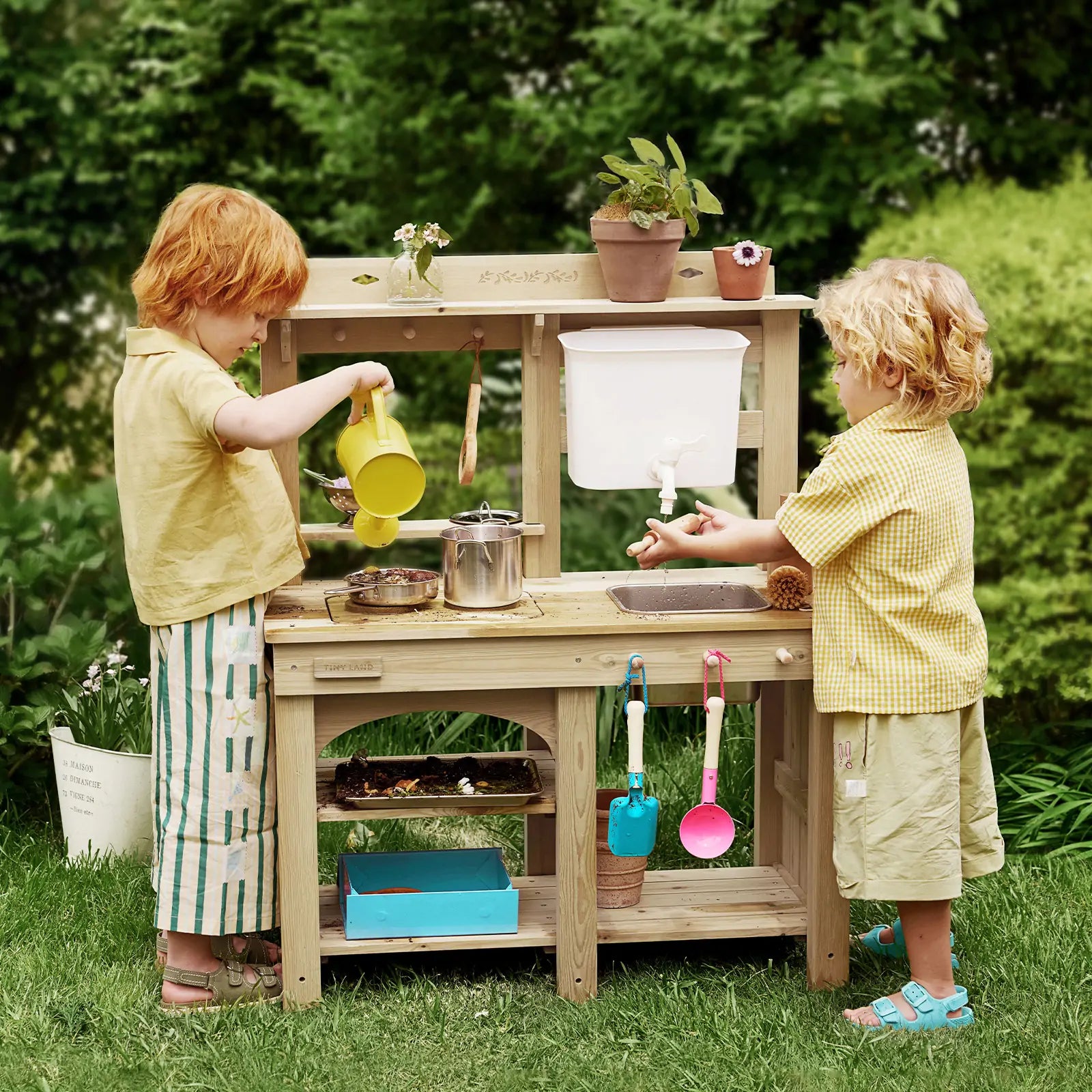

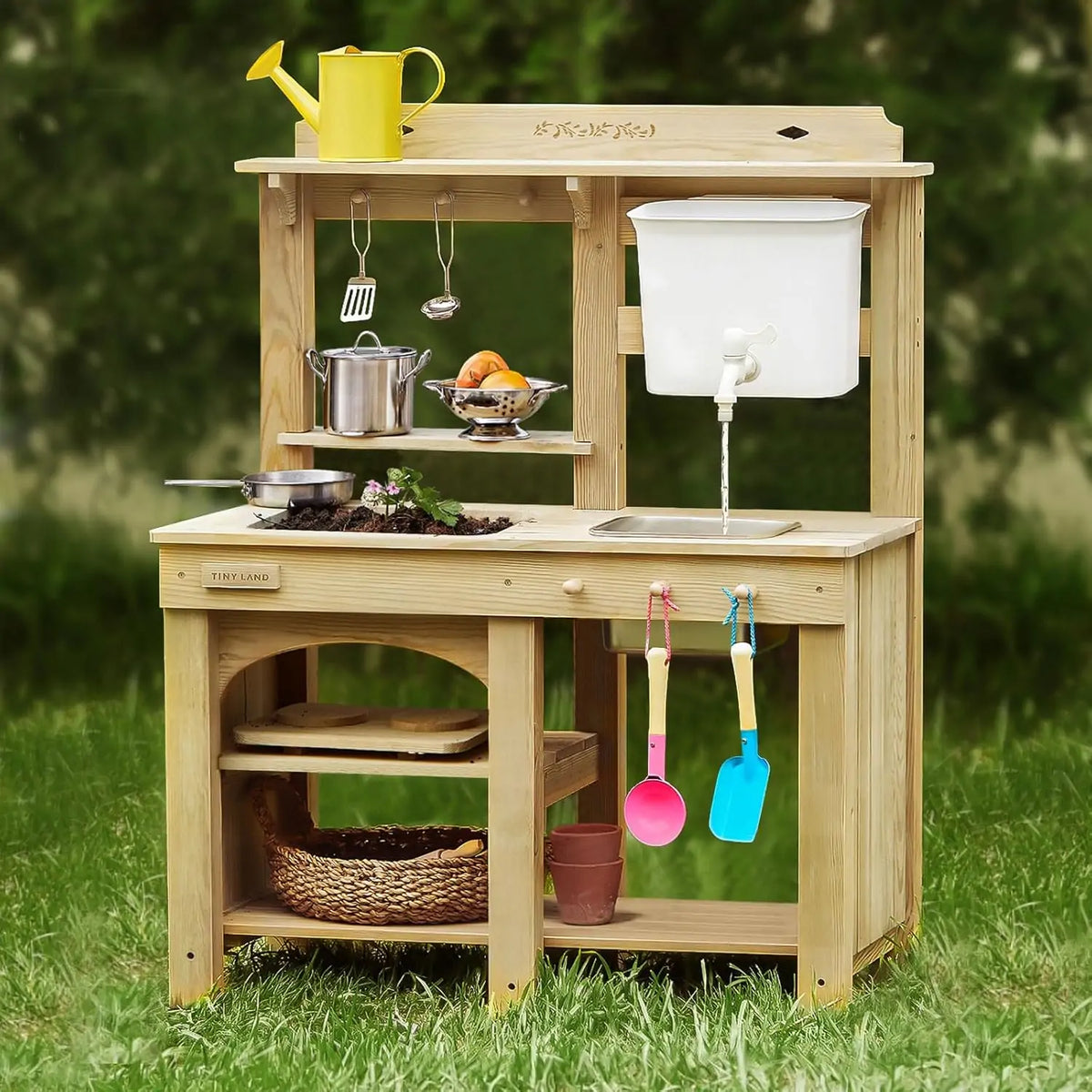
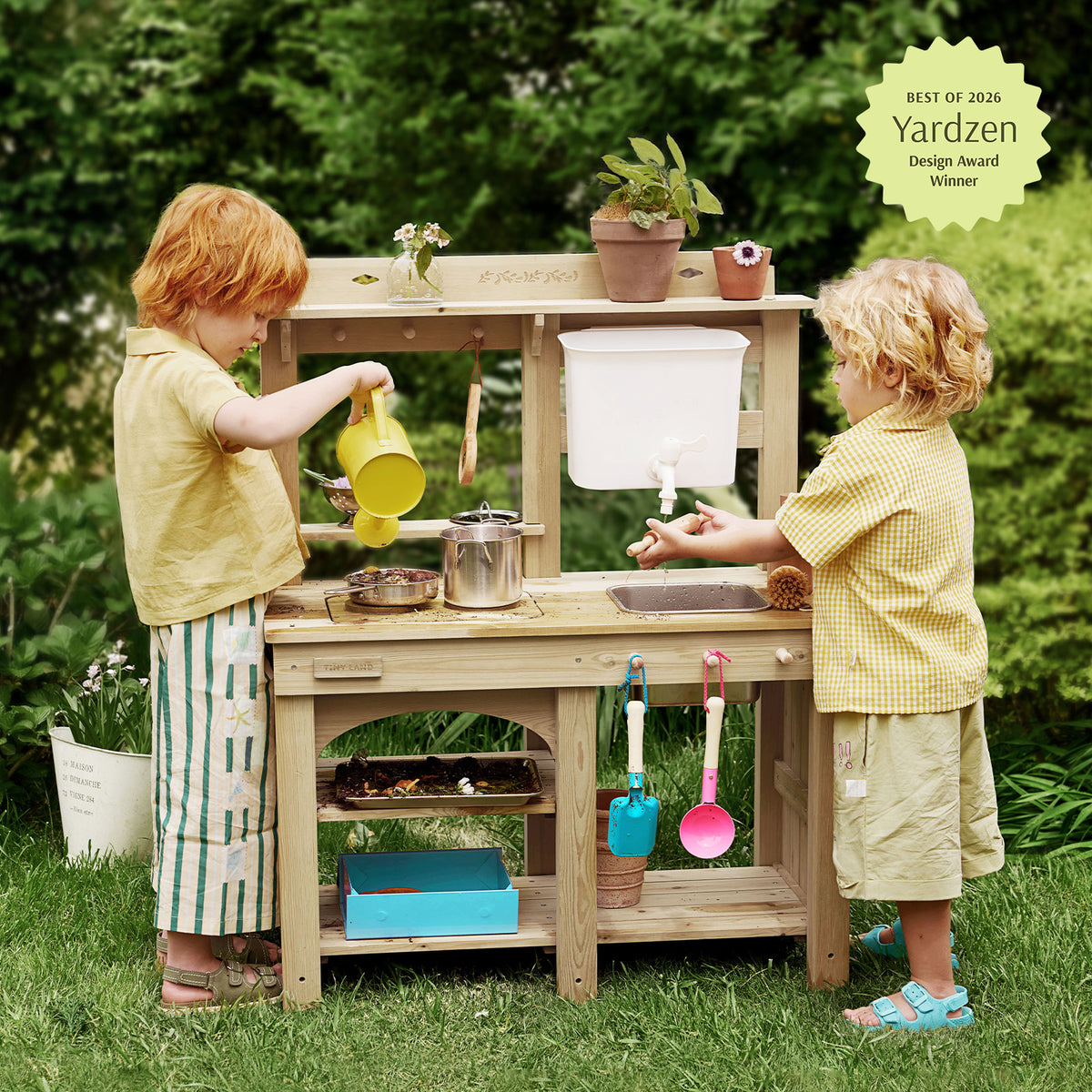




A mud kitchen is one of the easiest ways to turn outdoor play into a rich learning experience. With a few pots, bowls, kitchen utensils, sticks, flower petals, dirt, sand, soil, and a simple water source, children can create mud pies, mud cakes, flower cakes, imaginary dishes, or even open a pretend mud café in the backyard.
For young kids, mud kitchen play is not just messy fun. It is a highly beneficial form of sensory play, imaginative play, creative play, and open ended play. Children learn by mixing mud, pouring water, carrying water, scooping soil, and using real kitchen tools in a safe outdoor space. At the same time, parents need to think carefully about mud kitchen safety, especially when children are playing with mud, natural materials, loose parts, and water.
Here are practical safety tips to help kids enjoy an outdoor mud kitchen with confidence.

Mud play gives children a hands-on connection with nature. Unlike many structured toys, a mud kitchen has no fixed rules. Kids can pretend they are cooking food, running a lemonade stand, baking mud pies, or serving customers in a mud café. This type of open ended play supports creativity, imagination, and critical thinking.
Mud kitchen play also helps develop fine motor skills and gross motor skills. Small actions like stirring mud, picking up flower petals, filling muffin tins, and holding kitchen utensils build fine motor skills. Bigger movements, such as digging, carrying water, bending, reaching, and moving pots around the outdoor kitchen, support gross motor skills and overall motor skills.
When children play together, the benefits grow even more. Group play in an outdoor play kitchen encourages communication skills, language skills, social skills, cooperative play, and turn taking. One child may be the chef, another may collect sticks, and another may pour water into mixing bowls. They learn to share tools, explain ideas, solve problems, and create stories together.

1. Choose a Safe Place for the Mud Kitchen
The first step in mud kitchen safety is location. An outdoor mud kitchen should be placed on flat, stable ground where children can move freely. Avoid areas near driveways, sharp garden tools, thorny plants, deep water, steep steps, or slippery surfaces.
A little shade is helpful, especially in warm weather. Outdoor play is great for children, but kids can get hot quickly when they are busy cooking, pouring, digging, and playing. If there is no natural shade, place the mud kitchen near a tree or use a simple canopy.
Check the work surface before children start playing. It should be smooth, sturdy, and at a comfortable height for young kids. Look for splinters, loose screws, rusty nails, sharp corners, or wobbly legs. Whether you buy an outdoor play kitchen or build one yourself, regular checks help reduce risk.

2. Use Safe Soil and Natural Materials
Not all dirt is safe for mud play. Use clean soil from a trusted source. Organic garden soil can be a good choice, but make sure it does not contain chemical fertilizers, pesticides, animal waste, or unsafe materials. If you buy soil from garden centers, read the label carefully.
Avoid soil from roadsides, construction sites, old painted wood, treated timber, or places where pets may go to the bathroom. These areas may contain chemicals, glass, sharp objects, or bacteria.
Natural materials make mud kitchen play more exciting. Flower petals, leaves, smooth stones, pinecones, herbs, and sticks can add different textures and smells to sensory play. However, parents should check that plants are non-toxic and age-appropriate. Young children should also be reminded that mud kitchen “food” is pretend food, not real food.

3. Pick Child-Friendly Tools
A mud kitchen does not need expensive equipment. Many useful items can come from thrift stores, old kitchen cupboards, or garden storage. Pots, bowls, mixing bowls, muffin tins, spoons, cups, ladles, and safe kitchen utensils are perfect for mud kitchen play.
Avoid glass bowls, sharp knives, rusty kitchen tools, broken plastic, or anything with small parts that may be a choking risk. Loose parts can support creative play, but they must be safe for the child’s age. Larger loose parts are better for toddlers and preschoolers, especially if they still put objects in their mouths.
Tools should be light enough for children to carry and strong enough for outdoor mud play. If a tool cracks, rusts, or develops sharp edges, remove it from the outdoor kitchen.
4. Keep Water Safe and Simple
Water is what brings a mud kitchen to life. Children love pouring water, mixing mud, washing bowls, and changing dry soil into thick mud. These simple actions support sensory play and motor skills, but water still needs supervision.
Use a small bucket, watering can, or shallow container instead of a deep tub. Children should be able to carry water without struggling. Carrying water can build strength and coordination, but heavy containers increase the risk of spills or falls.
Make sure water does not collect in large puddles around the work surface. Wet ground can become slippery, especially when children are running or carrying tools. If the area becomes too muddy, move the mud kitchen slightly or improve drainage.

5. Teach Hygiene Habits Early
Messy play is part of the fun, but hygiene is important. Before and after mud kitchen play, children should wash hands. If a child has a cut or scrape, cover it before they play with soil, sand, or mud.
Children should also learn not to taste mud, dirt, sand, leaves, or imaginary dishes. Mud pies, mud cakes, and flower cakes may look fun, but they are only for playing. This rule is especially important for younger children in the early years.
After play, help children rinse tools, empty bowls, and leave utensils to dry. A simple clean up routine keeps the outdoor mud kitchen safe and teaches responsibility. Children can help wash hands, rinse tools, sort bowls, and put kitchen utensils back in their storage space.
6. Set Clear Rules for Safe Play
Good mud kitchen safety does not mean stopping the fun. The goal is to give children freedom with clear limits. Simple rules help kids understand how to enjoy messy play safely.
Useful rules include keeping mud in the mud kitchen area, not throwing mud, sticks, stones, or sand, sharing tools during group play, and asking an adult before adding new natural materials. Children should also know to wash hands after playing and clean up tools before leaving the outdoor play kitchen.
These rules support social skills, communication skills, and turn taking. They also help children understand risk in a calm, practical way.

7. Supervise Without Taking Over
Parents should supervise mud kitchen play, especially with toddlers and preschoolers. Watch for unsafe materials, slippery ground, sharp sticks, heavy buckets, or children putting mud near their mouths.
At the same time, try not to direct every part of the play. Let children lead. They may want to create a mud café, cook pretend soup, mix outdoor mud with flower petals, or invent new imaginary dishes. This freedom supports young minds, creativity, critical thinking, and imaginative play.
The best mud kitchen play often happens when adults stay nearby but allow children to make choices, solve small problems, and use their imagination.
8. Dress for the Mess
Mud kitchen play is messy, and that is part of its value. Dress kids in clothes that can get dirty. Rain boots, old shoes, waterproof pants, or a play apron can make outdoor play more comfortable.
Seasonal changes can make a mud kitchen even more interesting. In spring, children can use flower petals and fresh leaves. In summer, they may add herbs and water. In autumn, sticks, acorns, and fallen leaves bring new textures. Nature keeps the outdoor mud kitchen fresh and exciting.

Final Thoughts
A mud kitchen gives children a safe way to explore nature, creativity, and hands-on learning. With clean soil, safe kitchen tools, a simple water source, clear rules, and regular clean up, parents can reduce risk while still allowing kids to enjoy real messy play.
Mud kitchen safety is not about keeping children perfectly clean. It is about creating a safe space where children can play, imagine, build motor skills, develop language skills, practice cooperative play, and enjoy the simple fun of mud.