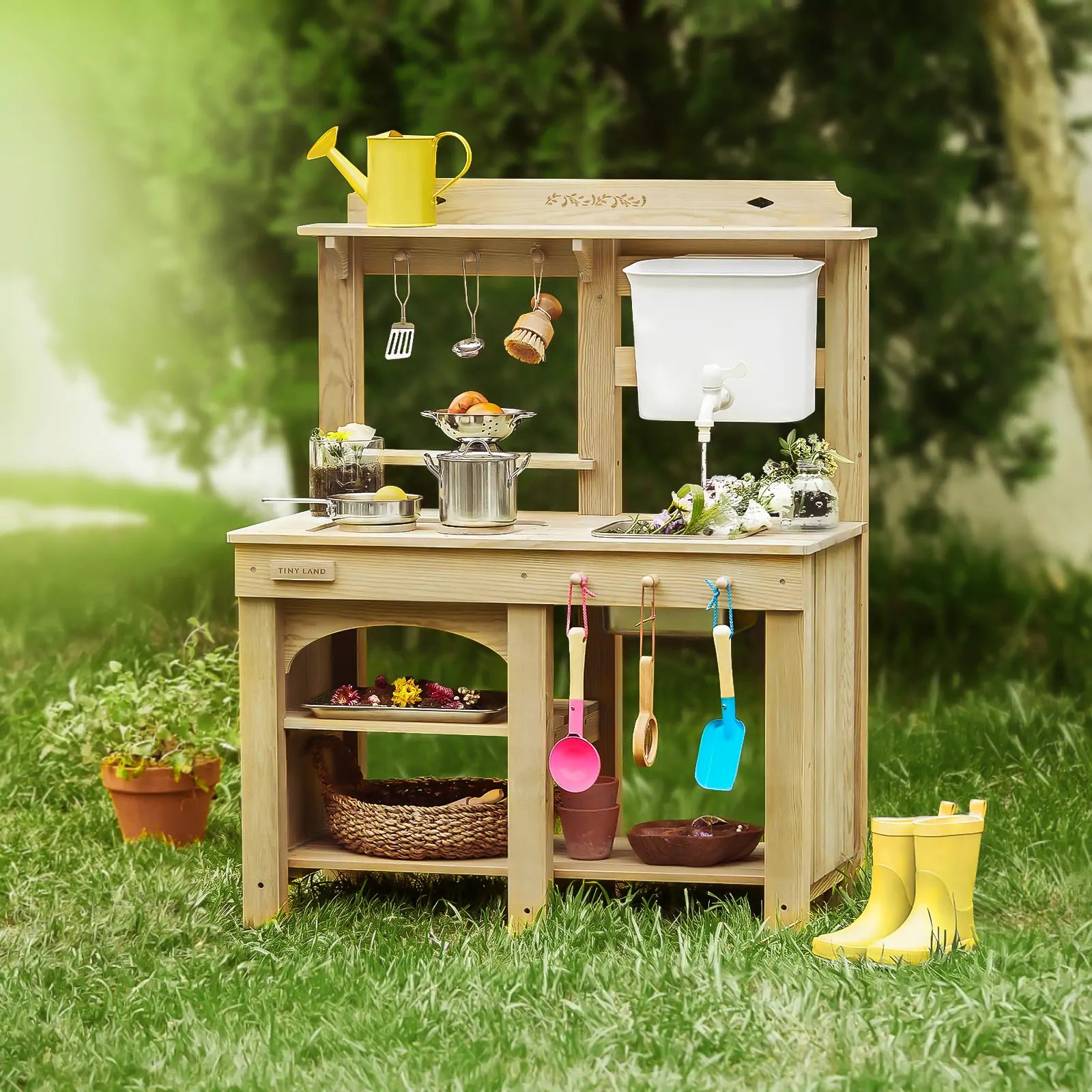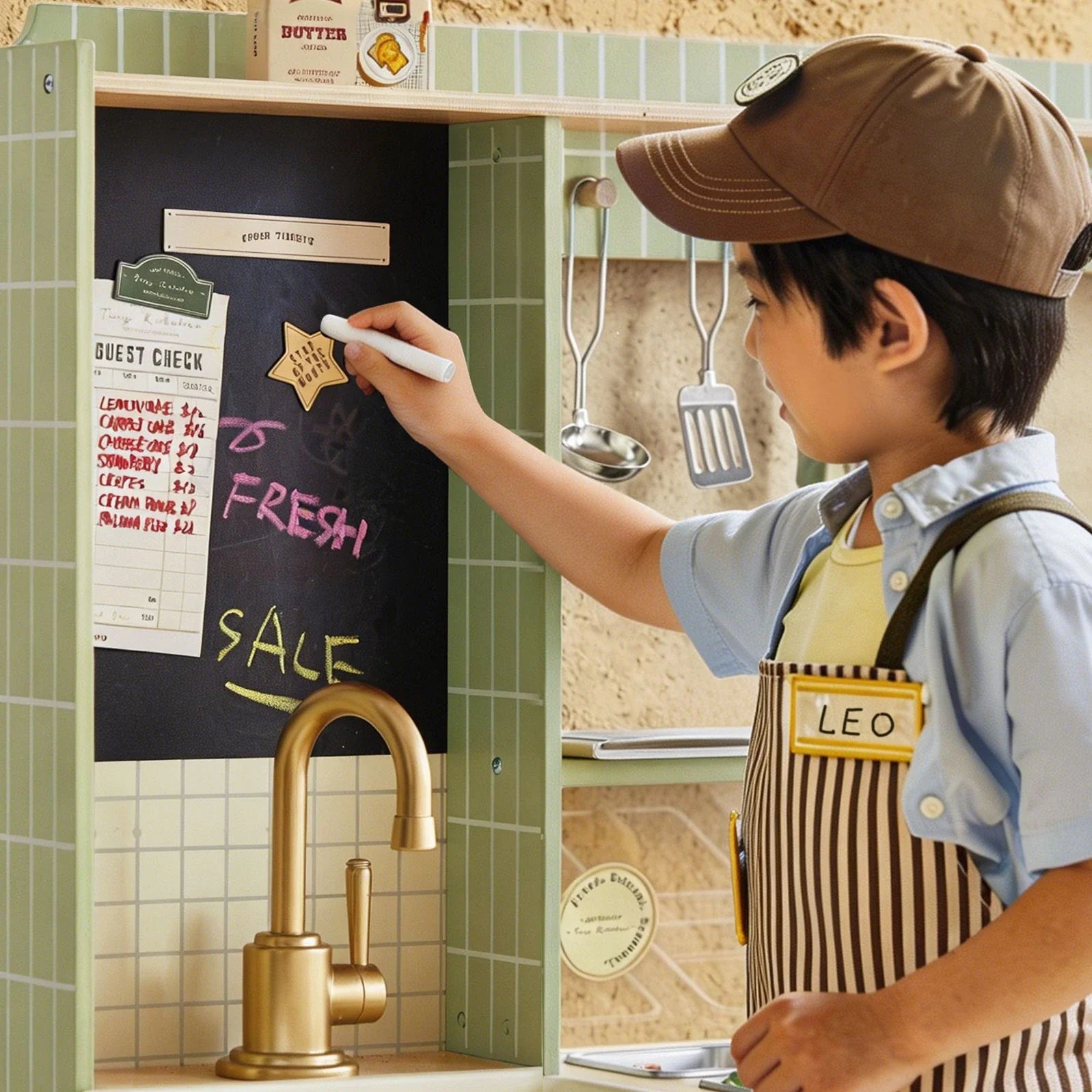
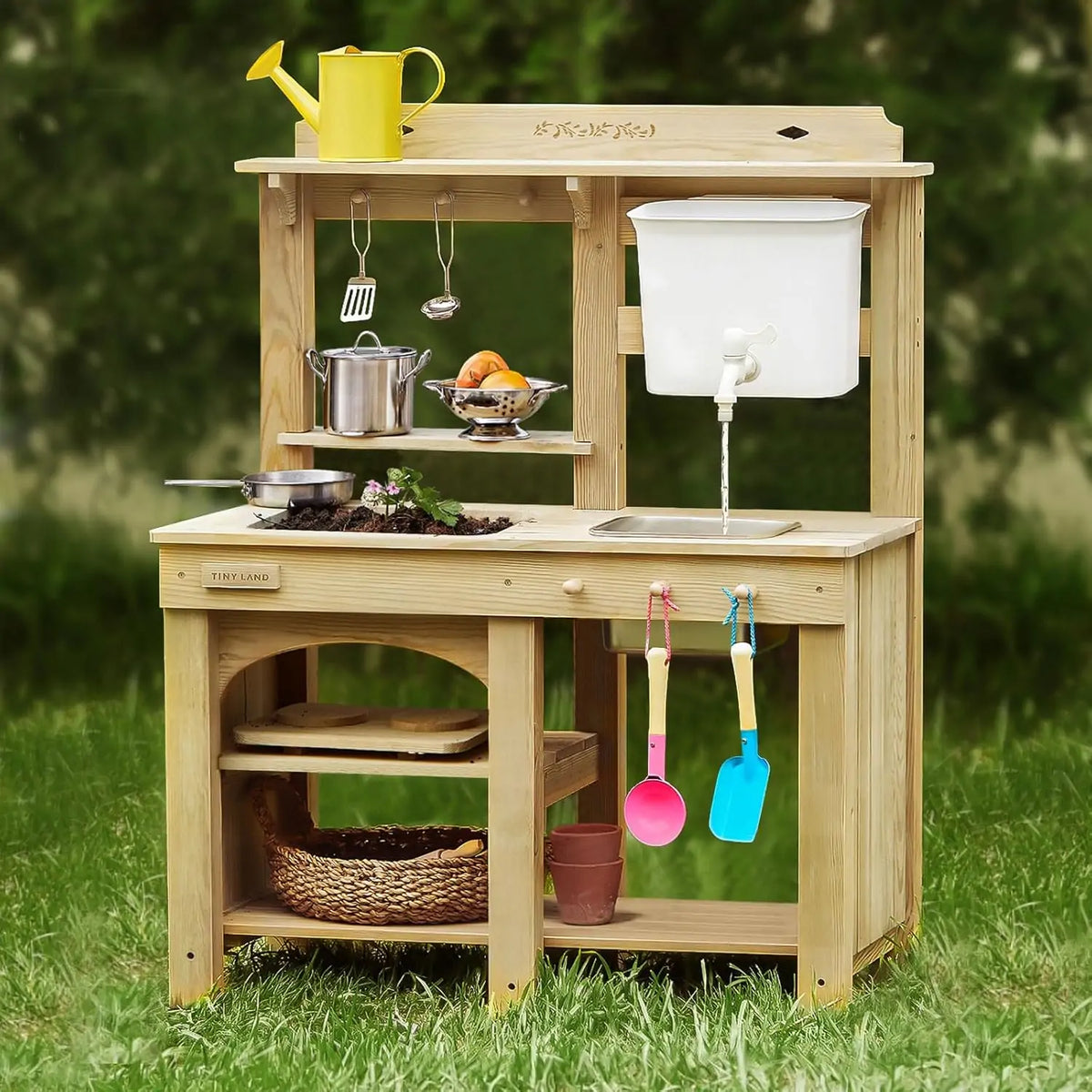
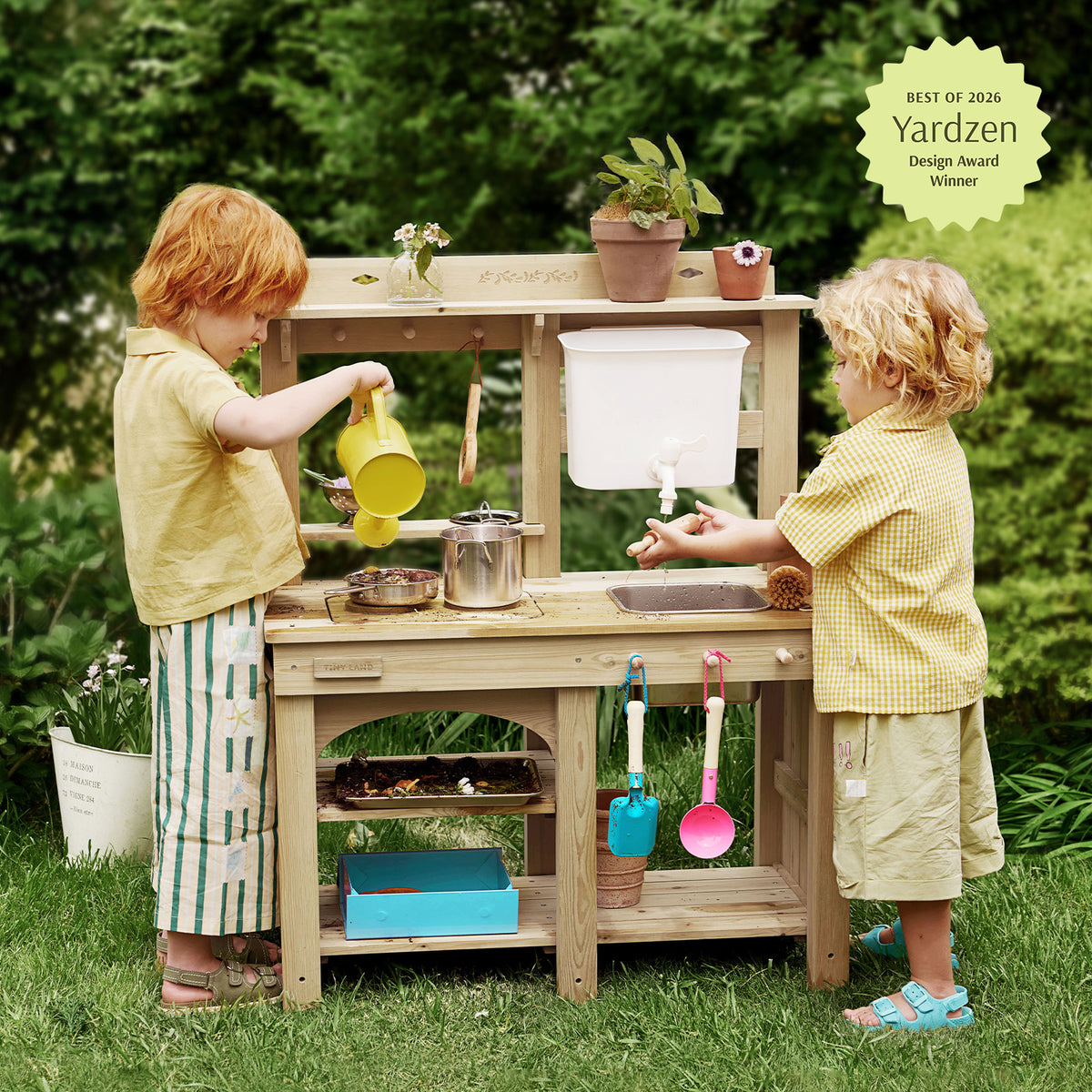
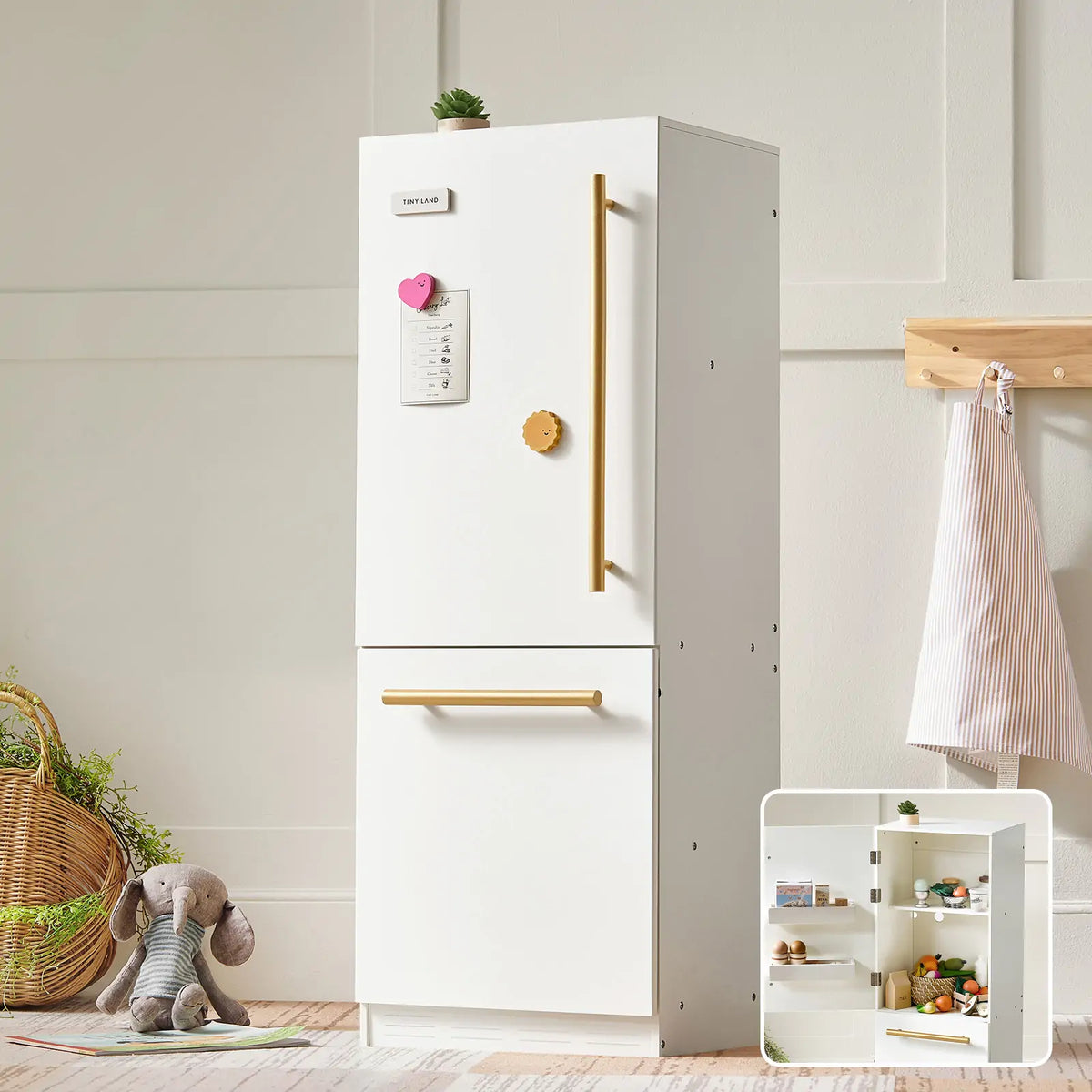
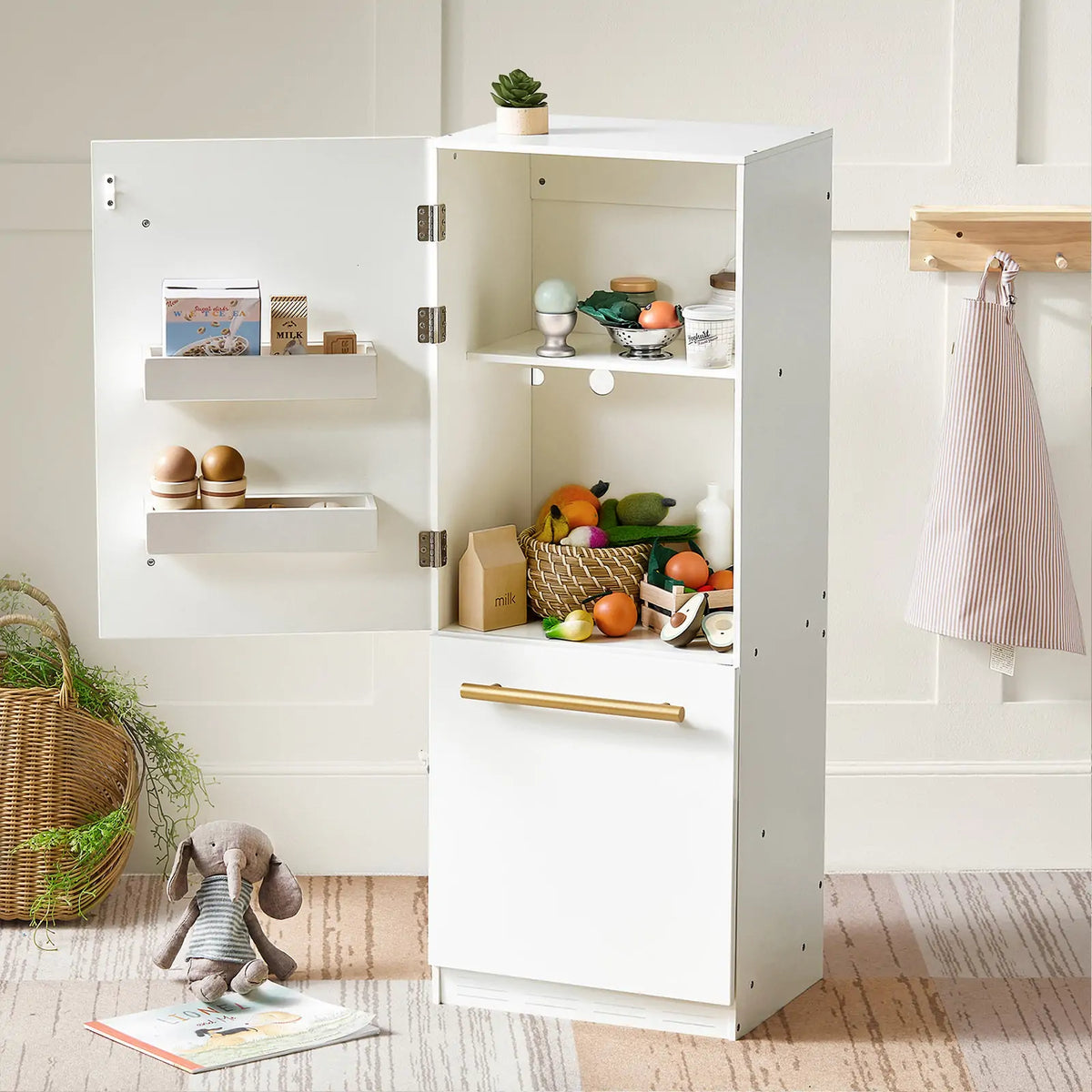
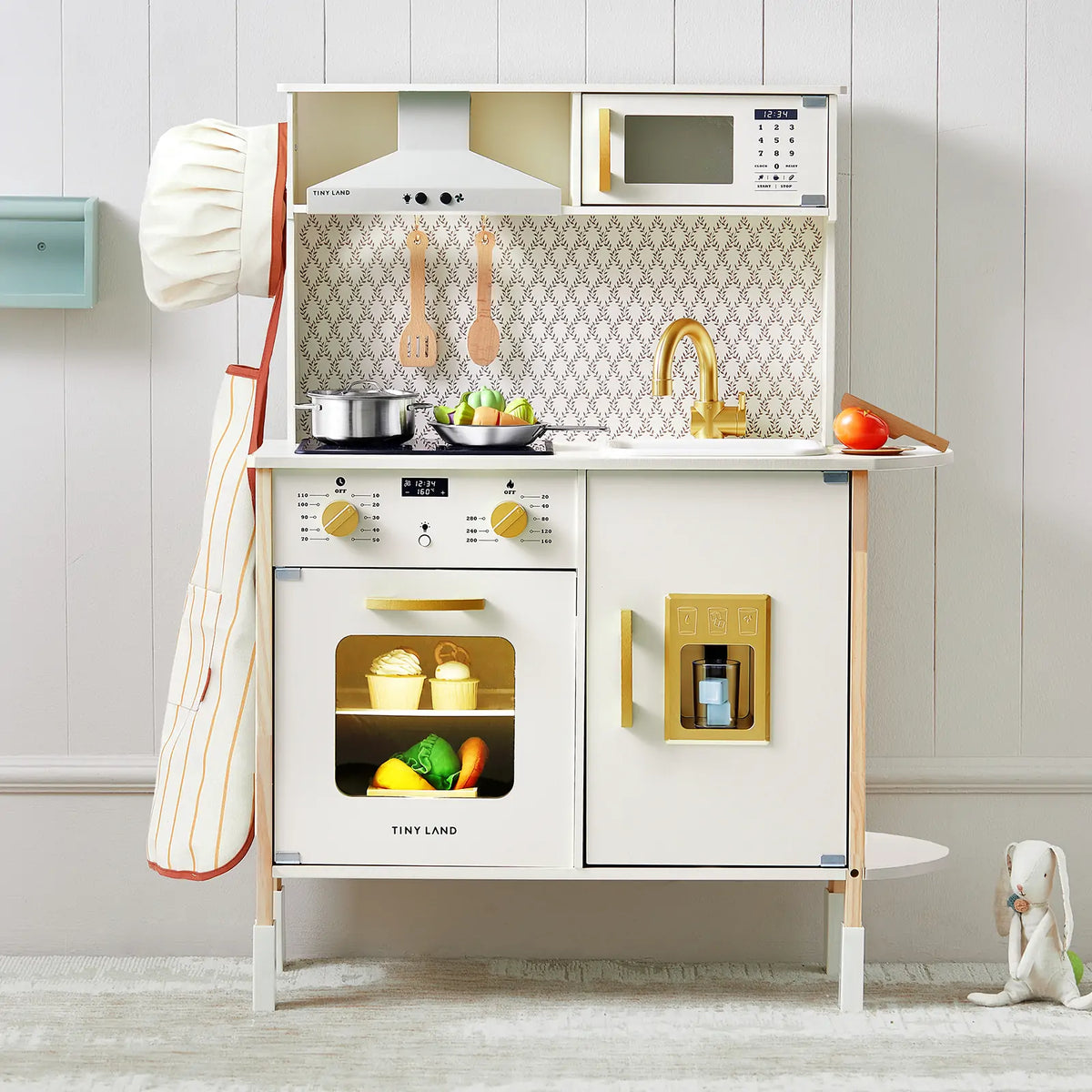
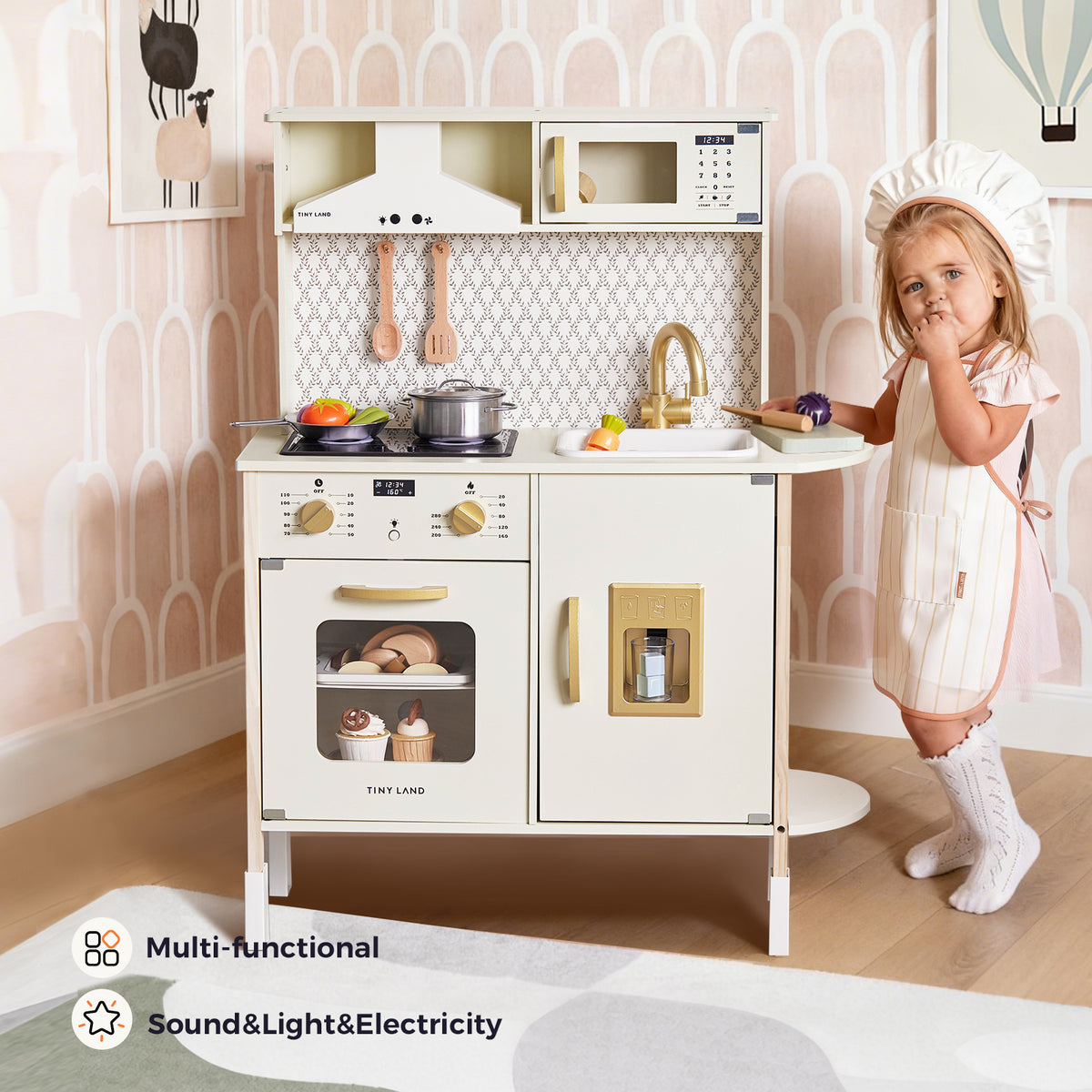



A mud kitchen can turn an ordinary afternoon outdoors into a café, bakery, garden shop, or magical potion station. It is especially useful for playdates because children can create their own games, share materials, and play together without needing complicated instructions.
The best mud kitchen games are simple enough for toddlers but flexible enough to keep older children interested. A few old pots, cups, pans, kitchen utensils, sticks, rocks, flower petals, dirt, sand, and water are often all kids need.
There is no right or wrong way to enjoy mud kitchen play. Some children may carefully follow pretend mud kitchen recipes, while others will mix everything together and proudly serve a bowl of muddy soup. Both approaches support imaginative play, sensory play, creativity, and child development.
Here are some fun ideas to try during your next outdoor playdate.

1. Open a Mud Kitchen Restaurant
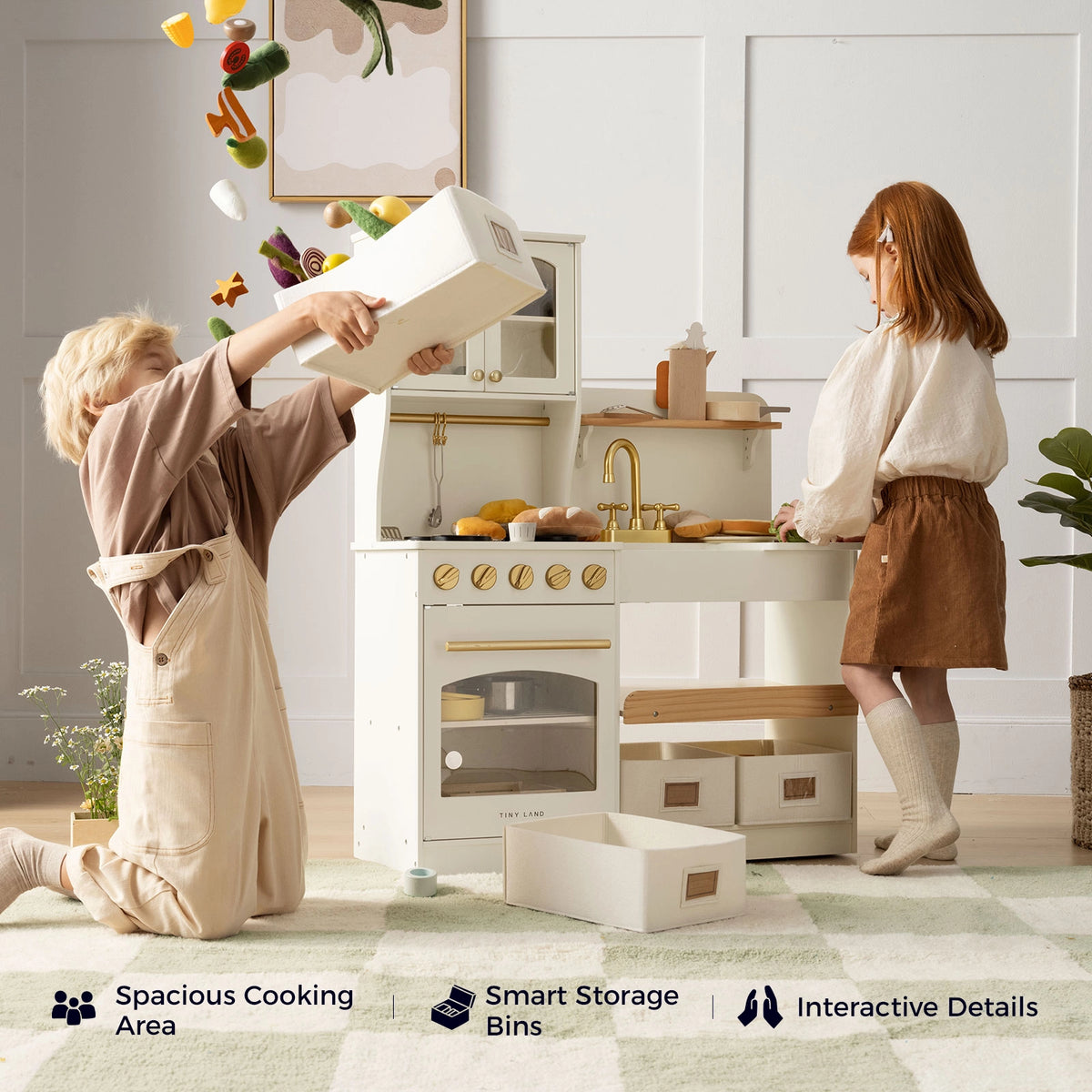
Turning an outdoor mud kitchen into a restaurant is one of the easiest ways to encourage role play.
One child can be the chef, another can take orders, and someone else can serve the food. Before the cooking begins, children can create simple shopping lists. They may need dirt for soup, grass for salad, rocks for cookies, and flowers to decorate the dishes.
Provide old pots, cups, spoons, and safe kitchen utensils. A small table can become the counter, while a kitchen sink or water tub can be used for pouring water and washing dishes.
This game supports communication skills and social skills. Children practice explaining ideas, listening to friends, and taking turns. They may also need to solve small problems when multiple kids want the same role.
The restaurant can serve anything they imagine, from stick fries to flower cakes.

2. Make Classic Mud Pies
Mud pie making is a classic activity because it is easy, messy, and suitable for children of different ages.
Start with a container of dirt and add small amounts of water. Children can mix the ingredients with spoons or their little hands. If the mud is too wet, add more dirt or sand. If it is too dry, add a little water.
Children can press the mixture into old pots, baking tins, or cups. Once the mud pie has a shape, they can decorate it with flower petals, grass, sticks, rocks, and other natural materials.
Making mud cakes supports fine motor skill development as children scoop, stir, pour, press, and decorate. It also helps them explore different textures through hands-on mud play.
The cakes do not need to look perfect. The mess is part of the fun.

3. Create Magic Potions
Magic potions are perfect for children who enjoy fantasy and imaginative play.
Set out cups or recycled containers and provide colored water, leaves, flowers, grass, sand, and small natural items. Children can invent names for their mixtures, such as Dragon Juice, Giggle Potion, or Garden Fairy Tea.
Pouring water between cups supports hand eye coordination and motor skills. Mixing ingredients and changing the recipe also encourages problem solving.
Older children may enjoy writing down their mud kitchen recipes, while toddlers can focus on scooping, stirring, and watching the colors mix.
Children can also create a potion menu and take turns being the potion maker and customer.

4. Hold a Mud Cake Decorating Activity
A decorating activity gives children a chance to show their creativity without making the playdate too competitive.
Ask each child to create a mud cake using natural or recycled materials. Fallen leaves, flowers, smooth rocks, small sticks, cardboard shapes, and safe bottle caps can become decorations.
Once the muddy masterpieces are finished, let each child introduce the creation. Instead of choosing one winner, use playful categories such as “Most Colorful,” “Funniest Cake,” or “Best Nature Design.”
This activity helps children describe their ideas, practice communication skills, and feel proud of what they have created.

5. Make Nature Soup
Nature soup is one of the easiest mud kitchen games because children can use many items found around the garden.
Give each child a pot and invite them to collect safe natural materials. They might choose grass, flower petals, fallen leaves, sand, dirt, or small sticks. Avoid unknown berries, mushrooms, sharp rocks, and plants that may cause irritation.
Children can add water, mix the ingredients, and name their soup. It might become dinosaur stew, rabbit soup, or a special restaurant dish.
This activity combines outdoor learning with pretend cooking. It also encourages children to notice the colors, textures, and shapes found in nature.

6. Set Up a Mud Kitchen Bakery
A bakery theme works well for children who enjoy making mud pies and mud cakes.
Create separate spaces for mixing, shaping, decorating, and serving. Children can turn wet sand and mud into pretend cupcakes, cookies, bread, and flower cakes. Small cups make useful molds, while flat rocks can become serving dishes.
One child can run the bakery while the others place orders. They may ask for a flower cake with grass sprinkles or a plate of stick fries.
This kind of cooperative play gives children a shared goal. They learn to divide tasks, share pots and pans, and combine their ideas.
7. Create a Garden Shop
A garden shop combines nature play, sorting, counting, and role play.
Children can collect fallen flowers, leaves, sticks, and rocks, then arrange them in separate cups or containers. They can pretend to sell bouquets, herbs, cake decorations, or soup ingredients.
Use smooth stones or leaves as pretend money. The shopkeeper can count items, fill orders, and help customers choose what they need.
This simple game supports early math, communication, and taking turns.

Preparing Your Own Mud Kitchen
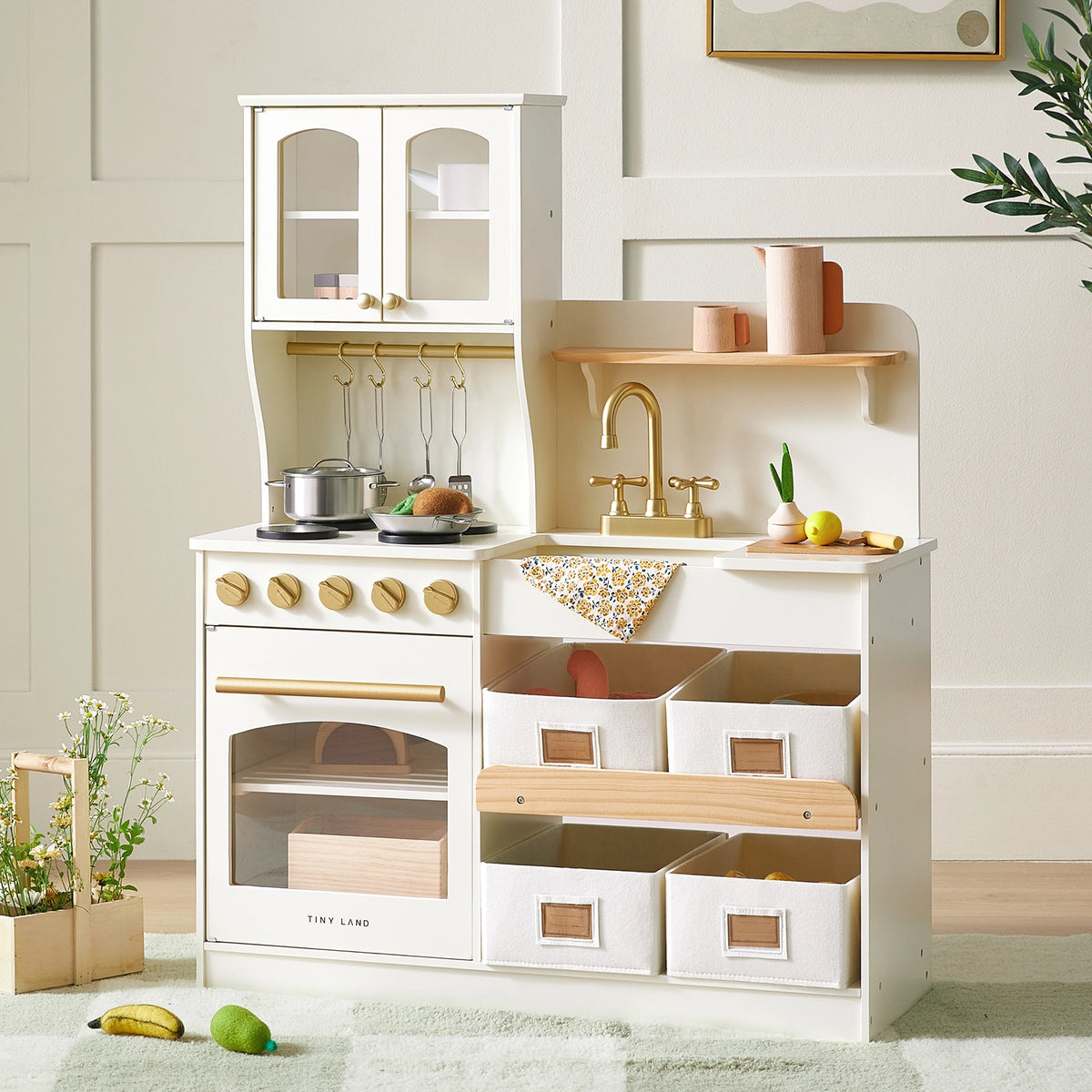
You do not need expensive outdoor toys to create your own mud kitchen. A basic setup can include a sturdy table, old pots, wooden spoons, pans, cups, recycled containers, and a water tub.
Keep natural materials in separate containers so children can easily see what is available. Good storage space will also make cleanup easier after messy play.
Choose an outdoor area where mud and water will not cause problems. Dress children in clothes that can get wet and dirty, and keep clean water nearby for washing little hands.
Adult supervision is still important, especially with toddlers. Check the area for sharp sticks, broken containers, harmful plants, and small objects that may not be safe.

Why Kids Love Mud Kitchen Play
Kids love mud kitchens because the play belongs to them. There is no fixed result, no detailed instruction sheet, and no single correct way to create something.
Mud kitchen play supports imagination, creativity, fine motor skill development, communication, social skills, and problem solving. It also helps children explore water, dirt, flowers, and other natural materials through meaningful outdoor play.
For parents planning a playdate, a mud kitchen offers more than a way to keep children busy. It creates a shared space where kids can cook, decorate, take turns, solve problems, and turn simple materials into something exciting.
With a few pots, some water, and plenty of imagination, an ordinary garden can quickly become the best restaurant in town.