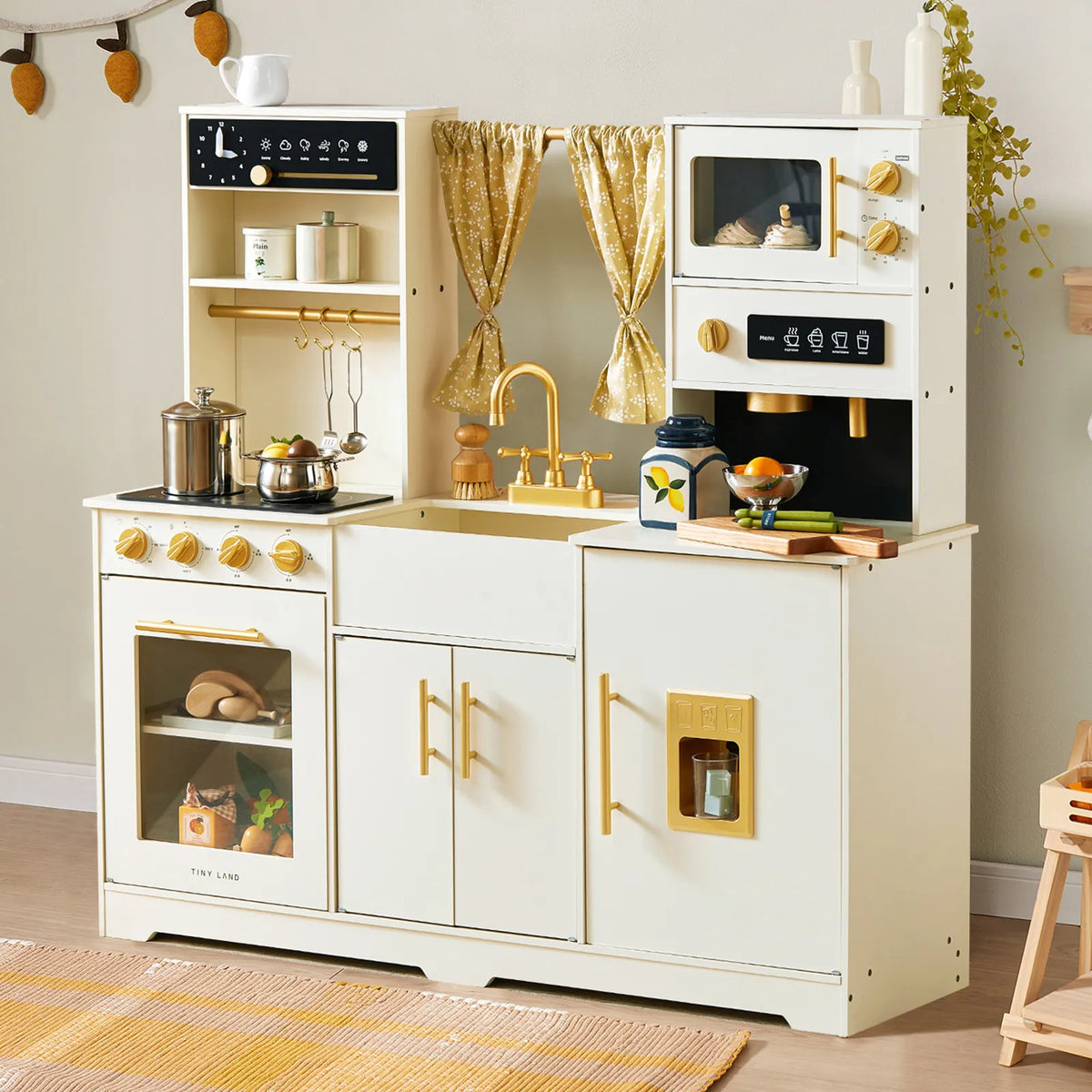
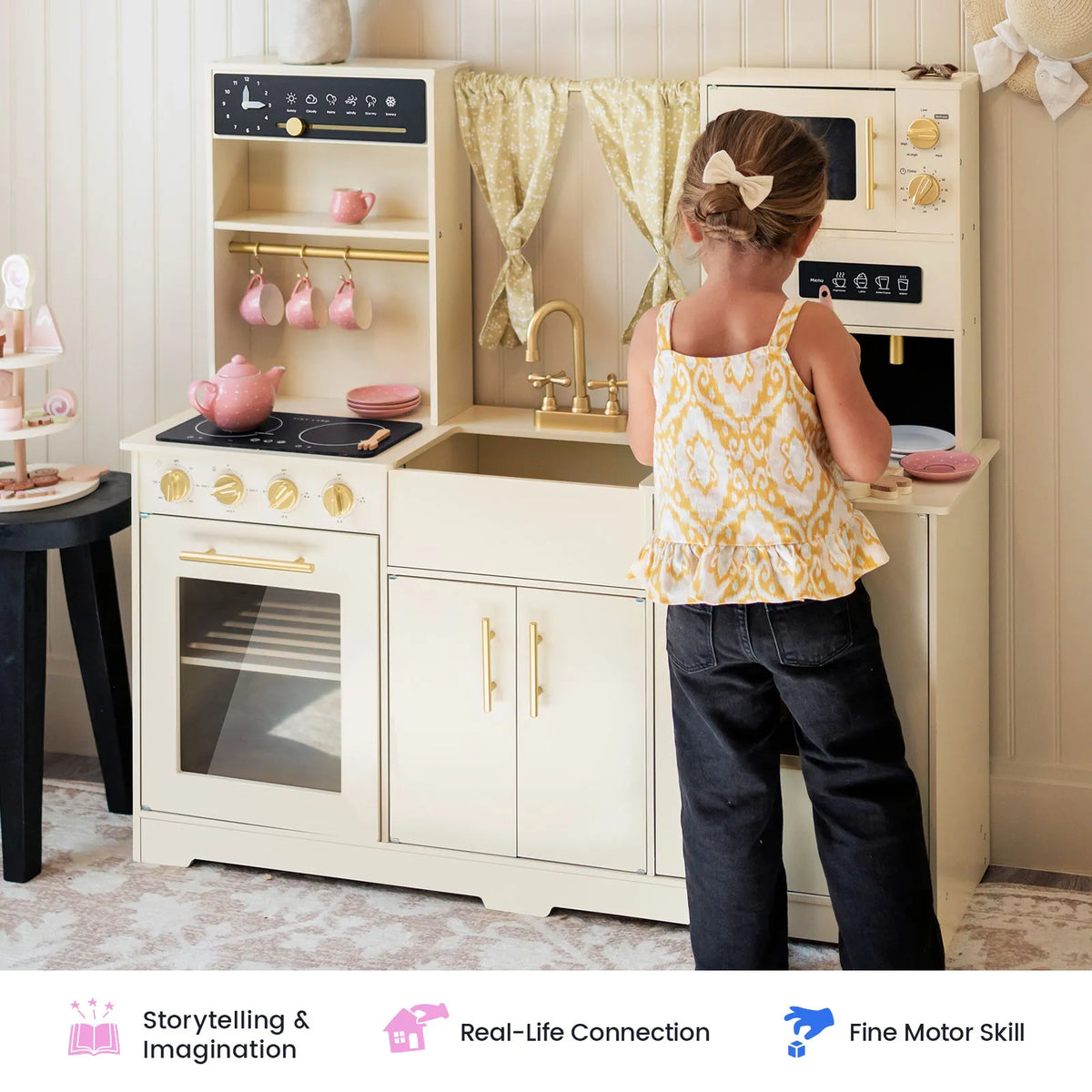
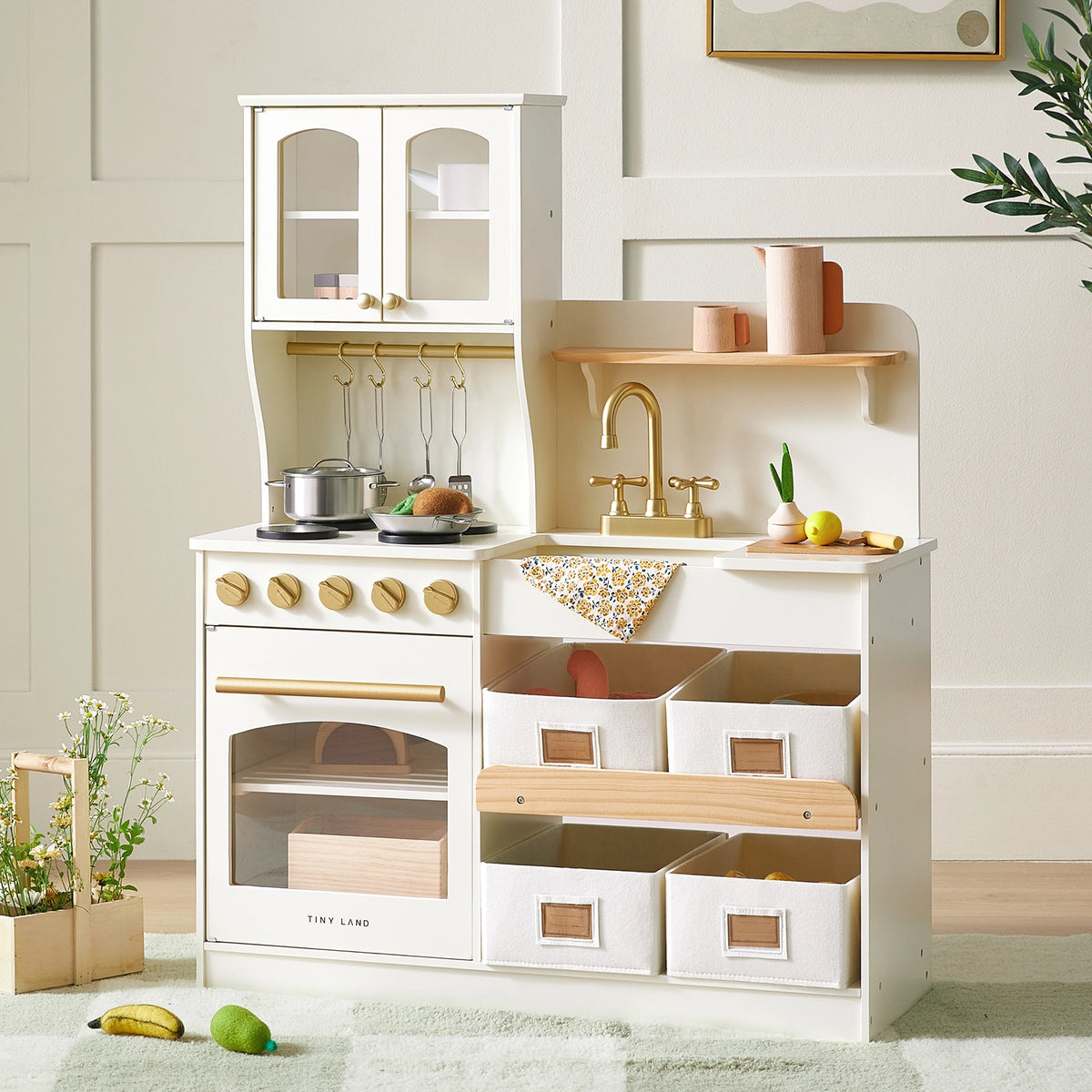
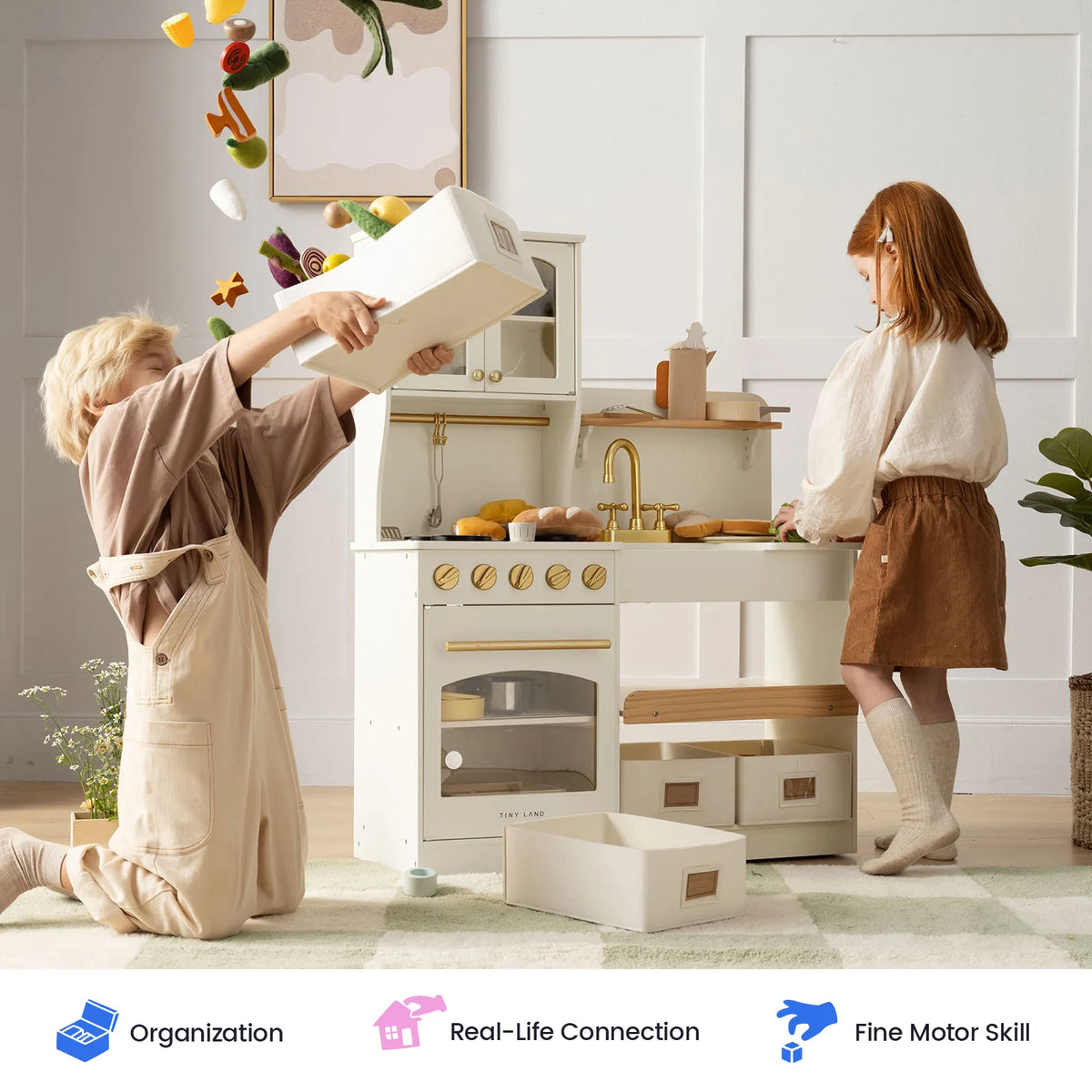
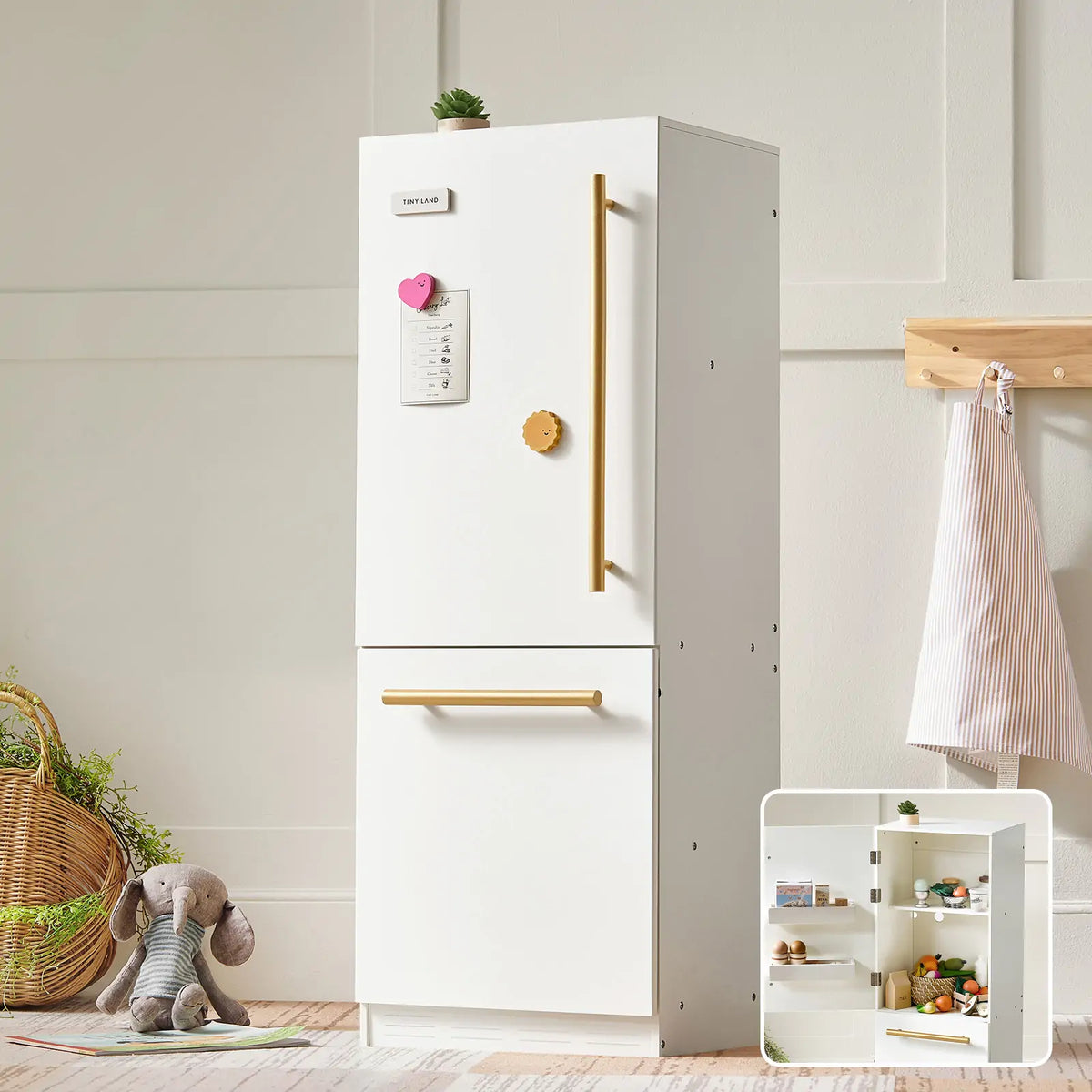
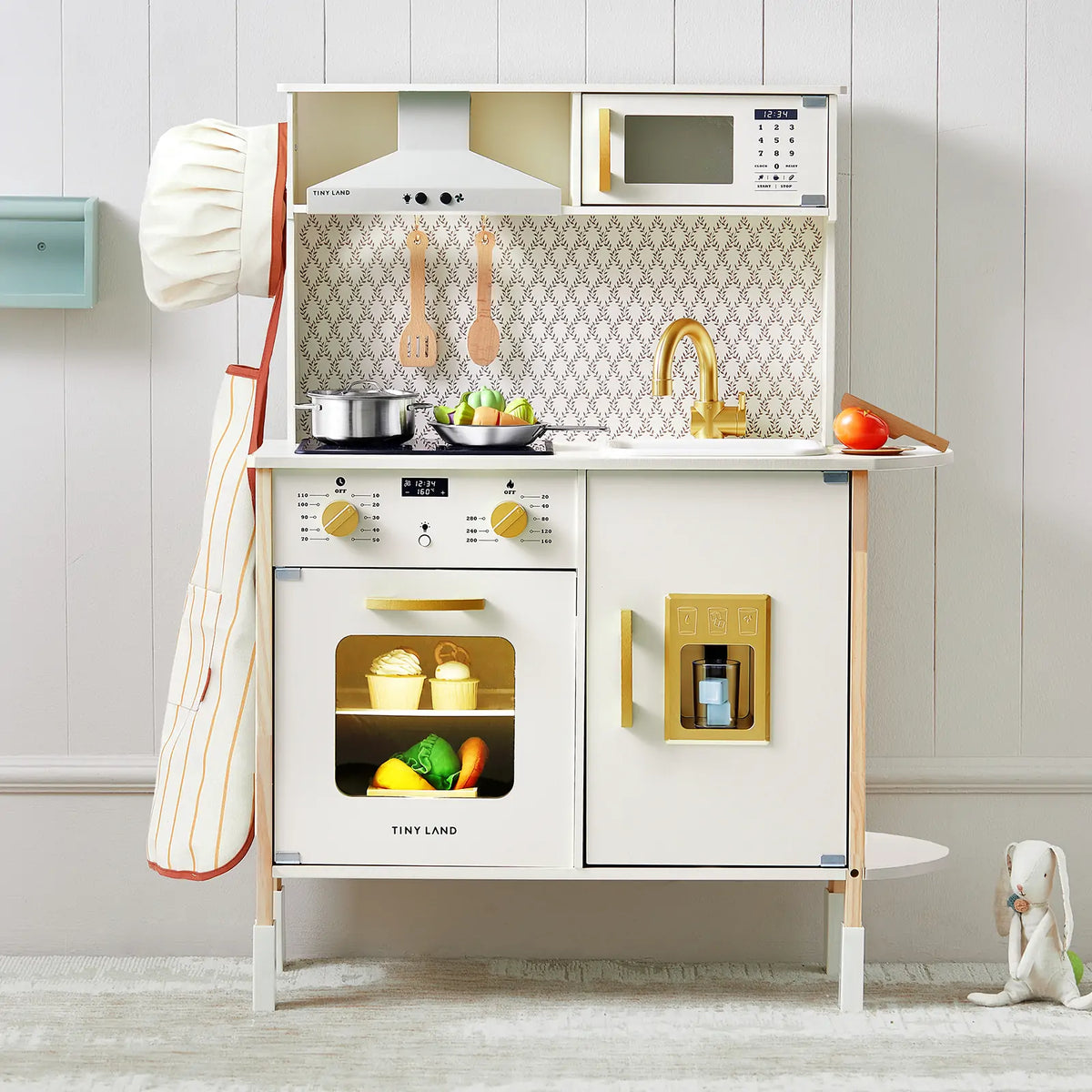
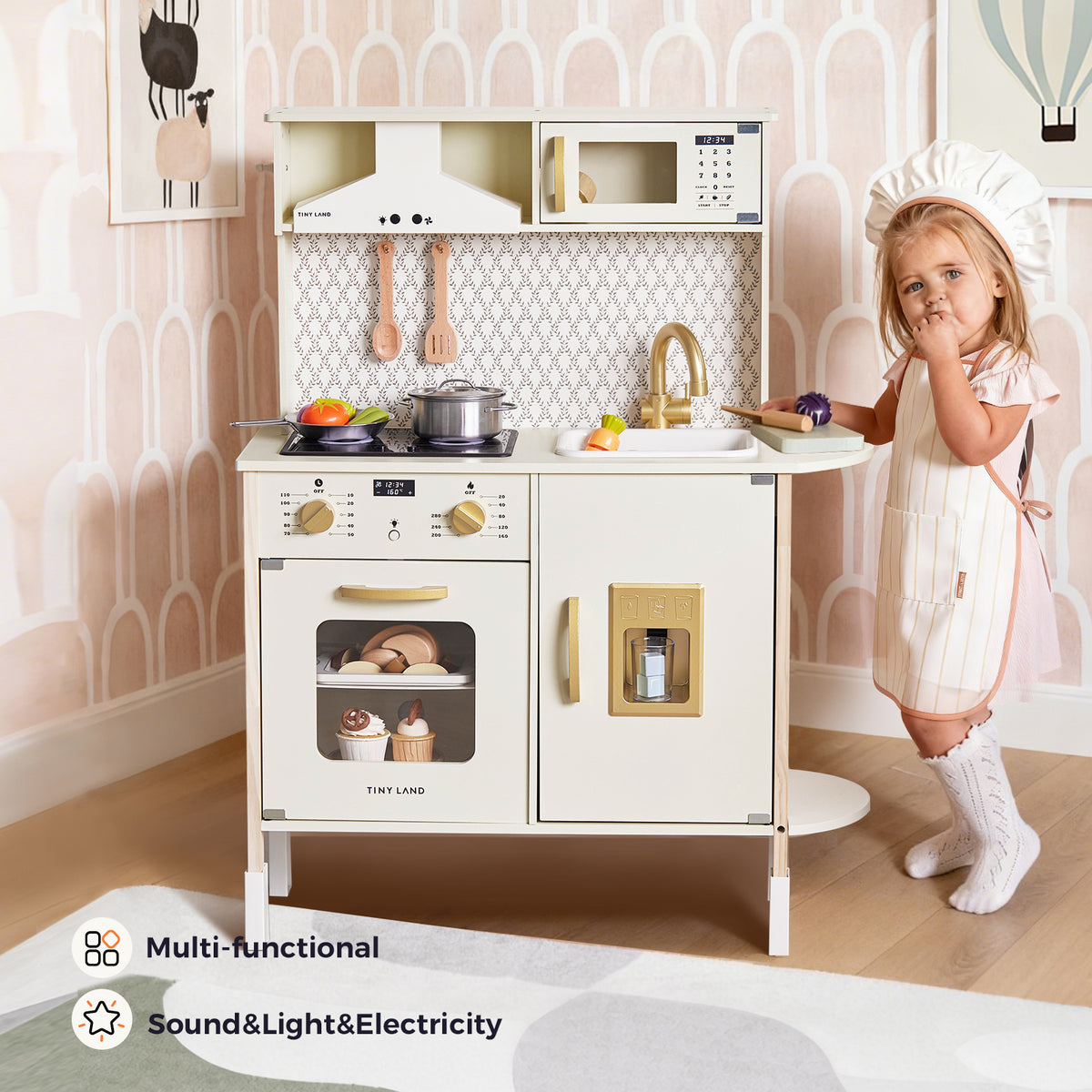



Most play kitchens naturally create a familiar kind of play. Children become little chefs. They cook meals, stir pots, prepare pretend food, and proudly serve what they’ve made to family or friends.
This kind of play is simple, intuitive, and something children immediately understand. It mirrors everyday life and helps them explore the world through imitation and imagination.
But as children grow, something interesting happens. Their imagination doesn’t stop at cooking. They begin to look for more—more stories, more interaction, more roles to step into, and more ways to turn a simple kitchen into something much bigger, because their creativity naturally expands.
That’s exactly what inspired Tiny Land’s newest kitchen.
Instead of replacing the classic play kitchen experience, it builds on it. It keeps everything children already love about pretend cooking, while adding a simple but powerful extension: a bistro-style play system that opens up new layers of imagination.

One kitchen. Two ways to play.
The Classic Home Kitchen Play Kids Naturally Love
At its heart, this is still everything children love about a traditional play kitchen.
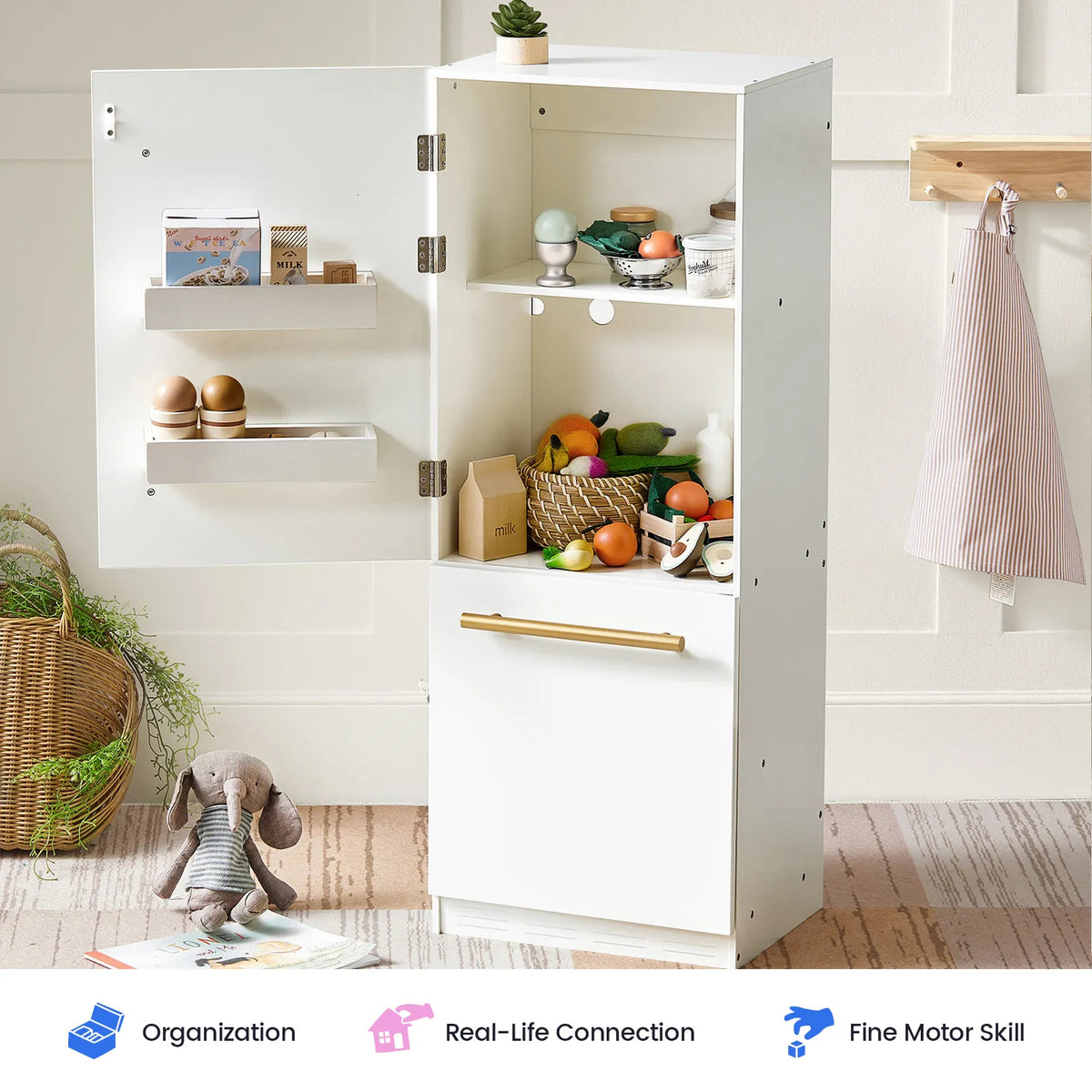
Kids can wash ingredients in the sink, prepare pretend meals, organize food, stir soup, bake treats, and imitate the everyday family routines they see around them.
This helps children understand the world around them through imitation, imagination, and play. It builds confidence through familiar routines while encouraging independence, creativity, and open-ended storytelling.
For younger toddlers especially, this type of home-based pretend play feels naturally comforting because it mirrors real life. They’re recreating moments that feel meaningful to them. That familiar kitchen experience is still an important part of this design.
But unlike most play kitchens, the experience doesn’t stop there.

Bistro Play That Expands the Experience
With a simple shift in setup, the kitchen transforms into a child-sized bistro experience.
Children are no longer only “cooking” in the kitchen—they are now operating a small restaurant from start to finish.
- A customer walks in.
- A menu is handed over.
- An order is placed at the counter.
- A meal is prepared.
- Food is served across the counter.
And the interaction continues as the bistro experience unfolds.
This creates a full service loop instead of a single cooking activity.
Instead of repeating isolated actions, children begin to understand the flow of a real-world dining experience in their own way.
The play becomes structured yet open-ended—guided by a real-world sequence, but fully driven by imagination.
And this keeps children deeply engaged.

Why Kids Tend to Play With It Longer
One of the biggest reasons children lose interest in toys is simple: the toy stops giving them new ways to interact with it.
The more flexible the environment becomes, the more opportunities children have to expand their imagination over time.
And that’s exactly what this kitchen was built for.
The interchangeable accessories help children completely shift the storyline without needing an entirely separate toy setup.
And for parents, that matters too.
Because instead of buying multiple single-purpose toys, one thoughtfully designed setup can support many different kinds of imaginative play in the same space.

It Encourages More Social Interaction
That new role switching encourages communication, collaboration, turn-taking, confidence-building, and social storytelling in a way many standard kitchen setups simply don’t.
And honestly, some of the funniest family moments happen when kids fully commit to their tiny restaurant roles.

It Changes Alongside the Way Children Play
The best toys don’t become outdated as soon as children grow older. They evolve alongside them.
Because children aren’t limited to one script. They’re constantly creating new ones.

Why Parents Are Choosing to Order Early
For many families, the decision isn’t just about what to buy—but when to bring it into the home.
There are a few reasons parents are choosing to bring it in sooner rather than later.
Dress-Up Accessories for More Immersive Bistro Role Play
With a full dress-up set, children step into the role of a server or restaurant owner—fully immersed in a bistro world where they’re not just playing, but running their own little restaurant.
Instead of playing side by side, children begin to play with each other
This setup is designed to naturally support multiple children playing together.
The bistro flow—ordering, preparing, serving, and responding—creates natural role division.
This makes the experience more dynamic, more social, and more collaborative, especially for siblings or playdates.
Thoughtfully Designed for Safe, Worry-Free Play
For parents, peace of mind matters just as much as play value.
This kitchen is built with child-safe materials and thoughtful design details that support everyday use in real family environments.